
Oak furniture offers distinct advantages over maple in several critical areas. First, oak has superior durability, as it resists dents, scratches, and moisture damage more effectively than maple. This means that oak furniture can withstand daily use without showing significant wear, making it a practical choice for households with children or pets.
Next, the open grain structure of oak allows it to absorb stains evenly. This characteristic results in bold, unique patterns that enhance the visual appeal of any room. Homeowners can apply a variety of finishes to oak furniture, achieving different looks that suit their personal style.
In terms of cost, oak typically costs about 15-30% less than maple initially. However, oak maintains its value better over time and often requires fewer repairs. This longevity makes oak a sound investment for your home.
Additionally, the natural tannins present in oak repel water and help prevent warping. This quality is particularly beneficial in humid climates, where moisture can damage other types of wood, including maple.
In summary, oak furniture excels in durability, aesthetic versatility, cost-effectiveness, and moisture resistance. These factors make oak a superior choice for anyone looking to invest in quality furniture for their home.
Oak’s Superior Durability and Longevity Compared to Maple
When evaluating furniture, focus on durability.
Oak furniture offers exceptional hardness, which provides strong resistance to dents, scratches, and daily wear. The dense grain structure of oak enhances its resilience, allowing pieces to maintain their appearance for decades with minimal maintenance.
In contrast, when comparing maple, you’ll find that it’s softer than oak and more vulnerable to surface damage over time.
The open grain of oak absorbs finishes effectively, creating a protective layer that increases its longevity. This means that oak furniture not only endures daily use but also thrives, making it a long-lasting investment for future generations.
The Distinctive Grain Patterns That Set Oak Apart
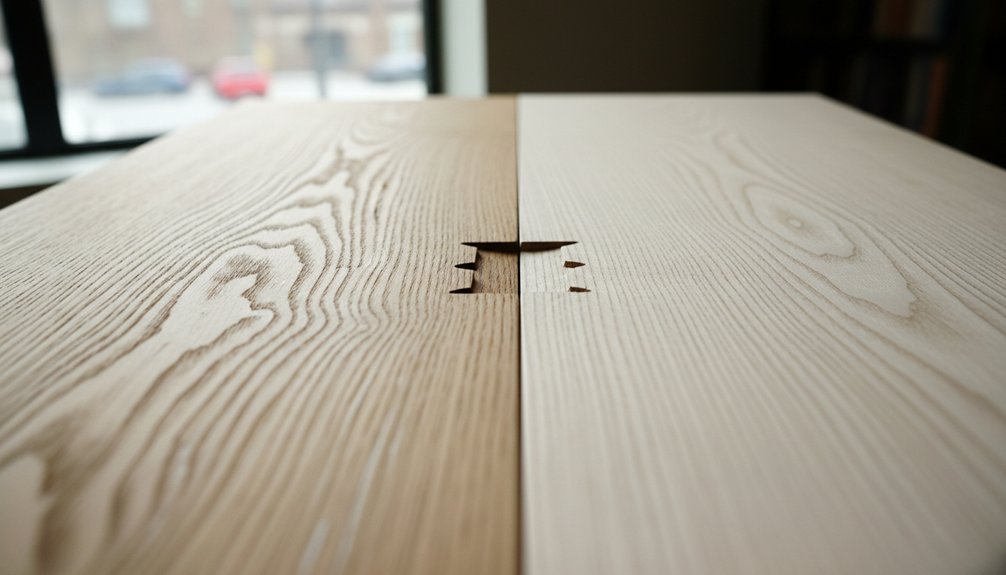
Oak furniture features distinct grain patterns that immediately catch the eye. When you look at oak, you see bold lines that create depth and interest.
Oak’s distinctive grain patterns create bold, eye-catching lines that add natural depth and visual interest to any space.
These patterns arise from the wood’s large pores and ray flecks, which show as lighter streaks on the surface. Oak grain textures vary from coarse and pronounced to moderately refined, influenced by whether you’re examining red or white oak.
Oak colors range from light honey to dark amber and brown. In contrast, maple has tight, subtle grain patterns that don’t offer the same visual impact as oak.
The unique grain of oak ensures that each piece of furniture is one-of-a-kind, making it a popular choice for homeowners who favor traditional and rustic aesthetics.
Oak’s Enhanced Resistance to Moisture and Wear
Oak provides superior durability compared to maple, especially in terms of moisture resistance and wear.
Oak’s open-grain structure contains natural tannins, which repel water and help prevent warping. This moisture resistance is crucial in humid climates or high-traffic areas, such as kitchens and dining rooms.
The density of oak contributes to its resistance to everyday wear.
Oak furniture resists dents and scratches better than maple under regular use. When you place hot dishes or spill liquids on oak surfaces, the risk of permanent marks is significantly reduced. The cellular structure of oak creates a protective barrier that maple doesn’t offer.
This durability means that oak furniture maintains its appearance longer, requiring less maintenance and fewer repairs over time.
Cost-Effectiveness and Long-Term Value of Oak Furniture
When you compare oak furniture to maple furniture, you’ll notice that oak generally has a higher initial cost.
However, oak provides better long-term value due to its enhanced durability. This durability means you’ll replace oak furniture less frequently, which translates to savings over time.
Additionally, oak furniture retains its resale value more effectively than maple furniture. This characteristic makes oak a more intelligent choice if you plan to sell or upgrade your furniture in the future.
Initial Investment Comparison
When you shop for solid wood furniture, you’ll find that oak usually costs 15-30% less than maple at most stores. This lower cost makes oak a practical choice for those furnishing their homes on a budget. The price difference arises from the higher availability and faster growth rates of oak trees compared to maple.
When you assess your investment in furniture, consider the following:
- Oak is highly durable, meaning you won’t need to replace it for several decades.
- The lower initial expenses allow you to allocate funds for other home improvements.
- Oak maintains a strong resale value thanks to its timeless aesthetic.
Durability Reduces Replacement Costs
Oak furniture offers a significant economic advantage due to its durability.
Oak’s dense grain structure allows it to withstand wear and tear better than softer woods, reducing the need for frequent replacements. For example, maple furniture might require replacement after 10-15 years of regular use, while oak furniture can last for generations when properly maintained.
Caring for oak furniture is straightforward. Regular polishing and basic cleaning keep the surfaces in excellent condition without requiring extensive effort.
This low maintenance means you spend less time and money on upkeep. When you calculate your yearly ownership costs, oak furniture proves to be a wise investment. You essentially make a single purchase that will serve your household for decades, eliminating the need for repeated purchases of less durable furniture.
Resale Value Over Time
Quality furniture holds its value well in the secondary market. Oak furniture consistently sells for higher prices compared to maple furniture. When you decide to sell or upgrade your furniture, you’ll find that oak pieces attract more buyers.
Several factors contribute to the strong resale value of oak furniture. First, market demand for oak remains high. Buyers appreciate its durability and classic look. For example, oak furniture typically retains 60-70% of its original value after five years.
You’ll likely encounter more interested buyers when you list oak pieces online or sell them at estate sales. Additionally, antique oak furniture often appreciates in value, unlike maple furniture, which tends to depreciate.
Investing in oak furniture provides financial security. This investment not only enhances your home but also offers a strong resale potential that extends beyond the initial purchase price.
Easier Staining and Finishing Options With Oak Wood
When you start staining or finishing furniture, oak wood provides distinct advantages over maple.
Oak’s open grain structure allows it to absorb stains more deeply and evenly. This means that when you apply a stain, you achieve richer and more consistent colors with less effort.
The enhanced absorption rate of oak enables you to create a wide range of finish options, from light natural tones to dark, dramatic hues. These finishes accentuate oak’s unique grain patterns, making your project stand out.
Oak’s Open Grain Structure
Oak’s open grain structure significantly influences its use in furniture making. Oak features prominent pores in its grain, which enhance both the appearance and functionality of the wood. These pores allow stains and finishes to penetrate deeply, producing richer color saturation and more pronounced visual effects.
The open grain structure of oak offers several practical advantages:
- Enhanced absorption: Stains penetrate the pores effectively, ensuring uniform color distribution across the surface.
- Better finish adhesion: Protective coatings adhere securely to the textured grain, increasing the durability of the finish.
- Distinctive appearance: The unique grain patterns create depth and character in the finished furniture pieces.
Working with oak allows for a more forgiving finishing process due to its porous nature. This characteristic enables greater flexibility in customizing furniture to meet specific design preferences and match interior décor requirements.
Superior Stain Absorption Rate
Oak wood absorbs stains faster than maple and other hardwoods due to its porous characteristics. The open grain structure of oak allows stains to penetrate deeper, resulting in a more uniform color throughout your furniture. This feature provides you with a broader range of finishing options for your home décor.
| Feature | Oak | Maple |
|---|---|---|
| Stain Absorption Time | 15-30 minutes | 45-60 minutes |
| Color Depth | Deep, rich tones | Light, subtle hues |
| Finish Versatility | Excellent | Limited |
When you apply stain to oak, the wood fibers absorb the color more deeply, enabling you to achieve darker and more dramatic finishes. In contrast, maple’s tight grain resists stain absorption, which can lead to uneven or blotchy results. Therefore, oak is the better choice if you want customizable furniture that showcases rich color and offers flexibility in finishes.
More Versatile Finish Results
Oak demonstrates exceptional finishing versatility. It absorbs stains effectively and works well with various finish types, including oil-based finishes, water-based polyurethanes, lacquers, and waxes. This compatibility allows for a range of custom finish options that maple can’t provide due to its dense grain structure.
The open grain of oak responds favorably to different finishing techniques. For instance, glazing enhances depth by settling into the grain patterns. Distressing creates an authentic antique look by utilizing the wood’s natural texture. Color layering allows for complex tones that accentuate the grain.
These finishing characteristics yield a broad spectrum of color options, from natural honey tones to deep espresso finishes. You can easily adjust the appearance of oak to align with evolving design preferences.
This adaptability makes oak a practical, long-term investment for your home.
Oak’s Timeless Aesthetic Appeal in Any Interior Design Style
When you select furniture for your home, you need to consider both the wood’s durability and its appearance. Oak provides a classic elegance that fits well with any interior design style. Its distinct grain patterns add visual interest without cluttering your space. You can place oak furniture in rustic farmhouses, modern apartments, or traditional Victorian homes, and it will enhance the overall look.
Oak’s versatility comes from its natural color variations. White oak features cool, neutral shades, while red oak offers warmer tones. You can choose to leave oak furniture in its natural state, apply a darker stain, or paint it entirely. This flexibility ensures that your oak furniture remains relevant as design trends evolve.
Unlike the understated look of maple, oak makes a strong statement that adds character to your room while retaining its sophisticated charm over the years.
In practical terms, oak furniture works effectively in various settings. For example, oak dining tables create inviting spaces for family gatherings. Oak dressers provide both storage and style in bedrooms.
The adaptability of oak allows you to create cohesive looks throughout your home, making it a smart choice for any interior design project.