

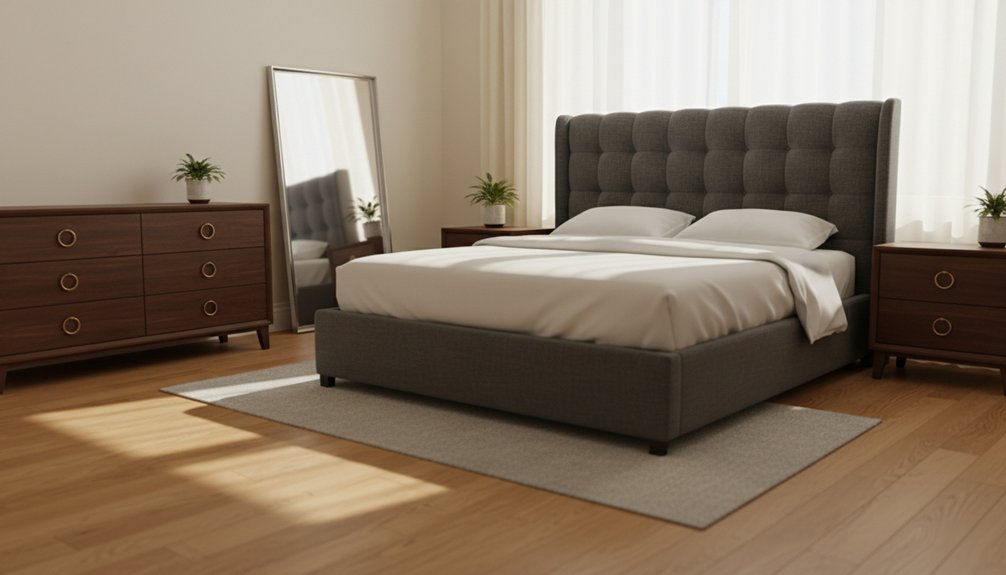
Your bedroom requires three essential pieces: a bed, nightstands, and storage solutions. The bed serves as the focal point. Select nightstands that stand 24-28 inches high for easy access to your nighttime essentials. Incorporate storage options like dressers or wardrobes to keep your space organized.
Maintain 24 inches of clearance around your furniture to ensure comfortable movement. Opt for durable hardwoods, low-maintenance metal, or cozy upholstery based on your personal style. Mixing materials can enhance the aesthetic, provided you keep color palettes and proportions consistent.
Understanding proper sizing is crucial. For example, ensure your bed fits well within the room’s dimensions to allow for movement and access. Strategically place nightstands within reach of the bed. This thoughtful arrangement creates a functional and personalized space tailored to your needs.
Must-Have Bedroom Furniture for Every Space
Every bedroom requires three fundamental pieces of furniture: a bed, a nightstand, and effective storage. These items ensure a functional and organized environment for sleep and personal belongings.
The bed acts as the central feature of the room, influencing its overall layout. You should select a bed that fits your space and meets your comfort needs. A nightstand offers easy access to daily essentials, such as your phone, lamp, and books, which enhances convenience during nighttime routines.
Choose a bed that fits your space and comfort needs, paired with a nightstand for easy access to nighttime essentials.
Storage solutions, like dressers, wardrobes, or armoires, keep clothing and personal items neatly organized. Accurate room dimensions are essential to ensure that your chosen furniture fits perfectly in the space.
In small spaces, consider multifunctional furniture that serves more than one purpose. For example, a storage bed with built-in drawers helps maximize space efficiency by combining sleeping and storage areas. You can also choose minimalist furniture with clean lines and neutral colors, which contributes to a tidy atmosphere while ensuring functionality and style.
When selecting bedroom furniture, focus on pieces that not only meet your practical needs but also create a cohesive look in your space.
Prioritize quality materials and construction to ensure longevity and durability.
Standard Bedroom Furniture Dimensions and Clearances
Getting the right furniture dimensions is essential for creating a functional bedroom. Standard bed frame sizes include twin (38″ x 75″), full (54″ x 75″), queen (60″ x 80″), and king (76″ x 80″). Knowing these dimensions helps you select a bed that fits well within your space.
Nightstands should typically stand between 24″ and 28″ high to align with the height of most mattresses. This height ensures easy access to items placed on the nightstand while you’re in bed.
When considering a dresser, leave at least 24″ of clearance in front for comfortable access. This space allows you to open drawers fully without feeling cramped.
By understanding these dimensions and clearances, you can avoid purchasing furniture that overcrowds your room or disrupts flow.
Pay attention to each piece’s size and placement to maintain a comfortable and functional environment.
Standard Bed Frame Sizes
Choosing the right bed frame size requires understanding the six standard dimensions available in North America. The options range from twin to California king, each designed for specific needs. Your choice affects room layout, sleeping comfort, and overall functionality.
Various bed frame types and materials, such as metal platforms and wooden sleigh frames, accommodate these sizes.
Standard bed frame dimensions:
- Twin: 38″ × 75″ – This size works well for children’s rooms and guest bedrooms.
- Full: 54″ × 75″ – This size is appropriate for single adults living in smaller spaces.
- Queen: 60″ × 80″ – This size is the most popular option for couples.
- King: 76″ × 80″ – This size offers maximum sleeping space for couples.
- California King: 72″ × 84″ – This size provides extra length for taller individuals.
When selecting a bed frame size, consider your room’s square footage and clearance requirements.
Ensure at least 24 inches of walking space around the bed to maintain comfort and accessibility.
Nightstand Height and Placement
Proper nightstand height and placement enhance bedroom functionality and comfort. Position your nightstand so that its surface aligns with your mattress top or sits slightly lower, ideally between 24 to 28 inches tall. This height allows you to easily reach for your phone, lamp, or water during the night without straining.
Place the nightstand 2 to 3 inches away from the bed frame. This distance ensures you can move freely while keeping a cohesive look in the room. Choose nightstands made from materials like wood, metal, or composite, as each affects durability and maintenance needs differently.
Consider various styles, from traditional to modern, to find a nightstand that fits your bedroom’s aesthetic. Ensure you have at least 36 inches of clearance around the nightstand. This clearance provides comfortable walking space and easy access to drawers.
Avoid overcrowding the area with furniture or decor that could impede movement. Proper nightstand height and placement contribute to a well-organized and functional bedroom.
Dresser Width and Clearance
A dresser needs sufficient space for effective use in your bedroom. You must consider both the dresser’s width and the necessary clearance around it to ensure easy movement and drawer operation. Dressers vary in width from 30 to 70 inches, so measuring your space accurately is essential.
To achieve optimal placement, follow these clearance guidelines:
- Maintain 36 inches minimum in front of the dresser. This space is crucial for accessing drawers and standing comfortably.
- Allow 3 feet between furniture pieces. This distance facilitates comfortable walking paths throughout the room.
- Leave 6 inches of clearance from walls on sides without drawers. This gap ensures proper air circulation around the dresser.
- Provide 48 inches of clearance when positioning the dresser opposite your bed. This measurement allows for easy navigation around the room.
You can adjust these measurements based on your specific room layout and traffic patterns. Aim to create a functional space that enhances both accessibility and comfort.
Bedroom Beds: Platform, Storage, and Upholstered Options
Choosing the right bed frame is crucial for both function and style in your bedroom. Platform beds provide a low-profile design that supports mattresses directly, eliminating the need for a box spring. These frames work well with foam and hybrid mattresses, ensuring compatibility across various options.
Storage solutions, such as lift-up hydraulic bases or frames with built-in drawers, are practical for maximizing space in smaller rooms. Upholstered bed frames feature cushioned headboards, available in multiple fabrics, which align with current trends that prioritize comfort and texture.
When selecting a bed frame, focus on standard and custom sizes to ensure a proper fit for your space. Assess how the bed frame interacts with your existing color scheme. Neutral tones offer flexibility in decor choices, while bold colors serve as striking focal points in the room.
Pay attention to your room’s dimensions, storage requirements, and personal style preferences. This will help you choose a bed frame that effectively combines functionality with visual interest. Additionally, consider how traditional furniture styles can influence your selection, adding timeless elegance to your bedroom.
Bedroom Nightstands With Smart Storage Solutions
Your nightstand should be more than just a surface for a lamp and alarm clock; it should enhance storage and accessibility for your nightly essentials. Modern nightstands incorporate smart drawer configurations that efficiently organize items like books and medications. These designs often include built-in charging stations, which effectively reduce cord clutter and keep devices charged within reach.
Additionally, hidden compartments secure valuables, ensuring they remain out of sight yet easily accessible. By integrating these features, a simple bedside table becomes a functional storage hub that supports your bedroom’s organization system effectively.
Investing in a nightstand with these practical solutions not only maximizes your bedroom’s space but also streamlines your nightly routine. For instance, a nightstand with at least two drawers allows you to separate items like chargers from personal items. Models with integrated USB ports enable you to charge devices without needing extra outlets.
Furthermore, a nightstand that includes a small locked drawer can protect sensitive items, like medication or personal documents, providing extra peace of mind. A well-crafted nightstand utilizing traditional joinery methods can enhance durability and longevity, ensuring it remains a reliable piece in your bedroom for years to come.
When selecting the right nightstand, consider your specific needs and space limitations. Ensure that the drawer sizes and compartments are suited to your items, whether you need space for books, electronics, or personal items.
Avoid designs that prioritize aesthetics over functionality, as these may not support your storage requirements effectively. By focusing on these practical features, you can choose a nightstand that enhances both the organization and usability of your bedroom.
Drawer Configurations and Layouts
When choosing a nightstand, focus on the internal drawer layout as much as the exterior design. The configuration of drawers influences how you’ll access and store your daily essentials. A thoughtful drawer layout improves functionality and maximizes storage capacity.
Consider these specific drawer layout options:
- Single deep drawer – This design allows you to store larger items like books or tablets within easy reach.
- Two shallow drawers – This layout helps separate small items, such as charging cables, medications, and reading glasses, making organization straightforward.
- One drawer with an open shelf – This configuration offers concealed storage for personal items while providing a display space for decorative objects.
- Multiple compartmented drawers – This design includes built-in dividers that keep jewelry, watches, and accessories neatly organized.
Select a drawer configuration that aligns with your storage needs to enhance the functionality of your bedroom space.
Built-In Charging Stations
Many modern nightstands feature built-in charging stations that reduce clutter by integrating charging solutions directly into the furniture. These charging stations commonly include USB ports, wireless charging pads, and standard electrical outlets, all positioned for easy access.
Designers place these components in locations such as drawer fronts, side panels, or the top surface of the nightstand for user convenience and to maintain a streamlined look.
Manufacturers vary in design integration, with some nightstands offering hidden compartments that keep devices out of sight during charging. Other models include dedicated cable management channels to neatly display cords.
When choosing a nightstand with charging capabilities, confirm that the power output meets your devices’ charging needs. Additionally, look for nightstands equipped with surge protection to enhance the safety of your electronics.
These features shift the nightstand’s role from basic storage to a fully functional bedside technology hub.
Hidden Compartment Features
Hidden compartments in nightstands serve as secure storage solutions for valuables. These compartments help keep your bedroom organized while ensuring easy access to important items like jewelry, documents, and electronics.
Manufacturers design modern hidden storage features to blend into furniture, making them nearly invisible to anyone casually observing.
Popular Hidden Compartment Options:
- False-bottom drawers: These drawers create additional concealed spaces beneath the visible areas, allowing users to store important items securely.
- Spring-loaded panels: These panels, located on the back or sides of nightstands, reveal hidden compartments through a simple push mechanism, providing quick access to stored items.
- Magnetic-release doors: These doors, disguised as decorative trim, allow for easy access to hidden compartments while maintaining a secure closure.
- Removable top surfaces: These surfaces lift to reveal shallow storage areas, which are ideal for medications or personal documents.
These features prioritize functionality and discretion, ensuring users can store valuables safely without compromising the design of their bedroom.
They enhance convenience by keeping essential items close at hand while maintaining a tidy appearance.
Bedroom Wardrobes, Dressers, and Closet Systems
Storage solutions are essential for maintaining an organized bedroom. Selecting the right combination of wardrobes, dressers, and closet systems significantly influences your daily activities.
Wardrobes serve as key storage units. They come in various forms, including freestanding armoires and built-in units. Freestanding armoires are perfect for smaller spaces, while built-in units maximize vertical space. You can choose single-door models for compact areas or triple-door designs for extensive clothing collections.
Modern wardrobe organization features adjustable shelves, multiple-height hanging rods, and pull-out drawers for accessories.
Dressers play a complementary role to wardrobes. They store folded clothing and provide additional surface space for personal items. Dresser styles include low, wide horizontal designs and tall chest-of-drawers formats.
Standard dressers typically measure between 30-50 inches in width and 30-40 inches in height, making them versatile for different bedroom layouts.
Closet systems offer customizable storage configurations. You can install modular components like wire shelving, laminate organizers, or premium wood systems. These closet systems adapt to specific storage needs and fit available space, providing a tailored solution for any bedroom setup.
Bedroom Desks, Vanities, and Seating Furniture
Bedrooms require furniture pieces that support both work and personal grooming. Focus on how desks, vanities, and seating work together to enhance your room’s functionality and style.
Key factors for selecting bedroom furniture include:
- Desk placement needs sufficient natural light and accessible electrical outlets. Organize your desk with storage solutions to boost your productivity.
- Vanity lighting must deliver even illumination without shadows, which is crucial for effective makeup application and grooming.
- Seating options consist of desk chairs, vanity stools, accent chairs, and benches. Choose styles that align with your bedroom’s overall aesthetic.
- Size proportions should fit your available floor space. Avoid overcrowding to maintain smooth traffic flow in the room.
Prioritize functionality and aesthetics when selecting furniture. Measure your space carefully before making purchases.
Ensure each piece serves its purpose while promoting a comfortable bedroom environment.
Bedroom Furniture Sets vs Individual Piece Styling
Once you have identified your required functional pieces for the bedroom, you must decide between purchasing a complete bedroom furniture set or selecting individual pieces. A complete bedroom furniture set provides several benefits. A set ensures cohesion through matching wood finishes, hardware, and design elements. You can save time by shopping for multiple items at once, and you may also save money through bundle pricing.
Complete sets are particularly effective for traditional bedroom themes, where a uniform look enhances elegance.
On the other hand, individual piece styling allows for greater creative flexibility. You can mix materials, such as wood and metal, and combine different styles or eras to reflect your personal taste. This approach works well for eclectic bedroom themes and enables you to invest in higher-quality statement pieces.
However, achieving a cohesive look with individual pieces requires careful attention to color palettes, proportions, and overall style. Assess your design confidence, budget, and timeline to make the best decision for your space.
Bedroom Furniture Layouts for Small and Large Rooms
Maximize bedroom functionality and visual appeal through strategic furniture placement. Start by measuring your room’s dimensions and observing traffic flow patterns. Arrange your furniture to create clear pathways while ensuring easy access to closets, windows, and doorways.
Room-Specific Layout Strategies:
- Small Bedrooms – Place your bed against the longest wall to save space. Use wall-mounted nightstands to eliminate floor clutter. Select multi-functional pieces, such as storage ottomans, to provide both seating and storage.
- Large Bedrooms – Float your furniture away from walls to create distinct areas, like a cozy reading nook. Add chairs or a small sofa to enhance usability and comfort.
- Square Rooms – Center the bed on a wall and use symmetrical nightstands on either side. This arrangement promotes balance and gives a more cohesive look.
- Rectangular Rooms – Position the bed along the shorter wall. This placement avoids a narrow corridor-like appearance and makes the room feel more spacious.
Bedroom Furniture Materials: Wood, Metal, and Upholstery
Selecting the right material for bedroom furniture affects durability, maintenance, and aesthetic appeal.
Wood is the most common choice due to its warmth and longevity. Hardwoods like oak and maple stand up to wear better than softwoods, while bamboo offers an eco-friendly option.
Metal furniture provides a sleek, modern look, with finishes such as brushed nickel and matte black. These pieces require low maintenance and fit well in contemporary settings.
Upholstered furniture, like headboards and accent chairs, adds comfort and style. When choosing upholstery, consider fabric durability and cleaning needs.
Each material has unique benefits, so align your choice with your lifestyle, budget, and design goals for optimal results.