

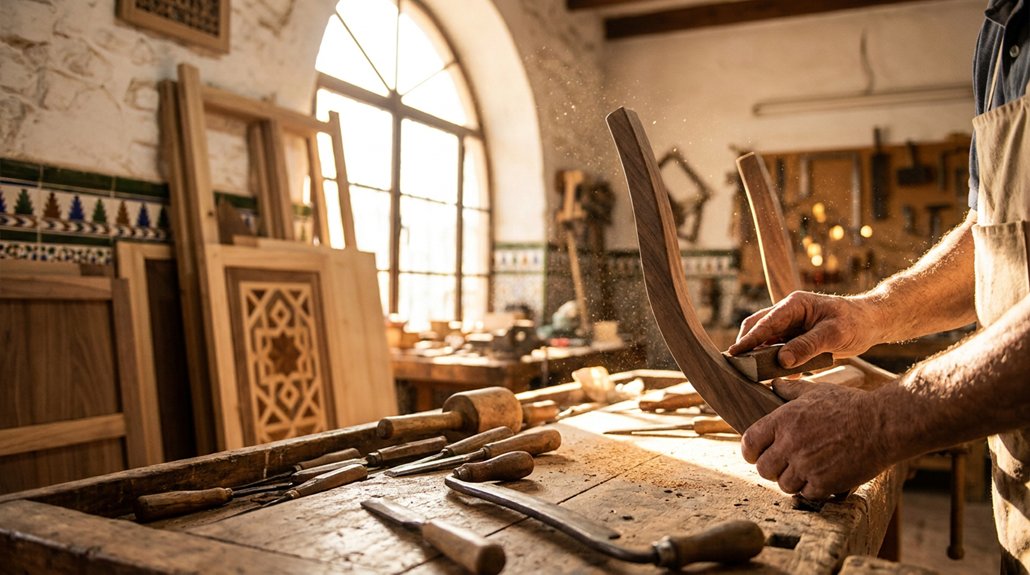
To select authentic artisan handmade furniture in España, examine the wood grain patterns for irregularities. Look for hand-cut joinery that shows minor inconsistencies and unique tool marks from chisels. Inspect hidden areas, like the interiors of drawers, for evidence of genuine hand-tool work. Authentic pieces use natural materials such as walnut, oak, or cedar, and display slight asymmetries that result from the artisan’s craftsmanship.
Expect to invest between €300 and €5,000 for these pieces. This price range reflects the skilled labor and traditional techniques involved in their production. Understand that lower-priced items may lack these authentic qualities, while higher-priced options often offer superior craftsmanship and materials. By focusing on these details, you can ensure that you are choosing genuine artisan handmade furniture in España.
What Makes Furniture Truly Artisan-Made in España?
When you consider artisan handmade furniture in España, you focus on craftsmanship that goes beyond basic construction. Authentic artisan furniture involves techniques passed down through generations.
Craftspeople use hand tools and natural materials, applying joinery methods that machine-made products can’t replicate. You see precise carvings and smooth finishes that highlight genuine skill.
Spanish furniture incorporates cultural influences from Moorish, Gothic, and Mediterranean design traditions, giving each piece a unique visual identity.
When evaluating a piece of artisan furniture, look for hand-finished edges, distinct wood grain patterns, and signed maker’s marks. These details confirm authenticity and craftsmanship.
True artisan furniture isn’t mass-produced. Craftspeople intentionally design each item, ensuring expertise is evident in every joint and surface.
This dedication to quality and tradition sets artisan furniture apart from mass-produced alternatives. Additionally, many artisan pieces reflect traditional styles that resonate with historical significance, adding depth to their craftsmanship.
Regional Styles That Signal Authentic Spanish Craftsmanship
When you examine authentic Spanish furniture, you can identify distinct regional styles that reveal origins and craftsmanship.
Andalusian Moorish wood carvings feature intricate geometric patterns and arabesques. These designs illustrate the strong Islamic artistic influence in southern Spain, dating back centuries.
Castilian rustic designs prioritize sturdy, dark-stained oak furniture with bold iron hardware. This choice reflects the rugged character of Spain’s central plateau.
Andalusian craftsmanship emphasizes precision in wood carving. Craftsmen spend significant time perfecting each geometric shape and arabesque, ensuring that each piece maintains traditional methods.
In contrast, Castilian artisans focus on functionality and durability. They select heavy oak timber and use robust iron fittings to create pieces that withstand daily use.
Both styles maintain a commitment to authenticity. Artisans in Andalusia and Castile adhere to regional techniques, preserving their cultural heritage.
However, contemporary demands can challenge these traditions. Some modern manufacturers may incorporate synthetic materials, which can dilute the authenticity of the designs.
In summary, authentic Spanish furniture reveals its origins through regional styles. Craftsmen in Andalusia and Castile maintain their unique techniques while facing pressures to adapt. Each piece serves as a testament to the rich cultural history of Spain, emphasizing the importance of traditional craftsmanship. Additionally, the use of solid wood materials ensures that each piece not only reflects artistry but also offers durability and longevity.
Andalusian Moorish Wood Carvings
Andalusian Moorish wood carvings represent over a thousand years of craftsmanship rooted in Islamic civilization in southern Spain.
Artisans create these intricate pieces using traditional techniques passed down through generations. They primarily work with walnut, cedar, and chestnut wood.
To recognize genuine craftsmanship, examine the hand-carved precision.
Authentic pieces feature complex geometric patterns, interlocking stars, honeycomb lattices, and floral motifs.
Granada and Córdoba serve as the leading centers for producing these designs today.
When purchasing furniture with Moorish carvings, engage directly with the craftsmen.
Ask them about their training lineage and the specific tools they use.
This ensures you understand the quality and heritage behind each piece.
Castilian Rustic Design Traditions
Castilian Rustic Furniture Characteristics
Castilian rustic furniture features bold designs that prioritize functionality over ornamentation. Craftsmen create pieces using thick oak and walnut, ensuring durability. This furniture often includes iron hardware, such as hand-forged hinges and nail-head trim, which enhance strength without adding unnecessary decoration.
When selecting authentic Castilian furniture, inspect for hand-hewn construction. Look for slight irregularities in the wood surface, which indicate craftsmanship. In contrast, machine-made furniture may appear too uniform and lacks character.
Construction Techniques
Craftsmen employ traditional methods to manufacture Castilian furniture. They use hand tools to shape and assemble each piece, maintaining a focus on durability. The result is furniture that stands the test of time.
Each item reflects the skills and techniques passed down through generations. This method contrasts sharply with modern, machine-driven production, which often compromises quality for speed.
Material Selection
Craftsmen prioritize specific materials for Castilian furniture. They primarily use thick oak and walnut due to their strength and longevity.
These woods resist wear and age gracefully over time, making them ideal for furniture intended to last generations. In contrast, softer woods may not support the same durability and require more frequent replacement.
Design Elements
Castilian furniture design emphasizes straight lines and sturdy frames. This minimalist approach avoids excessive decoration, focusing instead on practical functionality.
Each piece serves a specific purpose, ensuring that furniture meets everyday needs. The use of iron hardware further reinforces this emphasis on strength and practicality.
Limitations of Machine-Made Furniture
Machine-made furniture often lacks the unique characteristics of handcrafted pieces. Uniformity in production leads to a loss of individuality, making these items less appealing to those who value authenticity.
Additionally, machine-made furniture may not offer the same level of durability as hand-crafted alternatives. For consumers seeking lasting quality, investing in authentic Castilian furniture is crucial.
Conclusion
Castilian rustic furniture stands out for its durability, functionality, and craftsmanship. By focusing on specific materials and construction techniques, craftsmen create pieces designed to last.
When shopping for furniture, prioritize authentic Castilian designs that reflect these core principles. This approach ensures that you choose pieces that not only look good but also serve practical purposes for years to come.
Physical Signs You’re Looking at a Genuinely Handmade Piece
When you inspect authentic Spanish handmade furniture, you’ll see distinct tool marks from chisels, hand planes, and carving tools. These marks indicate that a skilled artisan shaped the wood manually instead of using machines.
You’ll also notice irregular wood grain patterns that vary across the surface. Handcrafted pieces utilize natural wood cuts, which machines typically overlook or can’t replicate.
These characteristics distinguish genuine handmade furniture from mass-produced items. The presence of tool marks showcases the craftsmanship and attention to detail involved in each piece. The unique grain patterns highlight the use of high-quality, natural materials, ensuring that each item is one-of-a-kind.
Moreover, look for slight asymmetries in the design. A handmade chair may have a leg that’s marginally shorter or a tabletop that isn’t perfectly flat. These variations reflect the artisan’s hand and their commitment to creating a functional piece rather than a perfect product. Additionally, maintaining at least 30 inches of clearance around furniture pieces is essential for both functionality and comfort.
Unique Tool Marks Present
One reliable method to identify handmade Spanish furniture is by examining the unique tool marks left during its creation. These tool marks demonstrate the distinctiveness of each artisan’s work. Every artisan uses hand tools, which leave specific impressions on wood surfaces.
You’ll observe slight variations in chisel cuts, plane strokes, and carving lines throughout the piece. Each handmade item features unique characteristics that confirm its authenticity.
In contrast, machine-made furniture displays uniform patterns with no variation. When you touch joints or carved sections, you’ll feel subtle irregularities that machines can’t replicate.
You should inspect areas like drawer interiors, chair legs, and table undersides. These hidden sections often provide the clearest evidence of genuine hand-tool work by skilled Spanish artisans.
Understanding these characteristics helps you differentiate between authentic handmade furniture and mass-produced alternatives. This knowledge ensures you appreciate the craftsmanship behind each piece.
Irregular Natural Wood Grain
Irregular Natural Wood Grain Indicates Handmade Spanish Furniture
Irregular natural wood grain shows that a piece of Spanish furniture is genuinely handmade. Craftsmen select wood for its unique beauty and sustainable sourcing, resulting in each item being one-of-a-kind. You will see grain patterns that shift direction, vary in density, and display organic imperfections.
Wood Grain Features and Their Indications
| Wood Grain Feature | What It Indicates |
|---|---|
| Shifting patterns | Craftsmen select timber by hand. |
| Density variations | Wood reflects natural tree growth. |
| Organic knots | Artisans use minimal processing techniques. |
| Color differences | Wood comes from sustainable sourcing practices. |
| Irregular lines | Authentic craftsmanship is evident. |
These wood grain characteristics confirm that artisans avoid using engineered or composite materials. Factory furniture typically exhibits uniform, printed grain patterns. When you examine a handmade piece, run your hand across the surface. You will feel subtle rises and dips that showcase the natural beauty of genuine wood.
Key Points
Hand-selected timber features shifting patterns across the grain. Craftsmen value natural variations that reflect the tree’s growth. Each unique knot or color difference emphasizes the commitment to sustainable sourcing. Authentic lines reveal the skill and care of the artisan.
In contrast, factory-made furniture lacks these irregularities, leading to a uniform appearance. Genuine wood, with its texture and depth, provides a tactile experience that artificial materials cannot replicate.
Understanding these characteristics helps you appreciate the craftsmanship behind handmade Spanish furniture. Each piece tells a story through its distinct wood grain, making it a worthwhile investment for those who value authenticity.
How to Spot Mass-Produced Furniture Disguised as Handmade
How to Identify Mass-Produced Furniture Disguised as Handmade
Identifying mass-produced furniture disguised as handmade can save you money and ensure you receive authentic craftsmanship. Follow these steps to differentiate between factory-made and artisan pieces.
Examine Uniformity in Design
Check the design of each furniture piece. If you notice that every curve, joint, and detail appears identical across multiple items, this indicates mass production.
Genuine handmade furniture shows slight variations due to the artisan’s touch.
Inspect Joints and Assembly
Evaluate the joints used in the furniture. Hand-cut dovetail joints will display minor inconsistencies, while machine-made joints will appear perfectly uniform.
This difference in assembly can reveal the production method.
Look at Hidden Areas
Inspect the underside and back of the furniture. Artisans often finish these hidden areas with care, showing signs of craftsmanship.
Look for tool marks, slight asymmetries, and hand-applied stains that indicate human effort.
Request Documentation
Ask sellers for documentation or photographs of the making process. Genuine handmade furniture often comes with proof of the artisan’s work, highlighting individual craftsmanship.
This documentation can help verify authenticity.
Recognize Authentic Traces
Understand that authentic Spanish artisan furniture reflects individual effort.
This effort leaves visible traces, such as unique finishing details and slight imperfections, which mass-produced furniture lacks.
Consider Limitations
Be aware that some mass-produced items may mimic handmade features to appear authentic.
Always verify claims with evidence. If you can’t find documentation or visible signs of craftsmanship, consider the piece likely mass-produced.
Where to Find Legitimate Artisan Furniture Makers in España
Finding Legitimate Artisan Furniture Makers in España
To find legitimate artisan furniture makers in España, start by visiting artisan markets in major cities. Barcelona, Madrid, and Seville host markets where local craftspeople sell handmade furniture directly to customers. These markets offer a chance to see and touch the furniture, ensuring you’re purchasing authentic pieces.
Next, explore workshops in smaller towns. Many traditional woodworking techniques are still practiced in these areas. By visiting these workshops, you can witness the craftsmanship firsthand and often meet the artisans who create the furniture.
Many artisans maintain websites and social media profiles. These platforms make it easier to locate artisans, view their work, and communicate directly. Follow them for updates on new pieces, events, or exhibitions.
Spain’s regional craft associations, like the Fundación Española para la Artesanía, provide directories of certified makers. These associations ensure that the artisans listed adhere to high standards of craftsmanship. Use these directories to find reputable makers in your region.
Attend trade fairs such as Maderalia in Valencia. These events feature verified furniture craftspeople from across the country. You can network with artisans, learn about their techniques, and explore a wide range of furniture styles.
What to Ask a Spanish Craftsman Before You Buy
Key Questions to Ask a Spanish Craftsman Before You Buy Handmade Furniture
To determine if a piece of handmade furniture is worth your investment, ask specific questions about craftsmanship, materials, and the building process. Engaging directly with the craftsman provides valuable insights.
Inquire About Materials
Ask, “What type of wood did you use, and where did it come from?” This question reveals the sourcing practices and quality standards of the materials.
Understanding the wood type helps assess durability and aesthetic appeal.
Understand the Crafting Time
Ask, “How long did this piece take you to build?” The duration of the crafting process indicates the level of care and precision involved.
If the craftsman mentions a rushed timeline, it may signal shortcuts that compromise quality.
Examine Joinery Techniques
Ask, “Can you show me the joinery techniques you used?” Observing techniques like traditional Spanish dovetail or mortise-and-tenon joints demonstrates genuine craftsmanship.
These methods reflect skill and the commitment to strong, lasting construction.
Evaluate the Craftsman’s Confidence
A knowledgeable craftsman will confidently answer your questions.
If the craftsman hesitates or struggles to explain their methods, consider this a red flag.
Trust your instincts—if the answers feel vague or incomplete, you may want to reconsider your purchase.
What Authentic Artisan Furniture in España Should Actually Cost?
Understanding Authentic Artisan Furniture Costs in España
Authentic artisan furniture in España typically costs between €300 and €5,000, depending on the piece and craftsmanship. Handcrafted wooden chairs range from €300 to €800. Custom dining tables can cost between €1,500 and €5,000 or more.
Pricing reflects hours of skilled labor, premium materials, and traditional techniques.
Evaluate Quality to Justify Costs
To justify your investment, assess the craftsmanship of the furniture. Examine the joinery for strength, check the finish for consistency, and evaluate the material density.
High-quality artisan furniture shows attention to detail. If the price is significantly lower than the typical range, it likely indicates that the piece isn’t handmade.
Recognize the Value of Skilled Labor
Reputable craftsmen charge fair prices because their work demands time and expertise. Skilled artisans spend years perfecting their craft, which affects pricing.
Understanding this relationship helps you appreciate the value of authentic pieces.
Consider Regional Pricing Variations
Regional differences impact pricing for artisan furniture. Furniture from established craft hubs like Castilla y León or Valencia may come at a premium.
These regions have a reputation for superior craftsmanship, which can justify higher prices.
Beware of Imitations
Be cautious of cheap imitations that may look similar to authentic pieces. Low prices often indicate mass production rather than handcrafted quality.
If a piece seems suspiciously affordable, it’s worth investigating further to avoid overpaying for inferior products.