

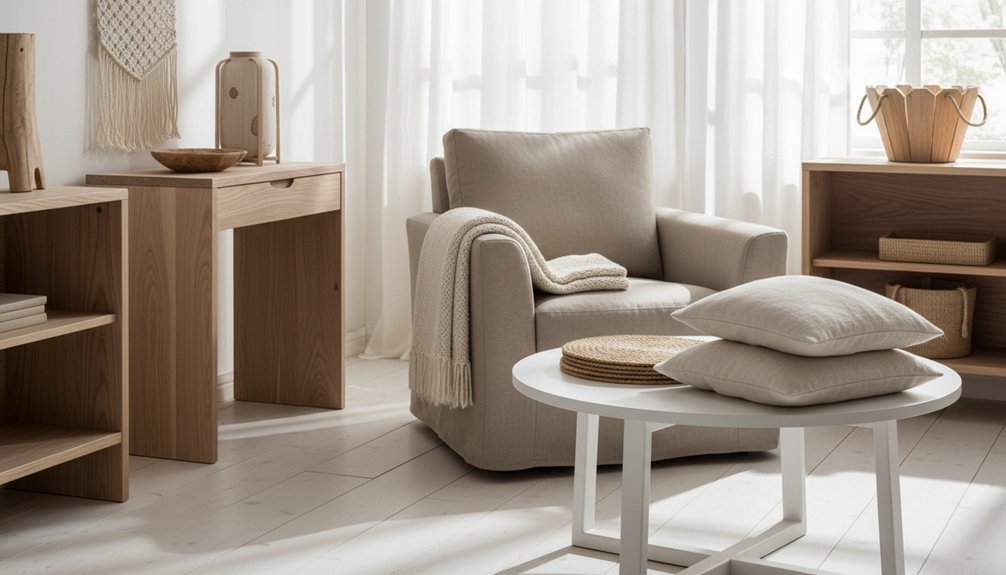
Scandinavian furniture utilizes light woods such as birch, beech, oak, and ash. These woods highlight natural grain patterns by applying clear finishes instead of heavy stains. Each piece often incorporates natural fabrics: wool provides insulation, linen offers sustainability, and leather ages beautifully over time.
These materials align with Nordic values of simplicity and environmental responsibility. Manufacturers source woods from rapidly regenerating forests, ensuring a sustainable supply. When purchasing, check for FSC certification labels, which indicate responsible forestry practices. Additionally, inspect joints for quality construction, as strong joints contribute to the longevity of the furniture.
Quality construction guarantees that furniture maintains its minimalist aesthetic for years. You will notice that each piece is designed to age gracefully while remaining functional and stylish. Focus on materials and craftsmanship when selecting your furniture to make informed choices that reflect your values.
Which Light Woods Define Scandinavian Furniture?
Three light woods—birch, beech, and pine—constitute the core materials of Scandinavian furniture design. These woods contribute to the bright and airy aesthetic prevalent in Nordic homes, making them essential in this style.
Birch serves multiple functions in furniture manufacturing, as it’s suitable for crafting chairs, tables, and cabinets. The wood features a light color and subtle grain patterns that enhance its visual appeal.
Birch’s versatility shines in Scandinavian design, offering light tones and delicate grain patterns perfect for multiple furniture applications.
Beech is known for its strength and flexibility, allowing manufacturers to create curved furniture pieces without compromising durability.
Pine offers a cost-effective alternative while preserving the desired light appearance, making it popular among budget-conscious consumers.
Sustainability is a critical aspect of these woods. Scandinavian forests regenerate rapidly, and responsible harvesting practices are standard. Additionally, choosing solid wood furniture made from these materials reflects a commitment to environmentally friendly practices.
By choosing furniture made from birch, beech, and pine, consumers support environmentally friendly manufacturing processes. The natural hues of these woods also reduce the need for heavy staining or painting, further promoting sustainable practices in furniture design.
In conclusion, birch, beech, and pine are integral to Scandinavian furniture due to their aesthetic qualities, versatility, and sustainable sourcing.
These woods not only define the style but also align with growing consumer demand for environmentally conscious choices.
Why Scandinavian Furniture Uses Oak, Ash, Beech, and Pine
Scandinavian furniture relies heavily on specific hardwoods like oak, ash, beech, and pine for their unique properties and sustainability. Oak provides exceptional durability and attractive grain patterns, making it a preferred choice for long-lasting furniture pieces. Ash offers flexibility and strength, which is particularly useful in creating robust chair frames and curved designs. Beech has a uniform texture that allows for excellent workability, ensuring smooth finishes on various furniture types. Pine remains a cost-effective option, aligning with the light aesthetic that defines Scandinavian design.
Scandinavian countries prioritize wood sustainability, managing their forests responsibly to ensure natural regeneration of these species. Choosing furniture made from locally-sourced woods supports environmental stewardship, as it minimizes transportation emissions while preserving regional forest ecosystems.
This commitment to sustainable sourcing means that consumers can feel good about their choices, knowing they contribute to responsible forestry practices.
The Natural Fabrics That Complete Nordic Interiors: Wool, Linen, Leather
Natural fabrics such as wool, linen, and leather play vital roles in enhancing Nordic interiors. Wool provides excellent insulation, which keeps living spaces warm during cold winters and breathable in summer. Wool’s natural stain and fire resistance make it an ideal choice for upholstery and throws, ensuring both durability and safety.
Linen contributes texture and visual appeal to cushions and curtains. Linen production relies on flax plants, which need minimal water and pesticides, making linen a sustainable option. Each wash softens linen while maintaining its durability, allowing it to last for years.
Leather enhances the sophistication of chairs and sofas. Over time, leather develops a rich patina, adding character to furniture.
Wool, linen, and leather are renewable and biodegradable materials. They age gracefully, aligning with Scandinavian design’s focus on environmental responsibility and longevity in home furnishings.
These natural fabrics collectively create warm, inviting, and sustainable interiors, making them essential components of Nordic design.
Why Scandinavian Furniture Showcases Natural Wood Grain Over Stains
Scandinavian furniture designers choose natural wood grain to showcase the beauty of materials like oak, ash, and birch. This choice reflects a design philosophy that prioritizes authenticity and simplicity.
Natural wood grain in Scandinavian design celebrates authentic materials, allowing oak, ash, and birch to reveal their inherent beauty through simplicity.
Scandinavian furniture typically avoids dark stains and heavy finishes. Instead, these designers apply light oils or clear lacquers that protect the wood while highlighting its natural patterns. This approach adds warmth to spaces without creating visual clutter.
Exposed wood grain offers practical advantages. When wood surfaces remain uncoated, buyers can assess craftsmanship quality directly. Each piece of furniture displays unique grain patterns, knots, and color variations, revealing its story.
This honest depiction of materials fosters a connection to nature and promotes furniture that ages beautifully over time.
How to Verify Wood Quality and Craftsmanship Before You Buy
Understanding wood quality is crucial when buying Scandinavian furniture. Start by examining joints. Look for dovetail and mortise-and-tenon joints; these indicate strong craftsmanship.
Check for wood certification labels such as FSC or PEFC. These labels confirm that the wood is sourced sustainably and meets quality standards.
Feel the surfaces of the furniture. Smooth, even finishes without rough patches indicate good quality. Inspect corners and edges for alignment. Misaligned edges or gaps signal poor construction.
Inquire about the wood species and its origin. Solid wood pieces should have a substantial feel when gently shaken, indicating sturdiness.
Test drawer mechanisms for smooth operation. Drawers should fit snugly and glide easily. Quality Scandinavian furniture often uses minimal hardware; strong joinery techniques replace excessive metal fittings.
Following these verification steps ensures you invest in durable, well-crafted furniture. Additionally, consider the importance of ergonomic design in enhancing comfort and usability, especially for multi-functional pieces.