

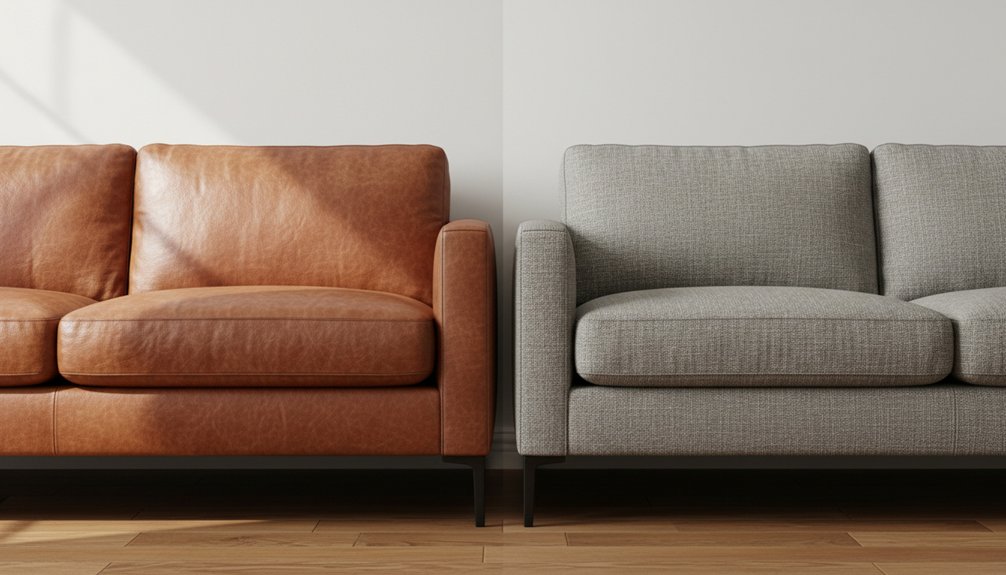
When choosing between leather and fabric upholstery, you must evaluate important factors. Leather typically lasts 15 to 25 years and resists stains effectively, making it a suitable option for pet owners and formal settings. However, leather upholstery usually costs 30 to 50% more upfront compared to fabric options. On the other hand, fabric upholstery presents a wider variety of colors and patterns at a lower price point, but it generally has a lifespan of only 7 to 15 years and requires more frequent cleaning.
Consider your climate when making your decision. In hot weather, leather can feel sticky against the skin, while fabric upholstery tends to absorb moisture in humid conditions.
Next, evaluate how each material performs in specific environments. For busy family rooms where spills and stains are common, leather provides a durable surface that is easier to clean. In contrast, fabric upholstery may require more upkeep but can offer a cozier feel in casual living spaces.
For high-traffic areas, leather’s durability stands out, while fabric may be better suited for less-used rooms where aesthetics and comfort are the priority. Additionally, if you have pets, leather’s resistance to damage makes it a practical choice. Conversely, fabric may offer more comfort for lounging but could attract pet hair and require regular vacuuming.
Ultimately, assessing your lifestyle and the specific demands of each room will lead you to the right upholstery choice.
Which Lasts Longer: Leather vs Fabric Durability?
When you invest in upholstered furniture, you need to consider durability, which significantly affects your long-term costs and satisfaction.
Leather typically lasts longer than fabric, with quality leather providing 15-25 years of service when properly maintained. In contrast, most fabrics last between 7-15 years. However, the longevity of your upholstered furniture depends on multiple factors beyond just the material type.
Quality leather furniture can serve you well for up to 25 years, while fabric options typically last 7-15 years with proper care.
The grade of leather is crucial. Full-grain leather is much more durable than bonded leather. For fabrics, opt for tight weaves or synthetic blends, as they resist wear better than loose weaves.
Your household activities also influence durability. Leather resists stains and damage from pets better than fabric, but it can scratch and fade in sunlight. On the other hand, fabric can handle daily use well but tends to absorb spills quickly.
Ultimately, your maintenance habits will determine how long your furniture lasts. Regular cleaning and protective treatments can extend the life of both leather and fabric.
Best Uses for Leather vs Fabric by Room and Lifestyle
Choosing between leather and fabric depends on how you use each room in your home. Leather fits well in formal settings, such as dining rooms and professional living rooms, where an elegant look is essential. Leather also serves as a practical choice for pet owners because you can easily wipe off fur and clean minor messes.
In contrast, fabric is better suited for bedrooms and children’s areas due to its soft texture and warm feel, which promote comfort during longer periods of use. Casual spaces, like family rooms, benefit from the variety of patterns and colors available in fabric, creating a relaxed atmosphere.
Avoid using leather outdoors; exposure to the elements can lead to cracking. For high-traffic living rooms, especially those with children, performance fabrics are a smart option as they resist stains while still providing comfort.
Ultimately, your lifestyle dictates whether leather or fabric is the best fit for each space in your home.
Leather vs Fabric Maintenance: Cleaning and Care Compared
When comparing leather and fabric furniture, understanding their specific maintenance needs helps you choose the best option for your home.
Leather requires regular wiping with a damp cloth to remove dust and spills, while fabric needs vacuuming to keep dirt and debris at bay. Each material has its own set of stain removal methods; for instance, using a leather cleaner on leather can preserve its finish, but the same cleaner can damage fabric.
On the other hand, treating a fabric stain with water may not be suitable for leather, as it can cause water spots.
Leather furniture should be conditioned every six months to maintain its suppleness, while fabric may need deep cleaning every year, depending on usage.
For leather, avoid placing it in direct sunlight, which can cause fading and cracking. For fabric, ensure that the cleaning products are suitable for the specific type of fabric to prevent discoloration or damage.
Overall, knowing these maintenance practices helps you keep your furniture looking fresh and extend its lifespan.
Understanding the relationship between cleaning routines and material types ensures you avoid mistakes that can lead to costly repairs or replacements.
Daily Cleaning Requirements
Leather furniture requires minimal daily maintenance, while fabric furniture demands much more attention. For leather upholstery, you’ll spend just a few minutes each day wiping surfaces with a dry cloth to remove dust and debris. This quick task helps prevent dirt from settling into the leather’s pores and keeps the material looking good.
In contrast, fabric furniture requires vacuuming at least twice a week. You need to vacuum cushions and crevices to extract dust, crumbs, and pet hair embedded in the fabric fibers. If you have children or pets, you may need to vacuum even more frequently to keep the fabric clean.
When spills occur on fabric, immediate action is necessary to prevent stains. You must blot the area with a clean cloth and use appropriate cleaning solutions to minimize damage.
Leather upholstery allows for a bit more time to respond to spills before they set, giving you a window of opportunity to clean up accidents effectively.
Stain Removal Techniques
Stain removal techniques for leather and fabric furniture differ significantly. Leather requires gentler cleaning methods, while fabric upholstery can handle more aggressive treatments. Using the right products and techniques for each material is crucial to avoid damage and ensure effective cleaning.
Stain Types and Their Treatments
Water-based spills:
For leather, immediately blot the spill with a clean cloth and then apply a specialized leather cleaner.
For fabric, blot the stain and use a water-based cleaner designed for upholstery.
Oil-based stains:
On leather, use a specialized leather degreaser to effectively break down the stain without harming the material.
For fabric, apply a solvent-based spot remover that’s compatible with the fabric type.
Ink marks:
For leather, apply isopropyl alcohol to a cotton swab and gently dab at the ink mark.
For fabric, use hairspray or rubbing alcohol to treat the stain.
Important Considerations
Always test any cleaning product on a hidden area of the furniture first. This step helps ensure the product doesn’t cause discoloration or damage.
After cleaning leather, conditioning is essential to prevent the material from drying out.
For fabric, thorough rinsing is necessary to remove any residual cleaning agents.
Understanding these distinct approaches allows you to maintain the appearance of your furniture and prolong its lifespan.
Each material demands specific care, and applying the right techniques will yield the best results.
How Leather and Fabric Feel in Different Climates
The temperature and humidity in your area significantly influence the comfort level of leather and fabric furniture. In hot climates, leather can feel sticky and uncomfortably warm, while fabric may absorb moisture and become damp.
Conversely, in cold climates, leather can feel chilly and rigid, while fabric can offer a cozier, warmer feel.
When choosing between leather and fabric, consider how each material reacts to seasonal changes. Leather tends to be less breathable than fabric, which can lead to discomfort in high heat. On the other hand, fabric can retain heat, making it a better option for cooler environments.
If you live in an area with high humidity, fabric may trap moisture, leading to mildew growth. Leather, however, is more resistant to moisture but can crack and dry out if not properly conditioned.
Hot Weather Performance Comparison
When temperatures exceed normal levels, the upholstery material of your furniture significantly impacts your comfort.
Fabric upholstery provides superior air circulation. The woven fibers in fabric allow heat to escape and prevent it from trapping against your skin, which keeps you cooler during long periods of sitting. Fabrics also manage humidity effectively by wicking moisture away from your body, which is essential in hot weather conditions.
In contrast, leather upholstery creates challenges in warm environments. Leather lacks breathability, which causes your skin to adhere to its surface when you sweat. After exposure to direct sunlight, leather becomes uncomfortably hot to the touch.
While leather offers a luxurious feel in moderate climates, it can lead to excessive sweating and discomfort during summer months. For individuals living in consistently hot regions, fabric upholstery typically delivers better performance and comfort than leather.
Cold Climate Comfort Factors
During cold weather months, leather upholstery provides several benefits that fabric options lack. Leather naturally insulates and retains body heat, resulting in a comfortable seating experience. Although leather may feel cool initially, it warms up quickly and maintains a pleasant temperature.
When choosing upholstery for cold climates, consider these important factors:
- Leather resists moisture absorption, which helps to keep your seating dry despite winter humidity.
- Fabric upholstery can trap cold air within its fibers, making it feel cold for a longer time.
- Leather’s surface temperature adjusts more rapidly to room heating, ensuring warmth.
- Fabric can absorb moisture from wet winter clothing and snow, leading to dampness.
- Leather can be easily wiped clean after exposure to winter elements, maintaining its appearance.
Leather upholstery is particularly advantageous in rooms with fluctuating temperatures. Fabric upholstery typically requires more time to warm up and retains cold air within its woven threads, making leather a superior choice for comfort in cold conditions.
Leather vs Fabric Cost: Upfront Price and Long-Term Value
When choosing between leather and fabric upholstery for furniture, budget plays a critical role. Fabric upholstery usually costs 30-50% less than leather. For example, you can find quality fabric sofas starting around $800, while comparable leather sofas begin at $1,500 or more. This price difference makes fabric an attractive option for those focused on upfront costs.
However, leather serves as a better long-term investment. Leather resists stains, doesn’t absorb odors, and can maintain its appearance for 15-25 years, provided you care for it properly.
Leather’s durability and low-maintenance qualities make it a smart investment that pays dividends over decades of use.
In contrast, fabric upholstery often requires professional cleaning, shows wear patterns more quickly, and generally lasts 7-15 years.
When you assess the total cost of ownership over the years, including replacement frequency and maintenance expenses, leather’s higher initial price often balances out.
Consider your lifestyle, budget constraints, and how long you expect your furniture to last when making your choice.
Where Fabric Wins: Color, Pattern, and Texture Variety
Fabric upholstery provides unparalleled design flexibility compared to leather. When considering fabric options, you encounter a vast range of colors and patterns that allow for seamless integration with any room’s decor.
- Fabrics offer diverse patterns: You can select from florals, geometrics, stripes, or even custom prints tailored to your style.
- Fabrics provide varied textures: You have choices like velvet, linen, chenille, or corduroy, each contributing to the overall feel of your furniture.
- Fabrics enable seasonal updates: You can easily change slipcovers to refresh your space without a significant financial investment.
- Fabrics allow for bold color choices: You can express your personality through vibrant shades that are often unavailable in leather options.
- Fabrics support mixing and matching: You can combine different fabric types on accent pillows, creating a cohesive yet varied look.
This adaptability means you can transform your furniture’s appearance multiple times throughout its life. Additionally, clear pathways are essential in furniture arrangement to ensure comfort and accessibility in your living space.
Fabric upholstery is ideal for those who enjoy regularly updating their interior design or desire furniture that evolves with their tastes.
Matching Upholstery Material to Your Home’s Style
Your home’s style dictates your choice of upholstery material, ensuring a cohesive look throughout your space. Leather works well in modern and minimalist designs due to its clean lines and smooth texture. Fabric, on the other hand, enhances traditional settings through its variety of patterns and textures. Assess how both materials fit your overall design vision. Additionally, consider how solid wood furniture complements your upholstery choice, as it adds an element of durability and warmth to your space.
| Style | Best Material | Reason for Compatibility |
|---|---|---|
| Modern/Minimalist | Leather | Clean lines and smooth surfaces enhance contemporary aesthetics. |
| Traditional/Classic | Fabric | Patterns and textures provide warmth and classic appeal. |
| Transitional | Either | Neutral colors in both materials connect design elements seamlessly. |
Choose upholstery that corresponds with architectural features, existing furniture, and color schemes. Leather fits well in industrial, contemporary, and masculine environments, while fabric is ideal for cozy, eclectic, and family-friendly spaces. Matching your upholstery with surrounding elements fosters visual harmony in your interior design.