

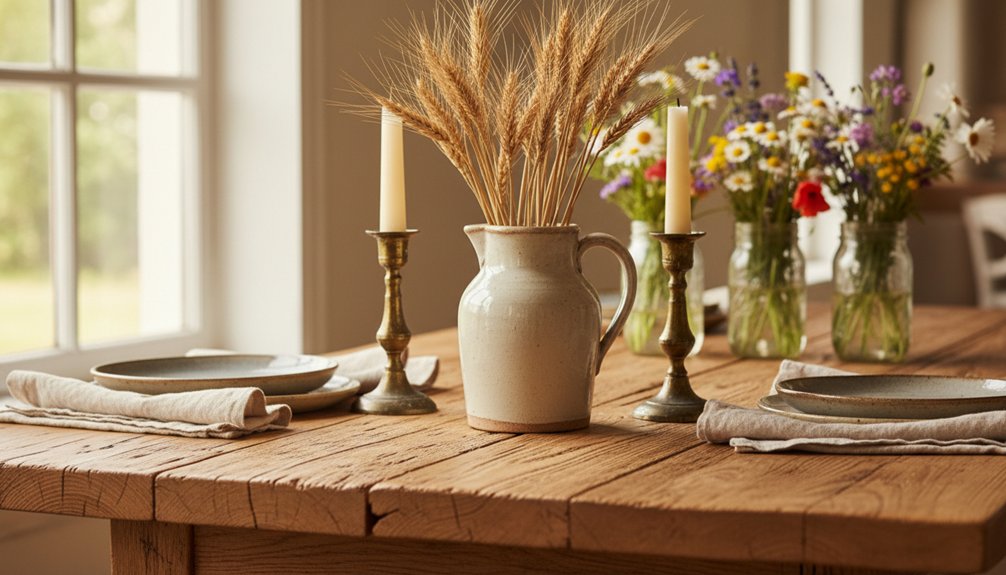
To enhance your rustic oak dining table, layer natural textures and warm elements that complement the wood’s golden tones. Use linen or burlap runners as a base. Add centerpieces with seasonal items such as wheat bundles, pinecones, or fruit displays in wooden bowls to create a focal point. Install warm-toned pendant lighting with dimmers to accentuate the oak’s grain and warmth. Combine modern plates with vintage silverware to create visual contrast and interest. Choose Windsor or upholstered chairs that match the wood’s finish to maintain a cohesive look. Refresh textiles seasonally to sustain a cozy atmosphere that encourages conversation and builds lasting memories around your table.
Natural Centerpiece Arrangements That Complement Oak’s Warm Tones
When you design a rustic oak dining table, you should focus on natural centerpieces that enhance the wood’s warm tones.
Start with floral arrangements that feature blooms in earthy shades like burnt orange, deep red, and golden yellow. These colors closely match the oak’s natural hues and add visual appeal. Select ceramic or terracotta containers that fit the rustic theme to hold these arrangements.
Next, consider fruit displays as another effective centerpiece option. Arrange apples, pears, and pomegranates in wooden bowls or woven baskets. This choice maintains an organic feel while providing a functional aspect to your table.
Additionally, you can create texture-rich arrangements by combining dried wheat stalks, pinecones, and seasonal branches.
Focus on varying the heights and materials to add depth while keeping the design straightforward. This approach ensures that your centerpiece complements the oak dining table without overwhelming it.
Textile Choices to Enhance Your Rustic Oak Table’s Character
Textiles play a crucial role in showcasing the natural beauty of your rustic oak table. When you select fabrics, you enhance the character of the wood and create a welcoming dining space. Layering different textiles adds depth and warmth, making the table more inviting.
To achieve this, focus on fabric patterns that complement the oak grain rather than distract from it. Here’s a breakdown of useful textile types, materials, and their impacts:
| Textile Type | Best Materials | Purpose |
|---|---|---|
| Table Runners | Linen, burlap, cotton | Guide the eye and create visual pathways |
| Placemats | Woven jute, canvas | Protect the table while adding texture |
| Napkins | Cotton, linen blends | Soften the overall table setting |
| Tablecloths | Natural linen, muslin | Establish a neutral foundation |
| Chair Cushions | Canvas, cotton duck | Provide comfort and introduce color |
Choosing earth tones like cream, sage, or terracotta enhances the warmth of the oak. Mixing textures by pairing smooth linens with coarser weaves creates visual interest without overwhelming the table’s natural beauty.
Lighting Solutions That Highlight the Wood Grain Beauty
Proper lighting enhances the beauty of your rustic oak dining table, turning it into a captivating centerpiece. Position pendant fixtures directly above the table to cast shadows that showcase the wood’s natural grain. Select warm-toned bulbs to bring out the golden and amber tones inherent in oak. Use adjustable pendant lights to control brightness and direction, allowing you to adapt the atmosphere throughout the day.
Combine overhead lights with ambient sources like wall sconces or floor lamps to minimize harsh shadows and add depth to the space. Install dimmers to adjust lighting levels for various occasions, whether hosting lively family dinners or cozy gatherings.
Strategically placing light sources emphasizes the table’s unique texture, knots, and character marks.
Mixing Modern and Vintage Tableware on Oak Surfaces
To create a visually appealing dining setup on your rustic oak table, pair modern plates with vintage silverware or antique serving dishes. This combination creates a unique dining experience.
Start by choosing a neutral color palette that complements both modern and vintage styles. For instance, select a soft white or muted gray that provides a cohesive look. Alternatively, pick one accent color that appears in both your contemporary plates and vintage pieces to create a unified theme.
Next, focus on texture. The natural grain of your oak table adds warmth and character, making it an ideal backdrop for your tableware. Mix smooth ceramic bowls with ornate vintage glassware. The contrast in textures enhances visual interest and invites conversation.
Finally, arrange your tableware thoughtfully, ensuring that each piece has enough space to stand out while still contributing to the overall aesthetic. This method creates a stylish yet functional dining area that reflects both modern sensibilities and vintage charm.
Balancing Contemporary and Antique Pieces
When you place contemporary tableware alongside vintage pieces on a rustic oak dining table, you enhance the visual appeal of both styles. The oak’s warm grain provides a neutral backdrop that supports the integration of antique and modern elements.
This method allows each piece to shine while keeping a cohesive look across your table setting.
Three Essential Guidelines for Mixing Styles:
- Choose a color palette of three complementary tones that align with the oak’s natural warmth.
- Balance proportions by combining one standout antique piece with several sleek modern items to create visual equilibrium.
- Use consistent materials like brass, ceramic, or glass throughout both styles to unify the table setting.
By following these guidelines, you prevent the table from looking cluttered while demonstrating your design skills.
The juxtaposition of old and new adds depth that matched sets often lack. This approach not only showcases individual items but also highlights the overall design strategy.
Color Coordination Across Eras
Modern and vintage tableware pieces come from different time periods, but you can create a cohesive look by focusing on color. Start by identifying a primary color that both your contemporary dishes and antique pieces share. For example, neutral tones like cream, sage, or dusty blue blend well on rustic oak surfaces.
These colors create a visual connection between the different eras and enhance the warm undertones of the wood.
When selecting modern pieces, consider the historical context of your vintage items. For instance, Victorian-era floral patterns complement minimalist white plates effectively. Similarly, mid-century pastel dishes work well alongside contemporary geometric designs.
To further unify your tableware, add metallic accents, such as gold or copper. These metallic elements can bridge the gap between old and new, making your table setting feel cohesive and thoughtfully curated.
Texture Contrast on Oak
Oak’s natural grain provides a visually rich backdrop, so combining smooth and rough textures enhances its appeal. Layering different textures can elevate your dining table from simple to sophisticated. The distinct grain patterns of oak create a strong base for pairing various tactile materials.
Here are practical texture combinations for your oak table:
- Use linen napkins with ceramic stoneware – The soft weave of linen contrasts with the rustic, uneven surface of ceramic pottery.
- Combine polished glassware with woven placemats – The sleek finish of glass balances the natural, rough texture of fiber mats.
- Pair metal flatware with wooden serving pieces – The smooth design of metal utensils complements the chunky feel of acacia or walnut boards.
Mixing glossy and matte finishes creates visual interest. This method allows the warmth of the oak to stand out while adding depth to your table setting.
Focus on these specific combinations to make your dining experience more inviting.
Seasonal Styling Tips for Year-Round Rustic Elegance
Your rustic oak dining table serves as an ideal base for seasonal styling, reflecting the character of each time of year.
In spring, use pastel table linens and add glass vases filled with fresh wildflowers.
For summer, choose lightweight fabrics in shades of white and blue, and enhance the look with coastal elements like shells or pieces of driftwood.
In fall, lay down burnt orange runners, arrange wheat bundles, and include small pumpkins to accentuate the oak’s warm tones.
Winter styling benefits from evergreen branches, pinecones, and plaid textiles in deep reds and greens.
Select natural materials that harmonize with your table’s wood grain to maintain a rustic elegance.
Regularly change centerpieces and textiles every season to keep your dining area vibrant while celebrating the enduring beauty of oak.
Chair Pairing Options That Complete the Rustic Dining Look
Your rustic oak dining table needs seating that enhances its natural warmth and character. Choosing the right chair styles can elevate your dining space significantly. Here are some effective pairing options:
- Windsor Chairs – Windsor chairs feature spindle backs made from wood. These backs complement the natural grain of oak. The simple design of Windsor chairs fits well with farmhouse and cottage styles.
- Upholstered Side Chairs – Upholstered side chairs offer comfort with fabric seats in neutral colors. Select materials like linen or cotton in shades of beige, cream, or soft gray. These colors soften the visual weight of the wood.
- Mixed Metal and Wood Chairs – Chairs that combine metal frames with wooden seats provide a striking contrast. This style suits modern rustic interiors and adds an industrial touch.
To maximize your dining space’s appeal, match your chair selection closely to your table’s finish and the overall design of your room.