

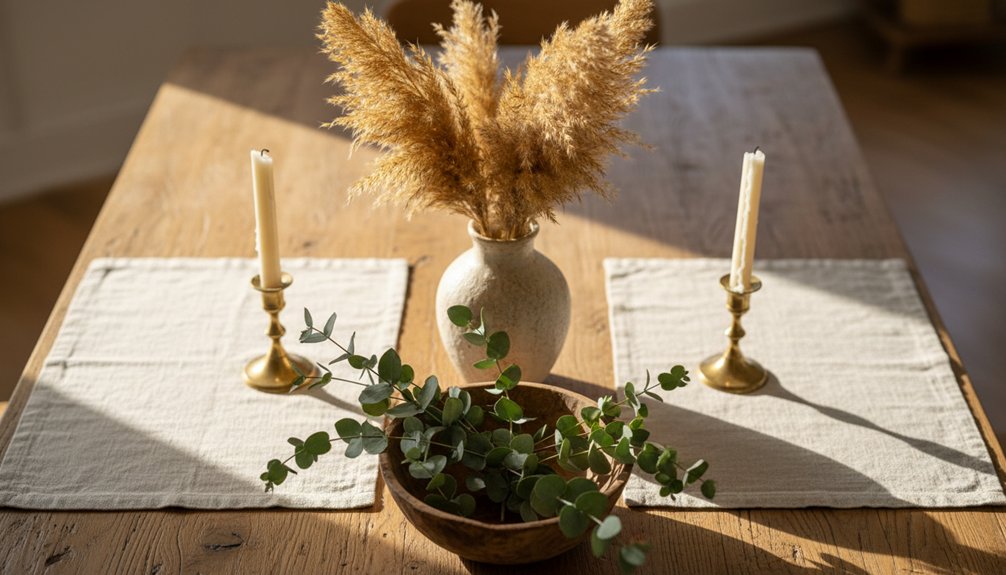
To enhance your oak dining table’s natural warmth, start by layering textures. Use linen runners for a soft touch and woven placemats for contrast. Pair modern metal chairs with rustic elements, like wooden bowls filled with pine cones or fresh flowers in neutral pottery vases. Install dimmable pendant lights 30-36 inches above the table. Use warm LED bulbs (2700-3000K) to emphasize the wood grain’s golden tones.
Adjust your decor seasonally. In spring, incorporate vibrant floral arrangements. In autumn, switch to cozy runners that reflect the season. Each element should work together to create a cohesive look that highlights the beauty of your oak dining table.
Natural Centerpieces That Complement Oak’s Warm Tones
Oak dining tables feature rich, honey-colored grains that create a warm atmosphere.
Natural centerpieces enhance oak’s inviting qualities. Use wooden bowls filled with pine cones, acorns, or dried wheat stalks to accentuate the table’s earthy character.
Fresh floral arrangements in neutral pottery vases work well with oak. Choose flowers in cream, rust, or sage green to maintain harmony with the wood’s warmth.
Eucalyptus branches, cotton stems, and dried pampas grass add texture without overpowering the space.
Arrange decorative elements in odd numbers for visual appeal. For example, place three pillar candles next to river rocks or use a single driftwood piece with seasonal greenery.
These straightforward touches allow your oak table’s natural beauty to stand out.
Layering Textures With Table Runners and Placemats
You can enhance your dining table’s appearance by combining various fabric textures. Start with a linen table runner placed down the center.
Layer different fabric textures on your dining table, beginning with a linen runner down the center for instant visual appeal.
Next, add woven placemats at each setting. This technique works well with oak tables because the wood’s grain adds to your overall design.
Pair smooth cotton napkins with rough jute placemats for an interesting textile mix. Use color contrasts to highlight oak’s natural hues—navy blue runners stand out against light oak, while cream fabrics can soften darker finishes.
Don’t shy away from patterns, either. For instance, striped runners with solid placemats create a balanced look without overwhelming the table.
Ensure that each layer complements your oak table’s beauty, so the focus remains on the wood itself.
Mixing Modern and Rustic Elements for Visual Interest
To create a visually appealing dining space, combine contemporary and rustic elements effectively. Start with a solid oak table, which provides a warm foundation. Pair this table with modern metal chairs to introduce clean lines that contrast nicely with the wood. Incorporate industrial elements, such as iron candleholders and steel serving trays, to enhance the rustic warmth of the oak.
Next, focus on accessories. Display geometric vases alongside vintage pottery to create visual contrast. Use smooth ceramic dishes paired with textured linen napkins to add depth to your table setting. Position a minimalist centerpiece next to rustic wooden bowls to maintain a cohesive look.
Balancing styles is crucial. Aim for a mix of three modern elements and three rustic pieces to avoid clutter while highlighting both design styles. This strategy results in a sophisticated dining area that showcases your unique taste without overwhelming the space.
Seasonal Styling Tips for Your Oak Dining Table
Your oak dining table can look different with each season by adjusting your decor. In spring and summer, you should choose light linens and fresh centerpieces to create an airy atmosphere. Use pastel colors and floral arrangements to bring energy to your dining space.
For autumn and winter, switch to warmer tones. Incorporate cozy table runners and candle holders to add comfort and warmth.
Focus on specific elements like the centerpiece and linens. For example, swapping out a bright floral arrangement for a more muted, earthy centerpiece can signal a seasonal change.
You don’t need to completely redecorate your table; simple changes in accessories can create a fresh look. By making these adjustments, you enhance the dining experience and reflect the spirit of each season.
Spring and Summer Freshness
As warmer months arrive, you can enhance your oak dining table with light and airy decorations that reflect the season. Use vibrant elements that complement the rich wood tones of your table.
- Display Fresh Florals: Place spring blooms, such as tulips, daffodils, or peonies, in clear glass vases. These flowers add color and life to your table setting.
- Incorporate Citrus Accents: Arrange summer fruits like lemons, limes, or oranges in wooden bowls. These fruits serve as natural centerpieces that bring a refreshing touch.
- Select Lightweight Linens: Choose cotton or linen table runners in pastel or bright white colors. These fabrics create a breezy atmosphere that suits the season.
- Add Natural Elements: Introduce seashells, driftwood, or potted herbs to your table decor. These items bring the freshness of the outdoors inside.
These straightforward additions create inviting spaces that celebrate the beauty of spring and summer.
Autumn and Winter Warmth
As the cooler months arrive, you can create a cozy atmosphere around your oak dining table. Start by layering textiles that provide warmth and texture. Use velvet table runners, wool placemats, and chunky knit napkins to enhance the table’s inviting look.
These materials not only complement the oak’s natural grain but also offer insulation against the chilly air.
Incorporate warm colors such as deep burgundy, burnt orange, forest green, and rich chocolate brown into your table settings. These hues create a visually warm environment that pairs well with the golden undertones of the oak.
Add brass or copper candleholders to provide ambient lighting during the darker evenings. For centerpieces, consider using natural elements like pinecones, dried wheat stalks, or cinnamon sticks.
These simple decorative accents will transform your dining space into a welcoming retreat, reflecting the character of the season while highlighting the timeless beauty of your oak table.
Lighting Solutions to Enhance Your Table’s Natural Grain
The right lighting plays a crucial role in showcasing the wood grain patterns on your dining table. Properly chosen lighting makes subtle textures stand out, enhancing the beauty of the wood.
Ambient lighting establishes a warm base that brings out the natural character of oak without creating harsh shadows. Positioning statement fixtures above the table serves both aesthetic and functional purposes while drawing attention to the unique wood patterns.
Here are specific lighting strategies to highlight your table’s grain:
- Install dimmable pendant lights 30-36 inches above the table to control brightness and focus.
- Add wall sconces to eliminate dark corners, ensuring even illumination across the space.
- Position accent lamps on adjacent surfaces to create layered lighting, adding depth to the overall look.
- Use warm LED bulbs (2700-3000K) to enhance the golden tones of oak, making the grain more pronounced.
Implementing these lighting solutions will reveal intricate details in the wood grain that you may have missed before.
Proper lighting not only enhances the table’s appearance but also elevates the dining experience.
Choosing the Perfect Chairs and Seating Arrangements
After you’ve set your dining table to look its best under good lighting, the next step is to choose chairs that enhance the table’s style. Match your chair styles to your table’s aesthetic. For example, traditional spindle-back chairs pair well with classic tables, while sleek upholstered chairs fit modern designs.
To add visual interest, consider using two accent chairs at the ends of the table and matching chairs along the sides. This approach maintains a cohesive look while introducing diversity in seating.
When arranging seating, consider your space and how you typically dine. Allocate 24 inches of table width for each person to ensure comfortable elbow room. If you often host larger gatherings, add a bench on one side of the table to provide extra seating.
For smaller, intimate settings, place four chairs evenly around the table. Pay attention to chair height, as seats should be 10-12 inches below the table’s surface for optimal comfort.