

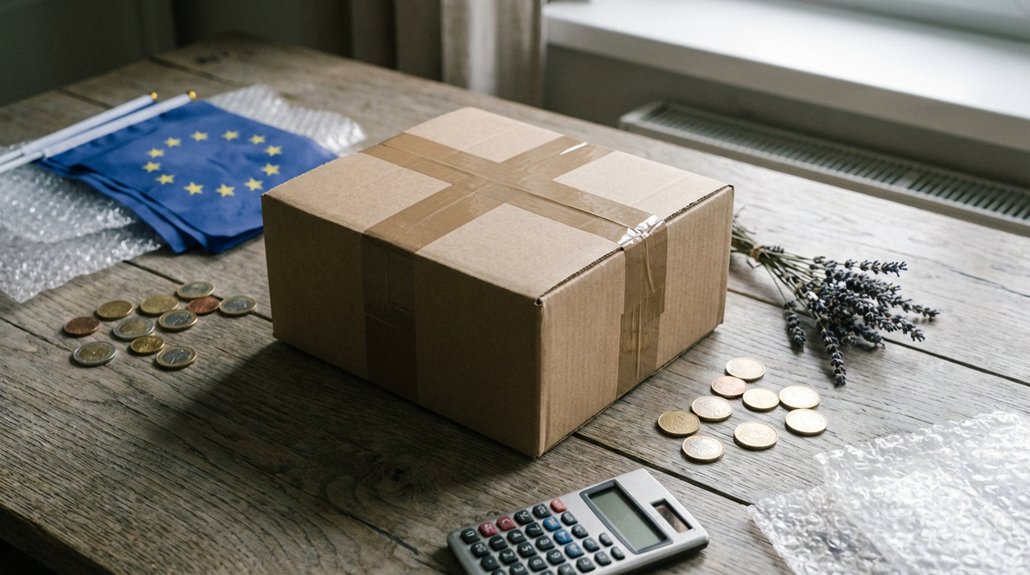
Free EU delivery has become a standard expectation among European shoppers. To remain competitive while protecting your profit margins, you must calculate your true landed cost. This cost includes carrier fees, packaging, VAT, and any hidden surcharges.
Next, incorporate these costs into your product pricing. Set minimum order thresholds to maintain profitability. For example, if your total shipping cost is €10, consider setting a minimum order value of €50 to offset that expense.
Analyze your competitors’ shipping thresholds to identify market trends. For instance, if many competitors offer free shipping over €60, evaluate whether you can match or slightly undercut that figure without compromising your margins.
Understand high-cost markets. If shipping to specific countries incurs higher fees, adjust your pricing or minimum order thresholds accordingly.
Continuously monitor these factors to refine your shipping strategy. This approach ensures you remain competitive in the EU market without sacrificing profitability.
Why Free EU Delivery Is Now Non-Negotiable for European Shoppers
Shipping costs directly impact sales in the European e-commerce market. Today, free delivery is a requirement for customers, not just a bonus. Research shows that EU shoppers frequently abandon carts when they encounter unexpected fees at checkout.
Businesses must adjust pricing strategies to include shipping costs without sacrificing profit margins. Consumer data indicates that loyalty programs offering free shipping effectively encourage repeat purchases.
Absorbing shipping costs into pricing while leveraging loyalty programs transforms free delivery from a burden into a growth strategy.
Different EU countries have unique expectations, so businesses need to adopt flexible shipping approaches to meet these local demands. Utilizing shipping innovations, such as dynamic carrier selection, can reduce costs while ensuring quality service.
Understanding the competitive landscape allows businesses to position themselves as trustworthy options for European shoppers.
Calculate Your True Landed Cost Before Offering Free EU Delivery
Before you offer free EU delivery, calculate your true landed cost. This calculation includes all expenses associated with delivering a product from your warehouse to a customer’s door. You must account for base shipping rates, packaging costs, customs duties, VAT, and carrier surcharges for cross-border shipments.
Many sellers overlook hidden fees. Fuel surcharges, remote area fees, and currency conversion costs can significantly affect your margins. If you don’t factor in these hidden costs, your profit can erode quickly.
To ensure accurate calculations, break down each cost category:
- Base Shipping Rates: Determine the standard shipping costs based on the carrier and shipping method you use.
- Packaging Costs: Include the expense for boxes, tape, and any protective materials necessary for shipping.
- Customs Duties and VAT: Research the applicable customs duties and VAT rates for the destination country. These rates can vary significantly.
- Carrier Surcharges: Identify any additional fees that your carrier may charge for cross-border shipments.
- Hidden Fees: Account for potential hidden fees such as fuel surcharges or remote area fees. Always check for currency conversion costs if you deal with multiple currencies.
Components Of Landed Cost
When you offer free shipping to EU customers, you cover all costs associated with delivering products to their doorsteps. Your true landed cost includes every expense incurred from your warehouse to their location. Understanding this cost is essential for improving shipping efficiency.
Your landed cost includes:
- Carrier fees: These are the base postage rates plus any fuel surcharges imposed by carriers.
- Packaging materials: This encompasses boxes, tape, void fill, and labels used for packing products.
- Customs duties and VAT: These are taxes you must pay when your products enter the EU.
- Handling and labor: This refers to the time spent picking, packing, and dispatching your orders.
- Returns processing: Reverse logistics for handling returns also impacts your profit margins.
Calculate these costs before establishing any free shipping threshold. If you overlook this step, you risk reducing your profitability without realizing it.
Hidden Cross-Border Fees
Understand Hidden Cross-Border Fees
Sellers must recognize that cross-border transactions involve hidden fees beyond standard carrier rates. Customs duties, VAT registration costs, and compliance charges accumulate quickly.
These hidden costs impact your overall cost management and can significantly erode your profit margins if overlooked early.
Prioritize Shipping Transparency
Consumers demand clear pricing. Sellers who fail to provide transparent shipping costs risk damaging consumer trust with unexpected charges.
You must account for currency conversion fees, brokerage charges, and local surcharges when developing your pricing strategies.
Optimize Logistics for Profitability
Market competition is intense. Sellers who ignore hidden fees often set prices too low and jeopardize profitability.
Analyze your logistics to identify every potential fee before committing to free delivery offers. Understand your complete cost structure to determine what you can absorb without sacrificing margins.
Implement a Strategic Approach
To effectively manage cross-border fees, track all relevant charges from the outset. This includes customs duties, VAT, and any additional compliance costs.
By establishing a thorough understanding of these fees, sellers can adjust pricing strategies and maintain healthy profit margins.
Avoid Common Pitfalls
Many sellers underestimate the impact of hidden fees on their bottom line. Ensure you factor in all possible charges to avoid financial losses.
Regularly review your pricing strategies and logistics to stay competitive while maintaining profitability.
How to Use Competitor Thresholds to Set Your Own
Once you calculate your true landed cost, use competitor pricing data to set your free shipping threshold. Start by examining the free shipping thresholds of your top competitors. Identify where these thresholds cluster; this indicates what customers in your market expect.
Position your threshold just below the most common competitor cutoff to attract customers. Alternatively, if your average order value is higher, consider setting your threshold slightly above the competitor average. This strategy helps you balance customer attraction with maintaining healthy margins.
Make sure to regularly review competitor data. Adjust your threshold as competitors change their pricing strategies. Stay aware of customer feedback and buying patterns, as these insights can inform your decisions.
Avoid setting your threshold too low, which can erode profit margins. Conversely, don’t set it so high that it discourages purchases. Your goal is to find a sweet spot that encourages customers to add more items to their cart while ensuring profitability.
Analyzing Competitor Threshold Data
Analyze Competitor Threshold Data for Effective Strategy
Analyzing competitor threshold data is essential for shaping pricing strategy. Focus on specific data points to inform your approach:
- Identify the most common threshold range within your niche.
- Determine which competitors set the lowest thresholds.
- Assess whether premium brands establish higher thresholds.
- Evaluate how thresholds differ by product category.
- Monitor any seasonal fluctuations in competitor thresholds.
After collecting this data, look for clear patterns. For instance, if most competitors price between €40 and €50, this range reflects customer expectations. You don’t need to match every competitor’s pricing. Instead, use the insights to establish a threshold that remains competitive without jeopardizing your profit margins.
Key Data Points
Identifying common threshold ranges helps you understand market positioning. Track the pricing of at least five competitors to establish a baseline. Note any outliers and analyze why they deviate from the norm.
Competitive Thresholds
Recognizing which competitors offer the lowest thresholds allows you to strategize effectively. Low thresholds can indicate aggressive pricing tactics aimed at capturing market share. Determine how these prices affect your own pricing strategy.
Premium Brand Analysis
Evaluating premium brands helps you understand market segmentation. Premium brands often set higher thresholds to create a perception of quality. Analyze their pricing strategy to identify if you can leverage similar techniques without compromising your brand position.
Product Category Variations
Analyzing how thresholds vary by product category provides insight into customer willingness to pay. Compare categories directly to identify where you can optimize pricing strategy based on demand.
Seasonal Changes
Monitoring seasonal changes in competitor thresholds is vital for adjusting your pricing strategy. For example, if competitors lower prices during holiday seasons, consider whether you should follow suit or maintain your pricing to uphold brand value.
Positioning Your Threshold Strategically
Position Your Shipping Threshold Strategically
Analyze your competitors’ shipping thresholds to position your own effectively. If most competitors set their free shipping threshold at €50, consider your options. You can match their €50 threshold to remain competitive, or you can set your threshold slightly lower, around €45, to attract budget-conscious shoppers.
Both strategies focus on optimizing your shipping threshold to balance customer acquisition with margin preservation.
Evaluate your average order value before making a decision. Your threshold should encourage customers to spend just enough more to qualify for free shipping without feeling pressured. For example, if your average order value is €40, setting a threshold at €45 may motivate customers to add an item to their cart.
Test different shipping incentive models, such as tiered thresholds. For instance, you could offer free shipping for orders over €45 and a smaller discount for orders over €30.
Analyze which model drives the most conversions. Use your competitor data as a starting point. Adjust your threshold based on your margin requirements and customer behavior.
Monitor metrics like conversion rates and average order values to refine your strategy over time. Avoid setting thresholds that are too high, as this can deter potential customers. Instead, aim for a balance that encourages spending while maintaining profitability.
How Free Delivery Thresholds Drive Up Average Order Value
Free Delivery Thresholds Increase Average Order Value
Setting a free delivery threshold effectively increases your average order value (AOV). When customers approach this threshold, they often add extra items to their cart to qualify for free shipping. This behavior is rooted in consumer psychology and has practical implications for revenue.
How Free Delivery Thresholds Influence Buying Behavior
Free delivery thresholds motivate shoppers to increase their cart size. Shoppers frequently add products to meet the minimum spend and secure free shipping. Customers view free delivery as a reward, which encourages them to spend more.
As order sizes increase, revenue per transaction also improves. Additionally, implementing thresholds provides a nudge for customers without resorting to discounts. Shoppers feel they’re making smarter financial choices by qualifying for free shipping, enhancing their overall buying experience.
Practical Application of Free Delivery Thresholds
To implement effective free delivery thresholds, determine a minimum spend that balances profitability and customer appeal. Analyze historical data to find an optimal threshold that encourages additional purchases.
For example, if your average order value is $50, setting a $75 threshold might effectively motivate customers to add $25 worth of items to their cart.
Limitations of Free Delivery Thresholds
Not all products may be suitable for free delivery thresholds. High-ticket items may not see the same increase in AOV as lower-cost items. Additionally, some customers may abandon their carts if they feel pressured to spend more than they intended.
Conclusion
Free delivery thresholds serve as a strategic tool to increase AOV. By understanding consumer behavior and setting appropriate thresholds, businesses can enhance revenue while maintaining margins.
Which EU Markets Will Cost You the Most to Ship Into
Shipping into the EU varies significantly by market, and costs can impact your profitability. Countries like Finland, Austria, and Greece usually require higher shipping rates due to geographic and logistical challenges. To maintain competitive pricing in these regions, you need well-planned shipping strategies.
| Market | Avg. Shipping Cost | Key Challenge |
|---|---|---|
| Finland | €12–€18 | Remote geography |
| Greece | €10–€16 | Island distribution |
| Austria | €9–€14 | Landlocked routing |
| Germany | €5–€8 | High competition |
| France | €6–€9 | Regional variation |
If you are budget-conscious, prioritize targeting Germany and France. These markets offer lower shipping costs and higher volumes. After establishing a solid volume in these regions, you can negotiate better rates with carriers. Expanding into higher-cost markets like Finland and Greece becomes more feasible once you have optimized your logistics.
Shipping into Finland incurs costs of €12 to €18 due to its remote location. This distance complicates logistics and increases expenses. Greece’s shipping costs range from €10 to €16, primarily due to the challenges of distributing to islands. Austria presents landlocked routing issues, leading to shipping costs between €9 and €14.
In contrast, Germany and France offer more competitive shipping rates, making them ideal for initial market entry. Germany’s shipping costs average €5 to €8, driven by intense competition. France presents similar rates of €6 to €9, but costs vary regionally.
Price Free EU Delivery In Without Sacrificing Margin
Once you identify the EU markets with the most cost-effective entry points, determine how to offer free delivery while maintaining your profit margins.
Start by integrating shipping costs into your product pricing structure. Here’s how to implement this effectively:
- Adjust Prices: Increase your prices slightly to cover shipping costs. This adjustment helps you absorb expenses without diminishing the perceived value of your products.
- Set Minimum Order Thresholds: Implement shipping incentives like minimum order requirements. This approach encourages larger purchases, helping to protect your revenue.
- Promote Free Delivery: Highlight free delivery as a premium service. This strategy enhances customer perception, making them more likely to complete purchases.
- Analyze Market Trends: Research market trends and consumer expectations. Understanding pricing dynamics in different EU markets helps you set competitive prices while factoring in shipping.
- Experiment with Shipping Strategies: Test various shipping methods across different markets. Evaluate their impact on sales and margins to identify the most effective approach.
How Regional Hubs and Carrier Deals Cut Per-Order Costs
Using regional hubs and negotiating carrier deals significantly reduces your per-order shipping costs. Regional logistics networks allow businesses to position inventory closer to customers across the EU. This setup shortens delivery routes, speeds up transit times, and decreases shipping fees per order.
Businesses can enhance their logistics by distributing inventory across multiple regional hubs instead of relying on a single central location. By doing this, each parcel travels a shorter distance, which directly lowers transportation expenses.
Distributing inventory across multiple regional hubs shortens delivery distances, directly reducing transportation costs per order.
Carrier partnerships play a crucial role in this strategy. When businesses commit to shipping consistent volumes with specific carriers, they can negotiate improved rates. Carriers appreciate reliable business and often provide discounts in return.
By combining efficient regional logistics with strong carrier partnerships, businesses can achieve a significant cost advantage on each order they fulfill.
Practical Application
To implement these strategies, businesses should first analyze their shipping volume and assess potential regional hub locations. Then, they should reach out to carriers and discuss shipping volumes to secure favorable rates.
Regularly reviewing both inventory distribution and carrier agreements ensures ongoing cost efficiency.
When Free EU Delivery Destroys Margins and What Triggers It
Free EU delivery can quickly erode your profit margins if you don’t manage it properly. Margin erosion occurs when shipping costs exceed what your pricing strategy can accommodate. Several specific triggers make free delivery risky for your business:
Low Average Order Values Increase Shipping Costs
Low average order values fail to cover carrier fees. For example, if your average order value is €30, and shipping costs €10, you incur a €10 loss on every order.
Implement minimum order thresholds, such as €50, to ensure that shipping costs are covered.
High Return Rates Double Shipping Expenses
High return rates increase your shipping expenses significantly. If 20% of your orders are returned, you effectively double your shipping costs.
Monitor return rates closely and identify problematic products. Adjust your return policy or improve product descriptions to reduce returns.
Remote EU Destinations Incur Premium Surcharges
Shipping to remote EU destinations often incurs premium surcharges. For instance, sending items to islands or rural areas can add €15 or more to your shipping costs.
Identify these high-cost zones and exclude them from your free delivery offers to protect your profit margins.
Currency Fluctuations Raise Cross-Border Costs
Currency fluctuations can increase cross-border shipping costs. If the euro weakens against the pound, your shipping costs to the UK will rise.
Regularly review currency trends and adjust your pricing strategy accordingly to maintain profitability.
Seasonal Volume Spikes Strain Negotiated Carrier Rates
Seasonal volume spikes can strain your negotiated carrier rates. During peak seasons like holidays, carriers may increase their rates due to demand.
Plan ahead by negotiating better terms during off-peak times or setting limits on free delivery during high-demand periods.
Smart Shipping Strategies Protect Your Bottom Line
Without smart shipping strategies, you’ll absorb losses on every order.
Focus on identifying customer segments, product categories, and destinations that can support free delivery. Use data analytics to determine which customers prefer free delivery and are likely to meet your minimum order thresholds.
Set Minimum Order Thresholds
Setting minimum order thresholds is essential. For instance, requiring a €50 order for free delivery ensures that shipping costs are covered.
This strategy can encourage customers to add more items to their carts, increasing your average order value.
Exclude High-Cost Zones
Excluding high-cost zones from free delivery offers is necessary. Identify areas where shipping costs are significantly higher, and clearly communicate these exclusions to customers.
This transparency helps manage customer expectations and prevents unexpected losses.
By implementing these strategies, you can offer competitive delivery options while protecting your profit margins. Experimenting with configurations to optimize delivery approaches can yield beneficial results.
Focus on data-driven decisions to optimize your free EU delivery approach and maintain a healthy bottom line.