

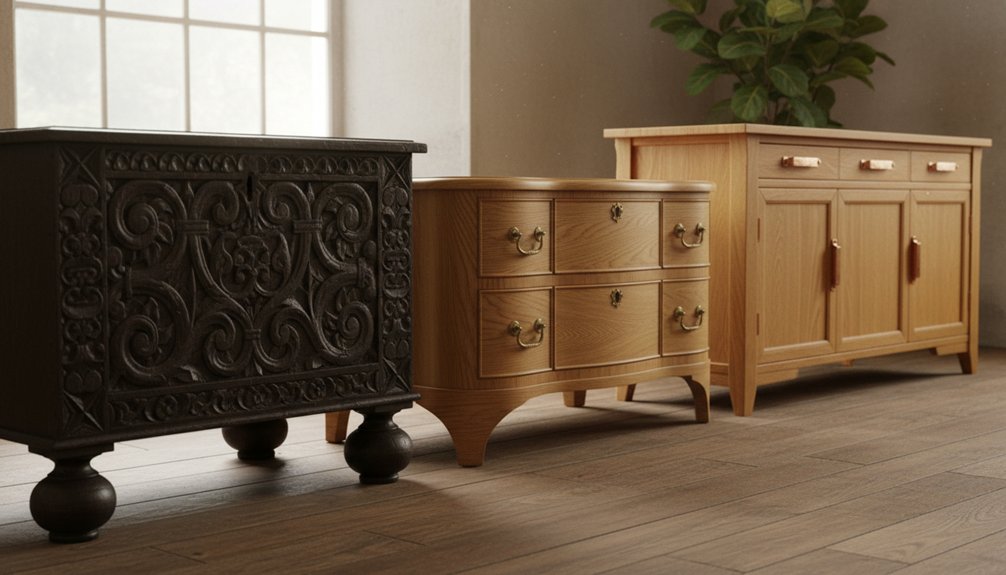
Oak furniture has evolved significantly over the past three centuries. In the 1700s, the Georgian era established a standard with its elegant designs featuring curved legs and intricate carvings. Craftsmen focused on creating pieces that showcased their skills and reflected the style of the time.
During the Victorian period, mass production changed the landscape. Manufacturers emphasized ornate designs, allowing more people to access decorative oak furniture, but often at the expense of quality craftsmanship. The furniture became more about style than the artistry behind each piece.
The Arts and Crafts Movement emerged as a response to these trends. Artisans prioritized handcrafted quality, using solid oak and simple designs to highlight the natural beauty of the wood. This movement sought to bring back the appreciation for skilled workmanship in furniture making.
In the 20th century, the Art Deco style introduced geometric patterns, which shifted the focus towards bold designs and luxury. Modernist influences later promoted clean lines and functional forms, emphasizing practicality in everyday living.
Today, oak furniture blends traditional craftsmanship with contemporary design principles. Manufacturers select sustainable materials and create functional pieces for modern homes. This evolution reflects a commitment to quality and environmental responsibility while meeting the needs of today’s consumers.
The sections below will delve deeper into the unique characteristics of each era and their lasting impact on oak furniture design.
Oak Furniture in the 18th Century: Georgian Elegance and Craftsmanship
In the early 18th century, the Georgian era began in 1714, marking a significant shift in oak furniture design and craftsmanship. Craftsmen in this period focused on creating furniture that combined aesthetic appeal with practical use. They prioritized elegant proportions and sophisticated designs, which transformed furniture-making into a skilled craft.
Cabinetmakers took pride in their work, producing pieces with detailed carvings, curved legs, and intricate inlays that demonstrated their technical expertise. They often paired oak with mahogany and walnut, which created striking visual contrasts that enhanced the overall appeal of the furniture. The durability of oak remained a key factor, ensuring that each piece could endure everyday use while retaining its beauty.
Georgian furniture-makers honed their skills in techniques like dovetail joints and mortise-and-tenon construction. These methods reinforced the structural integrity of their creations, resulting in furniture that was both sturdy and visually pleasing. Their designs balanced form and function, which is why collectors today still value Georgian furniture for its quality and timeless style.
The Regency Period: Refined Oak Designs and Classical Influences
During the Regency period (1811-1820), craftsmen designed oak furniture that reflected the neoclassical movement prominent in Britain.
Artisans integrated Greek and Roman motifs, specifically acanthus leaves, lyres, and wreaths, into their oak pieces. This design shift marked a departure from the bulkier Georgian styles.
Regency furniture featured specific design elements such as sabre legs that curved outward. These legs not only enhanced the aesthetic appeal but also improved stability.
Additionally, intricate inlay work provided a decorative contrast to the natural grain of the oak. This attention to detail in both form and function defined the craftsmanship of the time and set a standard for future furniture design.
Greek and Roman Motifs
The Regency period saw craftsmen transform oak furniture into pieces that reflected ancient Greek and Roman artistry. Craftsmen carved Greek key patterns into table edges and chair rails. They adorned cabinet doors and drawer fronts with acanthus leaves.
These artisans studied ancient techniques to design Roman columns as legs and supports for the furniture. They used motifs like laurel wreaths, lyres, and urns as decorative elements throughout their work.
Mythological elements gained prominence in oak furniture design. Craftsmen carved griffins, sphinxes, and classical figures into headboards and chair backs. They featured eagles on armrests and pedestal bases to symbolize Roman power.
This focus on classical detail enhanced oak furniture, elevating it from functional items to sophisticated artistic statements. These designs reflected the educated tastes and cultural refinement of the era.
Sabre Legs and Inlay
Craftsmen in the Regency period designed sabre legs to enhance furniture stability and aesthetics. These curved supports, resembling cavalry swords, were common on chairs, tables, and sofas. The design transitions smoothly from the seat to the floor, ensuring both strength and elegance. Skilled artisans often paired sabre legs with intricate inlay work, incorporating contrasting woods like ebony, satinwood, and boxwood.
| Inlay Element | Common Materials |
|---|---|
| Borders | Ebony, boxwood |
| Floral motifs | Satinwood, mahogany |
| Geometric patterns | Holly, walnut |
| Greek key designs | Brass, mother-of-pearl |
| Shell patterns | Various veneers |
These inlay techniques not only adorned the furniture but also elevated its overall quality. Craftsmen transformed basic oak pieces into sophisticated works that reflected both classical influences and modern refinement. By focusing on these details, they created items that were both functional and visually striking, appealing to the tastes of their time.
Victorian Era Oak Furniture: Ornate Details and Mass Production
When Queen Victoria became the British monarch in 1837, oak furniture design and production changed significantly. Craftsmen focused on creating rich, ornate carvings that incorporated nature-inspired motifs and geometric patterns.
The Industrial Revolution allowed manufacturers to produce oak furniture in larger quantities, making it possible for middle-class families to afford these pieces.
Victorian oak furniture has several key features:
- Builders used heavy, thick wood panels to create substantial constructions.
- Artisans carved intricate details, including flowers, fruits, and scrollwork into the furniture.
- Craftsmen applied dark finishes through staining and varnishing techniques to enhance the wood’s appearance.
- Manufacturers combined machine-cut components with skilled hand-finished elements to achieve a polished look.
This period marked a transition from solely handmade items to a mix of factory production and artisan craftsmanship.
While factories produced many pieces, skilled workers still applied decorative touches that characterized the Victorian aesthetic.
Arts and Crafts Movement: Returning to Handcrafted Oak Traditions
In the 1880s, a group of designers and craftsmen sought to address their dissatisfaction with Victorian furniture’s excessive ornamentation and factory-made look. They initiated the Arts and Crafts Movement, aiming to revive traditional handcrafted techniques and honest construction methods.
You can identify these oak pieces by their visible joinery; mortise-and-tenon joints aren’t concealed but showcased as decorative features. The movement prioritized sustainable materials, particularly locally sourced oak, which highlights the wood’s natural grain patterns.
Honest joinery and local oak define Arts and Crafts furniture, celebrating natural materials and visible craftsmanship over Victorian concealment.
Craftsmen like Gustav Stickley focused on creating furniture with clean lines and minimal decoration. They designed pieces with flat panels, straight legs, and functional hardware made from copper or iron.
This style rejected mass production and emphasized that each piece of furniture should reflect the maker’s skill and commitment to quality craftsmanship. By prioritizing craftsmanship, the Arts and Crafts Movement fostered a deeper appreciation for handmade furniture.
Early to Mid-20th Century: Oak Furniture in Modern and Art Deco Styles
In the early 20th century, oak furniture experienced significant changes due to the influence of Art Deco and Modernist movements. Designers began using geometric patterns, streamlined forms, and exotic wood inlays to create a stark contrast with the traditional oak grain. These design elements emphasized symmetry and bold angles, shifting the appearance of oak furniture from a rustic aesthetic to a sleek, contemporary look.
Manufacturers adapted their techniques to incorporate these new styles. They focused on precision cutting and finishing to achieve the clean lines characteristic of Modernism. As a result, oak furniture became more versatile, appealing to a broader audience who sought modern aesthetics in their homes.
The emphasis on machine-age design influenced not just the visual aspects but also the construction methods, allowing for more efficient production without compromising quality.
Art Deco Oak Characteristics
During the Art Deco period of the 1920s and 1930s, oak served as a practical choice for furniture despite not being the trendiest wood. Designers incorporated oak in ways that highlighted its unique characteristics.
- Geometric patterns and angular lines characterized furniture designs, replacing the softer curves of previous styles. This approach created bold, streamlined silhouettes that defined the era.
- Simplified ornamentation focused on showcasing oak’s natural grain. Instead of intricate carvings, designers used minimalistic designs that enhanced the wood’s inherent beauty.
- Lighter finishes transformed oak into a blonde or honey tone. These finishes contrasted sharply with the darker woods common in Victorian furniture, bringing a fresh look to modern spaces.
- Symmetrical designs often utilized stepped profiles and ziggurat-inspired shapes. These elements added a sense of order and balance to furniture pieces.
Many Art Deco oak pieces combined the wood with materials like chrome, glass, or exotic veneers.
This combination allowed for durable furniture that met the demands of modern living while embodying the forward-thinking aesthetic of the Art Deco movement.
Modernist Design Influences
The Bauhaus movement and other modernist schools reshaped the design of oak furniture from the 1920s to the 1950s. Designers focused on creating clean lines and geometric shapes while minimizing ornamentation. They debated the balance between functionality and aesthetics, resulting in furniture pieces that served practical purposes and looked appealing. The natural grain of oak became a feature to highlight rather than conceal with heavy carvings.
Modernist oak furniture incorporated tubular metal frames, sleek surfaces, and innovative joinery techniques. Designers prioritized sustainable sourcing as they recognized the environmental impacts of increased demand on forests.
Mass production methods made oak furniture accessible to middle-class consumers, which widened its market reach. This period transformed oak furniture from traditional bulky designs to streamlined pieces suited for smaller urban apartments and contemporary homes.
Contemporary Oak Furniture: Blending Traditional and Minimalist Aesthetics
Contemporary oak furniture merges traditional craftsmanship with minimalist design principles. Designers use oak to create furniture that maintains the wood’s warmth while adapting to modern living spaces. This combination emphasizes sustainability and versatility.
Contemporary oak furniture features clean lines that remove excess ornamentation. The natural finishes enhance the wood grain, showcasing oak’s unique characteristics. Modular components allow for reconfiguration, enabling the furniture to serve multiple purposes.
Reduced profiles help maximize space in smaller homes. These pieces also incorporate technology, such as hidden charging stations and cable management systems. The final result respects oak’s heritage while fulfilling the current demand for practical and efficient furniture solutions.