

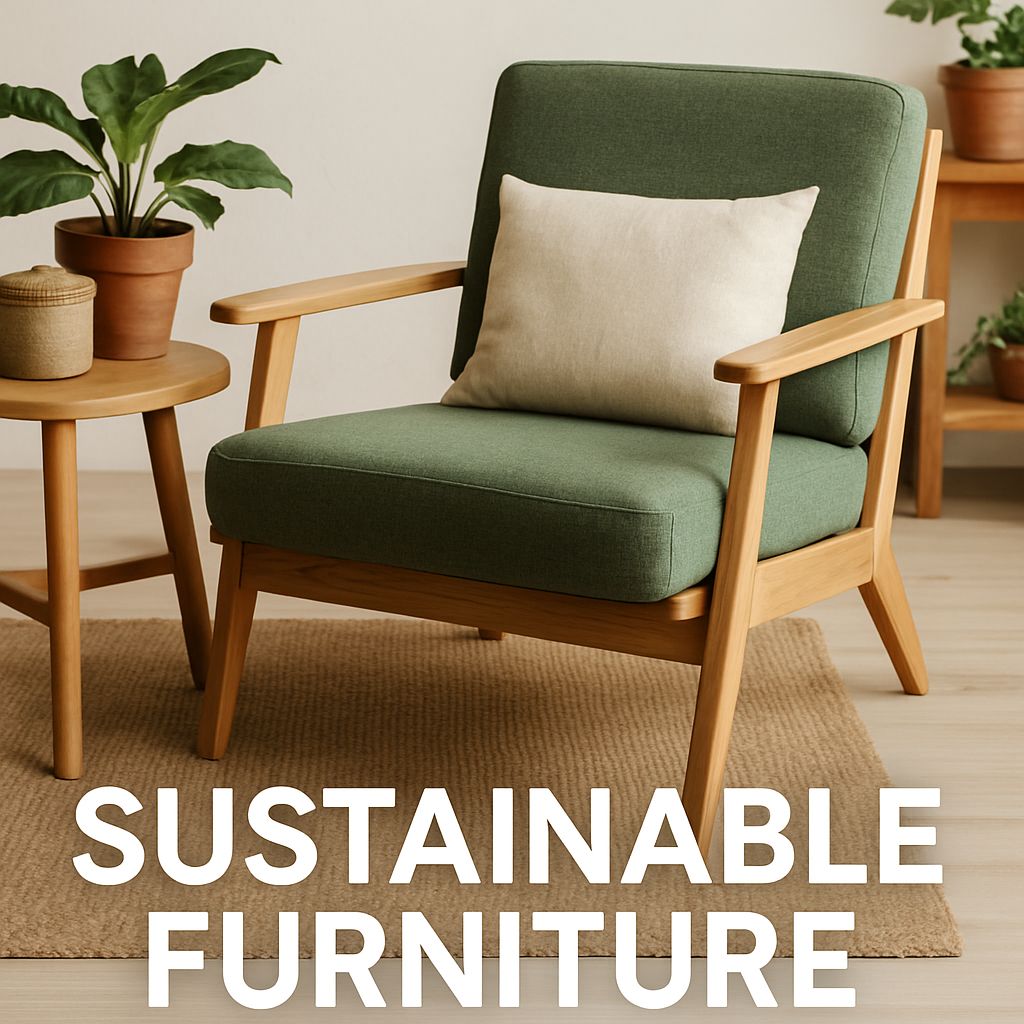
- Not all oak furniture is created equal — the sourcing method, certification, and finish used determine whether your dining table helps or harms the planet.
- FSC and PEFC certifications are the most reliable indicators of responsibly sourced oak, but knowing what greenwashing looks like is just as important.
- Reclaimed oak is the most sustainable option available, reducing demand for new timber and significantly lowering the carbon footprint of your furniture.
- The finish on your table matters — conventional lacquers release harmful VOCs into your home, while natural oil and hardwax alternatives are far safer for people and ecosystems.
- Keep reading to find out the exact questions you should ask any furniture maker before spending a single dollar on an oak dining table.
Your dining table is probably the most-used piece of furniture in your home — so it’s worth knowing exactly what went into making it.
If you’re passionate about sustainable living, an oak dining table can either be one of the most ethical purchases you can make, or one of the most harmful to the environment. It all depends on how the oak was sourced, processed, and finished. The trouble is, it’s often difficult to tell the difference just by looking at the finished product. Furniture companies have become very good at making unsustainable products seem eco-friendly, using warm, earthy colours, natural-sounding language, and vague promises about their environmental credentials that don’t really mean much.
Thankfully, there are indeed truly eco-friendly oak dining tables out there, and they’re not that hard to find once you know what to look for. Resources like sustainable furniture guides can help you sift through the clutter and make a purchase that actually aligns with your values.
Many Dining Tables Have a Secret Environmental Price Tag
Even if they’re advertised as being made of “natural wood,” the majority of mass-produced dining tables come with a series of unseen environmental trade-offs. The wood might come from unsustainable forests, be shipped all over the world, be put together with glue that’s loaded with chemicals, and then be finished with a coating that will release volatile organic compounds (VOCs) into your home for months after it’s been delivered.
Many people believe oak is a sustainable choice because it’s a hardwood, it’s durable, and it has a high-end appearance. However, these factors alone do not make a table eco-friendly. The eco-friendliness of any oak piece is largely determined by choices made long before the furniture arrives in a showroom.
The Environmental Impact of Traditional Oak Harvesting
Did you know that oak trees grow very slowly? In fact, it can take a single English oak (Quercus robur) between 150 and 200 years to fully mature. When the demand for oak wood surpasses the capabilities of responsible forest management, the end result is a push to cut down trees at a rate that ecosystems can’t recover from. This isn’t a potential risk — it’s a current trend in areas where timber laws are lax or not consistently upheld.
How Unregulated Logging Can Lead to Deforestation
Unregulated logging of oak trees does more than just take away trees — it throws entire forest ecosystems off balance. Oak forests are home to a stunning variety of plant and animal life. In the UK, a single mature oak tree can house more than 500 different species of insects, lichens, and birds. When these trees are cut down without plans for reforestation or time for the ecosystem to recover, the harm goes far beyond the loss of the timber.
Eastern Europe has been a particular flashpoint for this issue. Countries including Romania and Slovakia have faced significant criticism from environmental groups for illegal or poorly regulated logging in ancient oak forests, with timber entering supply chains that feed European and global furniture markets. Without traceability, a dining table sold in the US or UK could contain wood from these compromised sources.
Why “Oak” on a Label Doesn’t Necessarily Mean It’s Sustainably Sourced
Just because a label says “oak” doesn’t mean that the wood was responsibly sourced. The label doesn’t tell you where the tree was grown, how it was cut down, whether the forest was replanted, how far the wood had to travel, or what chemicals were used in the processing. A label that just says “solid oak” or “natural oak” doesn’t guarantee that the wood was sourced in a way that’s good for the environment.
Here is where the discrepancy between advertising lingo and ecological truth comes into play, and where a majority of consumers are duped. The furniture industry employs terms such as “natural,” “raw,” “rustic,” and “forest-inspired” without any regulatory requirement to support these assertions with proof of sustainable operations.
How to Know Your Oak Dining Table is Sustainably Sourced
When you’re looking for a guarantee that your oak dining table was sustainably sourced, certifications are your best bet. There are two main organizations that provide these certifications, and knowing what each one means can give you a leg up as a consumer.
The FSC Certification: The Highest Level of Sustainable Timber
The Forest Stewardship Council (FSC) is considered the toughest independent certification for timber products worldwide. To get an FSC certification, forest operators have to meet high standards in environmental protection, social responsibility, and economic viability. These standards are checked through independent third-party audits and not self-reporting.
When it comes to oak, FSC certification ensures that the forest where the timber came from has commitments to replanting, protections for biodiversity, and restrictions on the rate of harvesting. The chain-of-custody certification extends this traceability to processors and manufacturers, so when you see an FSC label on a finished dining table, it represents a journey from forest to showroom that has been verified, not just a marketing ploy.
What the FSC Chain-of-Custody Certification Includes:
Stage
What Is Checked
Forest Management
Harvesting rates, replanting, biodiversity protection
Processing & Milling
Separation of certified timber from uncertified sources
Manufacturing
Use of certified material in finished products
Retail
Correct labeling and documentation at point of sale
When you see an FSC label, you can cross-reference the certificate code on the FSC’s public database at info.fsc.org to confirm it’s legitimate — a step worth taking with any significant furniture purchase.
Understanding PEFC Certification and Its Difference From FSC
The Programme for the Endorsement of Forest Certification (PEFC) is considered the world’s most extensive forest certification system based on the area of certified forest, and it operates through a network of national certification schemes. Unlike the Forest Stewardship Council (FSC) that sets its own global standard, PEFC approves existing national forestry standards that meet its international benchmarks. This makes it especially strong in European markets where national forestry laws are already stringent.
The Forest Stewardship Council (FSC) and the Programme for the Endorsement of Forest Certification (PEFC) are both trustworthy and independently audited. Most environmental non-governmental organizations (NGOs) prefer FSC due to its more stringent social requirements, while PEFC is more widely recognized in Scandinavian and Central European timber markets. When it comes to an oak dining table, either certification is a good sign that the wood was sourced responsibly. If neither certification is present, that’s a cause for concern.
How Furniture Marketing Uses Greenwashing
Even the most discerning shoppers can be fooled by the sophisticated greenwashing techniques used in the furniture industry. Rather than blatant lies, these tactics often involve language that is technically correct but essentially meaningless, selective transparency, and the suggestion of sustainability without the actual follow-through.
Be on the lookout for these particular patterns:
- “Sustainably sourced” with no certification to back it up — this phrase has no legal definition and requires zero verification.
- “Eco-friendly finish” without specifying what the finish actually contains or its VOC levels.
- Images of forests or nature in marketing materials with no traceable sourcing information provided.
- “Partially recycled” framing that buries the fact that the majority of materials are conventionally sourced.
- Carbon offset claims used to justify high-emission manufacturing rather than actually reducing it.
A brand serious about sustainability will proactively share its certification codes, sourcing regions, and finish specifications. If that information isn’t readily available — on the product page, in a brochure, or on direct request — assume it doesn’t exist.
Opt for Reclaimed Oak for the Best Sustainability
While certified freshly cut oak is a good option, reclaimed oak is a standout. No new trees are cut down, no fresh forest land is disrupted, and the carbon that has been stored in the wood for many years remains trapped, rather than being released through rotting or burning.
If you’re genuinely interested in reducing your home’s environmental footprint, consider investing in a reclaimed oak dining table. These pieces are the epitome of circular furniture, taking a material that has already been used for one purpose and extending its life by several more decades. This is the category you should explore first.
The Real Origins of Reclaimed Oak
Reclaimed oak isn’t sourced from forests — it’s sourced from the past. It’s most commonly found in old agricultural structures, floors of factories from the Victorian era, warehouses that have been torn down, railway sleepers that are no longer in use, and recovered wine barrels. In North America and Europe, there is a vast amount of structural oak timber trapped within buildings that are being demolished at a rate faster than the materials within them can be responsibly repurposed.
Professional salvage companies and reclamation yards are responsible for the retrieval, cleaning, and selling of this wood. They either sell it raw to artisans or turn it into finished furniture parts. The oak in a reclaimed dining table may have served as a barn floor in rural France for 80 years or warehouse decking in the English Midlands for 60 years. This history is not just an interesting tale, but a testament to the durability of the material that newly cut wood has not yet had the opportunity to demonstrate. For those interested in the broader market, Denmark’s furniture market offers insights into the demand for solid wood furniture.
Quality Comparison: Reclaimed Oak vs. New-Cut Oak
Reclaimed oak often boasts a denser and more dimensionally stable composition compared to newly milled oak. The reason for this lies in the source of the wood. Old-growth timber, the type used in construction a hundred years ago, was sourced from trees that grew slowly over an extended period, resulting in a tightly packed grain structure. In contrast, modern plantation oak grows more quickly in managed conditions, leading to a wider grain and sometimes a less dense structure. Additionally, reclaimed pieces come pre-acclimatized, having spent many years adjusting to indoor environments. This means they are less likely to warp and shrink, common issues with new timber in its first few years in a home.
How Reclaimed Oak Significantly Lowers Carbon Footprint
For every kilogram of oak timber, about 0.9 kilograms of CO₂ that was consumed during the tree’s growth is stored. When this timber is reclaimed and reused instead of being disposed of in a landfill or incinerated, the carbon stored remains locked within the wood and is not released back into the atmosphere. Furthermore, reclaimed oak does not require any new land to be disturbed, no replanting programs, and has much shorter supply chains. Most reclamation processes are regional, which significantly reduces transport emissions compared to timber that is shipped across continents.
Wood Isn’t the Only Thing to Consider
When it comes to eco-friendly furniture, the type of wood is just one piece of the puzzle. The finish on your dining table can also have a significant environmental impact. Some finishes can release harmful chemicals into your home for months after purchase, and they can also contaminate waterways during the manufacturing process. So, even if your oak dining table is FSC-certified, if it’s finished with a traditional polyurethane lacquer, it’s not as eco-friendly as it could be.
Many furniture brands discreetly reduce expenses and neglect the environment during the finishing stage because customers seldom inquire about it. A high-quality, sustainable finish is more expensive to apply and requires more skilled labor, neither of which is a priority for mass manufacturers who compete on price.
Traditional Wood Stains and Lacquers Emit VOCs
Conventional wood finishes, such as nitrocellulose lacquers, oil-based polyurethanes, and most commercial wood stains, contain volatile organic compounds (VOCs). These are chemicals that can evaporate at room temperature and react with the air in your home. They include chemicals like formaldehyde, toluene, and xylene, which are found in high concentrations in these products. The Environmental Protection Agency (EPA) has linked long-term exposure to VOCs to respiratory irritation, headaches, liver damage, and even effects on the central nervous system in severe cases. A freshly finished oak table in a closed-off dining room can continue to emit VOCs for weeks after it has been delivered.
1. Finishes Based on Water
Finishes that are water-based utilize water as the main carrier solvent, as opposed to chemicals that are derived from petroleum. This results in VOC levels that are significantly lower than traditional lacquers — usually 50 to 150 grams per liter as opposed to 300 to 600 grams per liter in alternatives that are solvent-based. They dry quicker, have less of a smell during application, and create a clear, clean finish that displays the natural grain of the oak without it yellowing as time goes on. The downside is that they can be slightly less resistant to water than finishes that are oil-based, although modern formulations that are water-based have considerably narrowed this gap.
2. Natural Oil Finishes
Natural oil finishes, like pure linseed oil, tung oil, and plant-based Danish oil blends, soak into the wood instead of just covering the surface. This nourishes the wood from the inside and gives a finish that feels more real and less like plastic. These finishes are biodegradable and come from renewable plant sources. When made correctly, they also produce very few VOC emissions.
- Raw linseed oil — this is the purest option and has extremely low VOCs, but it dries very slowly (it takes several days for each coat to dry)
- Boiled linseed oil — this option dries faster, but you need to check the formulations carefully because some contain metallic drying agents
- Pure tung oil — this option has excellent water resistance, it’s food-safe when it’s fully cured, and it’s naturally derived from the tung tree
- Plant-based Danish oil — this is a blended finish that allows for faster application; make sure it doesn’t contain any petroleum distillates
You should understand the maintenance requirement of natural oil finishes before you decide to purchase one. Unlike lacquered surfaces that create a sealed top coat, oiled oak needs to be re-oiled periodically — typically once or twice a year depending on how much you use it — to maintain its protection and appearance. This is not a drawback for people who are mindful of sustainability; it’s actually a benefit, because re-oiling with a natural product can extend the life of the table indefinitely without the need for stripping or refinishing. For those interested in custom-made furniture options, understanding these maintenance practices is crucial.
Over time, a well-oiled oak dining table develops a patina that a lacquered surface just can’t match. The wood deepens in color, the grain becomes more pronounced, and the table takes on a character that gets better with age and use, instead of getting worse. For those who appreciate longevity in their furniture, natural oil finishes are the obvious choice.
3. Hardwax Oil Finishes
Hardwax oil is a hybrid finish that combines natural plant oils with hard waxes — usually carnauba wax or beeswax — to provide the penetrating benefits of an oil finish with significantly improved surface durability and water resistance. Brands such as Rubio Monocoat and Osmo Polyx-Oil have become industry benchmarks in sustainable furniture finishing, with formulations that contain zero water-based carriers and use plant oil chemistry to bond at a molecular level with wood fibers. A single coat of Rubio Monocoat, for instance, is typically enough for full coverage, which significantly reduces material waste and application time.
Longevity of Oak Contributes to Its Sustainability
Sustainability is not just about the material that a product is made from, but also how long that product will last. A dining table that has to be replaced every decade will have a much larger environmental impact over its lifetime than one that is bought once and lasts for fifty years. This is where oak really shines and has a real and significant advantage over softer woods, engineered board alternatives, and certainly over flat-pack furniture made from MDF and melamine.
The European oak (Quercus robur and Quercus petraea) is a tough wood, with a Janka hardness rating of about 1,120 lbf. This makes it harder than walnut, cherry, and most pine species that are often used in furniture making. This toughness means that it can resist dents, scratches, and surface wear that can occur on a dining table that is used frequently. An oak dining table can be used every day for family meals, for homework, and for gatherings, and it will show wear slowly and gracefully. It can also be sanded and refinished many times throughout its life without losing its structural integrity.
Let’s consider the idea of embodied carbon. Every item has a carbon cost from its production – the energy required to collect, transport, and process materials. When this carbon cost is spread over fifty years of use instead of ten, the annual environmental impact is significantly reduced. So, when you buy an oak dining table that you plan to pass on to your descendants, you’re making a lower-carbon choice than if you were to buy a less expensive alternative every ten years.
Selecting a Sustainable Oak Dining Table
Picking the right piece involves understanding what to inquire about and being prepared to pass up vendors who can’t provide answers. The eco-friendly furniture industry has plenty of authentic choices, so there’s no need to settle — but it’s crucial to be clear about your requirements, because a company’s general positive intentions are not the same as proven green operations.
It’s a straightforward process. Pay attention to three key factors: where the wood is sourced and if it’s certified, the type of finish used, and the manufacturer’s transparency about these details. A responsible furniture maker will be happy to share where their oak is sourced, its certification, and the finish used. Their willingness to share this information, or lack thereof, can tell you a lot about the company.
What to Ask Before Purchasing Furniture
Before you buy, make sure to ask these questions — and take note of how the seller responds:
- Can you tell me where the oak was sourced and what country or region it came from?
- Does the wood have FSC or PEFC chain-of-custody certification, and could you provide the certificate number?
- Do you use any reclaimed or recycled oak, and if so, where did it come from?
- What kind of finish is on the table, and what are the VOC levels per liter?
- Are there any adhesives, binders, or composite materials used in the construction, and do they contain formaldehyde?
- How is the furniture packaged, and can the packaging be recycled or is it free of plastic?
- What is the table’s expected lifespan, and is it possible to refinish or repair it?
A manufacturer who truly values sustainability will not hesitate to answer these questions. If you receive vague answers, are deflected, or are told to “check the website” for answers that aren’t actually there, these are signs that should be taken seriously. For more insights, consider exploring the Alibaba furniture supplier checklist for evaluating suppliers.
How to Spot a Non-Eco-Friendly Product
One of the first things to look at is the price. True sustainable oak furniture that is responsibly certified, correctly finished, and carefully handcrafted is more expensive to make than mass-produced alternatives. If you see a solid oak dining table that is priced similarly to flat-pack furniture from a large retailer, there is likely something wrong in the supply chain. The thing that is usually not compromised is the brand’s profit margin.
Aside from cost, you should be wary of incomplete paperwork, vague “eco” labeling without any real meaning, finishes that are only described as “natural-looking” without listing the actual ingredients, and supply chains that cross several continents without any clarity about where they came from. If a company can’t tell you where they got their oak, it’s highly likely they don’t know — and that lack of traceability is exactly what an unverified environmental claim looks like. For those sourcing from Alibaba, here’s a checklist to vet suppliers effectively.
Why A Sustainable Table Is the Most Ethical Furniture Choice
When you choose an eco-friendly oak dining table, you’re not just buying a piece of furniture. You’re making a statement about your priorities. It reflects your commitment to sustainability, your careful consideration of the items you bring into your home, and your support for responsible supply chains. Responsibly sourced oak, when finished with environmentally friendly materials, is one of the few furniture materials that gets better with age. It can be cared for and repaired over generations, and its journey from forest to table is traceable and environmentally accountable. With its durability, natural beauty, and traceable origins, it is the best choice for those who are committed to living sustainably.
Common Questions
Here are the questions that first-time sustainable furniture shoppers usually ask, answered plainly and without any sales jargon.
Can oak be a sustainable wood choice for furniture?
Oak can indeed be a sustainable choice for furniture, but it depends on where it comes from. If it’s harvested from certified, responsibly managed forests, it’s a great choice. Oak trees grow slowly and support a rich diversity of life, so how they’re harvested is key. The best way to ensure that the oak in your furniture is sustainable is to look for FSC or PEFC certification. Without that certification, “oak” is just a type of wood — it doesn’t tell you anything about how it was grown or harvested.
What is the significance of FSC-certified oak?
When oak is FSC-certified, it indicates that the wood was responsibly sourced from a forest that has been independently reviewed and endorsed by the Forest Stewardship Council. This endorsement is based on the council’s global standards for responsible forest management. These standards take into account the rate of harvest, the requirement to replant, the protection of biodiversity, and the rights of local communities and forest workers.
When you see the FSC label on a dining table, it means that the table’s journey from forest to retail has been documented and verified at every stage — milling, manufacturing, and retail. This is not a self-declared claim, but a traceable, verified journey. You can check any FSC certificate code directly through the FSC’s public database at info.fsc.org.
- FSC 100% — every piece of wood in the product is sourced from an FSC-certified forest
- FSC Recycled — every piece of wood in the product is either reclaimed or recycled, meaning no new trees were cut down
- FSC Mix — a mix of FSC-certified wood, recycled material, and FSC-controlled wood
If you want to make the greenest purchase possible, look for products labeled FSC 100% or FSC Recycled — and make sure the label applies to the specific product you’re buying, not just a general claim from the brand that they partner with FSC. Some brands only use FSC-certified wood for some of their products, not all.
Does reclaimed oak have a smaller environmental impact than new oak?
Indeed — reclaimed oak is the most eco-friendly type of oak that can be used in furniture production. It doesn’t require cutting down any new trees, doesn’t disturb any new land, keeps carbon stored in the wood instead of releasing it through decay, and usually involves shorter, more local supply chains than newly milled timber that’s imported from abroad.
When it comes to the quality of the material, reclaimed oak is often superior to newly cut oak. Old-growth timber, which was harvested a hundred years ago, comes from trees that grew slowly and have a dense, tight grain structure. This makes them harder and more dimensionally stable than the faster-growing plantation oak that is available today. A dining table made from reclaimed oak is not just a compromise. In fact, it is often the best choice in terms of both the environment and the material.
Which finishes are best for a green oak dining table?
The best finishes for a green oak dining table are natural oil finishes, hardwax oil finishes, and low-VOC water-based finishes. Pure tung oil and raw linseed oil are the most organic options available — both are derived from plants, biodegradable, and safe to eat off of once fully cured. Hardwax oil products like Rubio Monocoat and Osmo Polyx-Oil mix plant oils with natural waxes to provide strength and a small environmental footprint.
Steer clear of traditional finishes such as nitrocellulose lacquers, solvent-based polyurethanes, and oil-based stains with high VOC concentrations. These release dangerous compounds into the air inside during and after application, and create hazardous waste during the production process. When considering a finish, ask the manufacturer for the VOC content in grams per liter — anything under 100 g/L is considered low-VOC, while responsible natural finishes often register well below 50 g/L.
How does the longevity of an oak dining table compare to other types of wood?
With proper care, a solid oak dining table can last anywhere from 50 to 100 years under normal household conditions. Reclaimed oak tables have already proven that oak structural timber can stay sound for well over a century. This significantly outlasts softwood pine tables, which usually show significant wear within 10 to 20 years, and engineered wood or MDF alternatives, which are seldom worth repairing after 5 to 15 years of use.
One of the reasons why oak is so durable is due to its Janka hardness rating of around 1,120 lbf. It also contains natural tannins that make it resistant to decay and damage from insects. Its open grain structure allows it to deeply absorb oil finishes, which can be maintained over time to extend the life of the wood. Unlike composite materials, solid oak can be sanded and refinished many times without losing its structural integrity.
Longevity is the key when it comes to sustainability. The environmental cost of producing a piece of furniture, which includes the embodied carbon of harvesting, transporting, and processing the materials, is fixed at the point of manufacture. The longer a piece of furniture lasts, the lower its per-year environmental impact becomes. An oak dining table purchased today, maintained properly, and passed to a future generation represents a genuinely low-carbon approach to furnishing a home over time. For those interested in the broader market, the Denmark furniture market offers insights into sustainable practices.
If you’re in the market for oak furniture that’s not only gorgeous but also sustainably sourced and built to last, check out our collection. We use certified materials and natural finishes in every piece, and we’re committed to ethical practices from the forest to your home.