

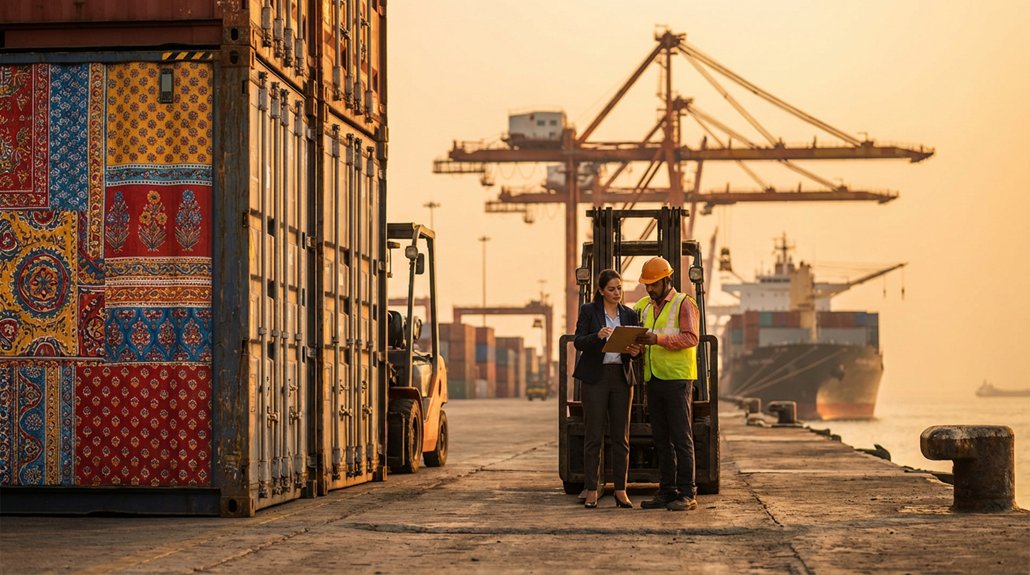
Container Importing from India to the EU: A Practical Guide
When you import a container from India to the EU, start by selecting the shipping method: FCL (Full Container Load) or LCL (Less than Container Load). FCL is ideal for large shipments, while LCL suits smaller loads. After deciding on the shipping method, calculate your true landed cost. This includes shipping fees, customs duties, and taxes to avoid unexpected expenses.
Next, select the appropriate Incoterm. Common choices include FOB (Free on Board) and CIF (Cost, Insurance, and Freight). Each term defines the responsibilities between you, the buyer, and the seller in terms of shipping costs and risks.
Transit times from India to the EU typically range from 18 to 25 days, depending on the specific port of departure and destination. Be aware of potential delays due to weather or port congestion, and plan accordingly.
Once your container arrives, focus on customs clearance. Prepare the necessary documentation, including the commercial invoice, packing list, and Bill of Lading. Ensure you meet all customs requirements to avoid delays. Customs may also conduct inspections, so be ready for this possibility.
Missing any step in this process can lead to costly delays. Each stage requires attention to detail, from selecting the shipping method to navigating customs. Follow this guide closely to keep your shipment on track and minimize risks.
FCL vs LCL: Which Shipping Option Is Right for Your India Import?
When importing goods from India, you must choose between Full Container Load (FCL) and Less than Container Load (LCL) for shipping.
FCL provides better cargo safety, faster shipping times, and reduced handling risks. With FCL, you use the entire container, which minimizes the chances of damage during transit.
In contrast, LCL involves sharing container space, leading to longer transit times, higher per-unit costs, and increased risk of damage during consolidation.
To determine cost-effectiveness, FCL is usually more economical when your shipment exceeds 15 cubic meters. FCL is also preferable for shipping fragile or high-value items, as it lowers exposure to potential damage.
If you ship smaller volumes infrequently, LCL may be suitable, but be aware of the trade-offs, such as increased transit time and handling risks.
Calculate Your True Landed Cost Before You Place the Order
Calculate Your True Landed Cost Before Placing an Order
Before placing an order with an Indian supplier, calculate your true landed cost. This total encompasses every expense from the factory door to your warehouse. Relying solely on the supplier’s quoted price can mislead you. Hidden fees can significantly reduce your profit margin.
Your landed cost calculation must include the product cost, sea freight, marine insurance, destination port charges, customs duties, VAT, customs broker fees, and inland transport.
Every landed cost must account for product cost, freight, insurance, port charges, duties, VAT, broker fees, and inland transport.
Request Detailed Quotes from Your Freight Forwarder
Request detailed quotes from your freight forwarder early in the process. This ensures you have a clear understanding of all shipping-related costs.
Compare multiple quotes to identify the best option. An attractive product price can turn unprofitable once you account for these additional expenses.
Track Each Expense with a Spreadsheet
Use a simple spreadsheet to track each expense line. Input costs like product price, shipping fees, and taxes as you receive quotes.
This organized approach helps you visualize your total landed cost. Accurate tracking prevents surprises when the shipment arrives.
Protect Your Business with Accurate Cost Planning
Accurate cost planning is essential for protecting your business. Calculate potential costs before committing to an order.
Be aware of edge cases, such as unexpected customs fees or delays. Understanding these constraints helps you make informed decisions.
Conclusion: Focus on True Landed Cost
In summary, focus on calculating your true landed cost to avoid profit erosion. Use specific numbers and detailed quotes to ensure comprehensive planning.
Which Incoterm Is Right for India-to-EU Shipments?
When you ship containers from India to the EU, the choice of Incoterms directly impacts your costs and risks. For most shipments, you’ll choose between FOB (Free on Board) or CIF (Cost, Insurance, and Freight).
With FOB, you take on responsibility once the goods leave the Indian port; you manage freight, insurance, and customs from that point onward. In contrast, with CIF, the seller handles shipping and insurance costs until the goods reach the destination port.
Choosing FOB or CIF affects your overall logistics strategy. If you select FOB, prepare to coordinate customs clearance and shipping logistics after the goods are loaded. This option allows for greater control over shipping arrangements, but it also means you assume more risk.
If you choose CIF, you transfer some responsibility to the seller, which can simplify logistics but may limit your control over shipping conditions and costs.
Consider the specific needs of your shipment when deciding. For example, if you frequently ship large volumes, FOB might be more cost-effective in the long run. If you’re handling smaller shipments or lack experience with international logistics, CIF may provide added security and ease.
Always evaluate your suppliers’ capabilities, as their reliability can impact your choice.
Popular Incoterms Explained
Choosing the right Incoterm for your India-to-EU shipment directly impacts your costs, risks, and responsibilities. Understanding Incoterm definitions allows you to negotiate effectively and comply with international regulations.
- EXW (Ex Works): The buyer assumes full responsibility for shipping from the seller’s warehouse. This arrangement places the highest obligations on you, as you manage everything from pickup to delivery.
- FOB (Free on Board): The seller transfers risk to you once the goods board the vessel in India. This shifts cost responsibilities, allowing you to plan for shipping expenses more accurately.
- CIF (Cost, Insurance & Freight): The seller covers the freight and insurance costs. This arrangement reduces your initial management tasks and financial burden related to delivery.
Use these Incoterms strategically during contract negotiations. Each term clarifies payment responsibilities, helping you manage your budget and avoid unexpected liabilities during transit.
For example, if you choose FOB, you can better anticipate shipping costs, as you only take on risk once the goods are loaded.
Understanding these terms improves your negotiation power and reduces potential risks throughout the supply chain.
FOB Versus CIF Compared
FOB Versus CIF for India-to-EU Shipments
FOB (Free on Board) and CIF (Cost, Insurance, and Freight) are two Incoterms commonly used for shipments from India to the EU. These terms define how costs and risks are shared between you and your supplier.
Understanding FOB
Under FOB, the supplier delivers goods to the port of origin. Once the goods are loaded onto the vessel, you assume all shipping risks.
You must arrange and pay for your own freight insurance, which allows you to choose coverage that fits your needs and budget. If you have a reliable freight forwarder, FOB gives you more control over logistics and costs.
Understanding CIF
With CIF, the supplier manages transportation and freight insurance until the goods reach your destination port. This arrangement simplifies the shipping process for you.
However, you typically pay higher costs since suppliers include their margins in these services. CIF is ideal for buyers who prefer a hands-off approach and are willing to pay for convenience.
Cost Comparison
In general, FOB is more cost-effective if you can handle logistics yourself. For instance, if your supplier quotes $2,000 for goods under CIF, you might only pay $1,800 under FOB plus insurance.
This difference can add up, especially for larger shipments.
Risk Management
FOB allows you to mitigate risks by choosing your own insurance provider. You can negotiate better rates or select a policy that meets specific requirements.
In contrast, CIF puts the responsibility for insurance on the supplier, which mightn’t align with your risk management strategies.
Conclusion
Choose FOB if you want control over shipping and costs. Opt for CIF if you prioritize convenience and don’t mind paying a premium.
Understanding these terms helps you make informed decisions for your shipments from India to the EU.
Choosing Your Best Option
Choosing the Right Incoterm for Your Business
Now that you understand how FOB (Free on Board) and CIF (Cost, Insurance, and Freight) work, you can determine which Incoterm best suits your business needs. Your sourcing strategies, supplier evaluation, and risk management objectives will guide this choice.
Assess Your Experience Level
If you’re new to market research and importing, choose CIF. CIF simplifies logistics by allowing the supplier to manage shipping. This reduces your workload and minimizes early-stage complications.
Evaluate Your Control Preference
If you prefer greater control over shipping, select FOB. FOB allows you to negotiate shipping terms and maintain quality oversight during transport. You can manage the shipping process and address potential issues directly.
Consider Supplier Reliability
If you have confidence in your supplier’s reliability, FOB may be the better option. A strong supplier evaluation can provide assurance that your partner will handle logistics effectively. Trust in your supplier’s performance can help mitigate risks.
Weigh Your Budget and Capacity
Analyze your budget, shipping volume, and operational capacity. CIF typically incurs a higher initial cost due to insurance and freight, while FOB may offer savings when you can manage logistics.
Conclusion
Choosing between FOB and CIF isn’t straightforward. Assess your specific business needs, evaluate your ability to manage logistics, and select the Incoterm that aligns with your operational goals.
The right choice will depend on your experience level, control preferences, and supplier reliability.
How Long Does India-to-EU Container Shipping Actually Take?
When you import containers from India to the EU, you must plan for transit time. The shipping duration varies based on your origin port in India and destination port in Europe. Use the following table to estimate transit times:
| Origin Port (India) | Destination Port (EU) | Estimated Transit Time |
|---|---|---|
| Mumbai | Rotterdam | 18–22 days |
| Chennai | Hamburg | 20–25 days |
| Nhava Sheva | Antwerp | 19–23 days |
These transit times indicate direct services. If you choose transshipment routes, expect an additional 5–10 days. Always check with your freight forwarder for the latest schedules, as seasonal demand and port congestion can impact actual shipping durations.
Understanding Transit Times for India-to-EU Shipping
Transit times from India to the EU depend on the chosen origin and destination ports. For example, shipping from Mumbai to Rotterdam takes approximately 18–22 days. Similarly, containers moving from Chennai to Hamburg require about 20–25 days, while shipments from Nhava Sheva to Antwerp take around 19–23 days.
Factors Influencing Shipping Duration
Several factors can affect shipping duration. Direct routes generally offer faster transit compared to transshipment routes, which can add 5–10 days. Additionally, seasonal demand and port congestion can further delay shipments. Always confirm the current conditions with your freight forwarder to avoid unexpected delays.
Importance of Accurate Planning
Accurate planning is crucial for successful shipping. Set realistic timelines based on the estimated transit times provided. Keep in mind that unexpected factors may arise, so maintaining open communication with your freight forwarder will help you navigate any challenges. By understanding these aspects, you can better manage your imports from India to the EU.
What Happens When Your Container Reaches an EU Port?
Once your container arrives at an EU port, you must complete specific procedures before accessing your goods. The arrival of your container initiates standard port protocols that every importer must follow. Customs authorities will inspect your documentation, verify your shipment’s contents, and calculate any applicable duties.
Customs Clearance
Customs authorities review your import declaration, commercial invoice, and packing list. They ensure that all documents match the shipment details.
This review is crucial for facilitating the next steps in the import process.
Physical Inspection
Customs officers may conduct a physical inspection of your container. They’ll open the container to check if the actual goods match your documentation.
This inspection can take several hours, depending on the volume of shipments at the port.
Duty Payment
You must pay import duties and VAT before customs releases your goods. The duty rate and VAT percentage will depend on the type of goods you’re importing.
These payments are typically required at the time of customs clearance.
After customs clearance, a freight forwarder or logistics partner arranges the final delivery of your goods to your warehouse or distribution center.
This step is essential for moving your products to the market efficiently.
EU Customs Clearance: Documents, Inspections, and Compliance Rules
Customs Clearance in the EU: Essential Steps and Requirements
To clear customs in the EU, prepare specific documents, undergo inspections, and comply with regulations. You must provide a commercial invoice, packing list, bill of lading, and certificate of origin with your shipment. Each document plays a critical role in ensuring smooth processing.
Prepare Required Customs Documentation
Customs documentation must include the commercial invoice, which outlines the transaction details, the packing list detailing the contents of the shipment, the bill of lading acting as the contract of carriage, and the certificate of origin verifying where the goods were produced.
These documents ensure that customs officials can accurately assess your shipment.
Engage a Customs Broker for Guidance
A customs broker navigates tariff classifications and identifies duty exemptions based on applicable trade agreements.
Working with a broker helps you avoid misclassifications that lead to delays or penalties. Brokers also stay updated on import quotas that restrict specific product categories, ensuring compliance with current regulations.
Comply with Inspection Procedures
EU customs authorities conduct inspections to verify the accuracy of documentation and safety compliance of goods.
These inspections happen randomly, so be prepared for scrutiny. Ensure that your shipment meets EU safety standards to avoid hold-ups and fines.
Ensure Accurate Tariff Classifications
Accurate tariff classifications are vital for avoiding costly delays.
Misclassifying goods can lead to additional duties or penalties. Work closely with your customs broker to ensure that you classify your goods correctly before shipping.
Verify Compliance with Product-Specific Regulations
Compliance regulations differ based on product type.
Confirm that your goods meet EU requirements, including labeling and safety standards. Non-compliance can result in rejected shipments or fines.