

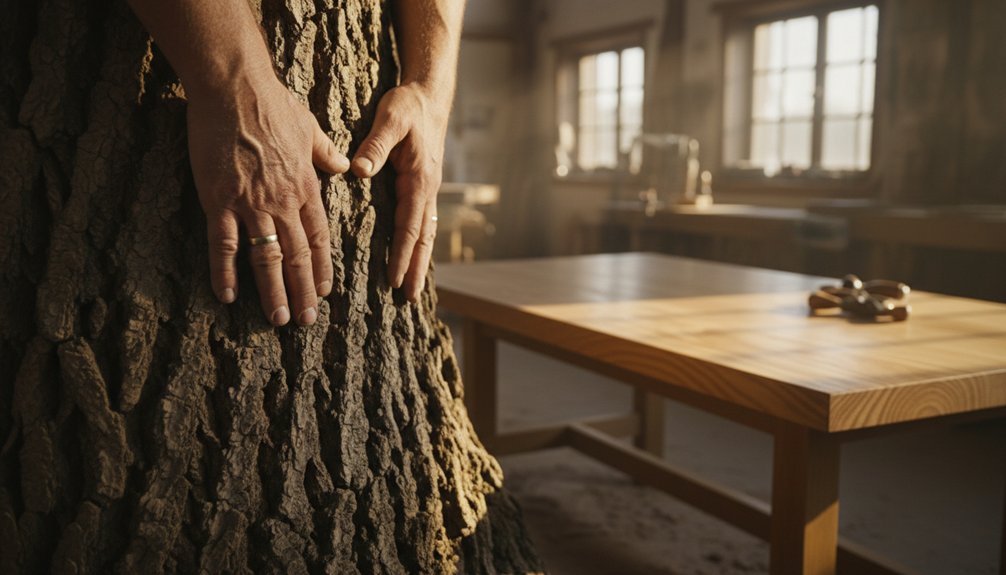
Oak wood furniture offers a sustainable choice for several reasons. Oak trees grow relatively fast, reaching maturity in 20 to 30 years. They regenerate naturally through acorns, ensuring a continuous supply. The durability of oak wood means that furniture made from it can last for decades, which reduces the need for frequent replacements. This longevity minimizes manufacturing waste and environmental impact.
During its growth, oak actively stores carbon, which helps lower your overall carbon footprint. Oak wood is also naturally non-toxic, produces minimal VOCs, and completely biodegrades at the end of its life cycle. By choosing certified oak furniture, you support responsible forestry practices. This not only protects ecosystems but also promotes sustainable management of resources. Overall, selecting oak wood furniture contributes positively to environmental sustainability while providing long-lasting quality for your home.
Oak Trees Grow Abundantly and Regenerate Naturally
When you evaluate sustainable furniture options, consider oak as a top choice due to its abundance. Oak trees thrive in various climates across North America and Europe, providing a reliable source of hardwood. These trees mature within 20 to 30 years, which is quicker than many other hardwoods.
Oak trees naturally regenerate by dropping acorns, which grow into new seedlings without needing human assistance. This self-sustaining cycle allows oak forests to replenish continuously when managed correctly.
The widespread availability of oak reduces transportation distances between forests and manufacturers, which helps lower carbon emissions. Sustainable forestry practices ensure that oak harvesting occurs at a rate that allows forests to regenerate effectively.
Superior Durability Means Fewer Furniture Replacements
Oak wood possesses dense fibers and natural tannins, which enhances its durability compared to softer woods like pine or particleboard. Choosing oak furniture means selecting pieces that endure for decades instead of just a few years.
Oak’s dense fibers and natural tannins create furniture built to last decades, not just years.
This longevity leads to less waste and a smaller environmental impact. By opting for oak, you reduce the frequency of furniture replacements, which also means fewer trees are cut down and less furniture is discarded in landfills.
Oak furniture resists scratches, dents, and moisture damage, which contributes to lower maintenance costs over time. You’ll spend less on repairs and refinishing when compared to furniture made from inferior materials.
The inherent strength of oak allows it to withstand daily use, making it a suitable choice for high-traffic areas in your home. By investing in oak furniture, you support sustainability while also protecting your budget and the environment.
Oak Furniture Reduces Carbon Footprint Over Time
When you choose oak furniture, you’re selecting items that actively store carbon. During its growth, an oak tree absorbs carbon dioxide from the atmosphere, and this carbon remains locked in the wood for decades.
This natural carbon storage is significant because oak furniture typically lasts between 50 to 100 years.
By investing in long-lasting oak furniture, you minimize the need for replacement pieces. Fewer replacements mean manufacturers produce less new furniture, which reduces the industrial emissions linked to processing, finishing, and transporting those new products.
Thus, choosing oak furniture directly contributes to a lower carbon footprint over time.
Carbon Storage in Wood
Oak trees absorb carbon dioxide from the atmosphere during photosynthesis and store it in their wood fibers. This carbon storage can last for decades or even centuries. When you buy oak furniture, you help keep that stored carbon out of the atmosphere.
The carbon sequestration benefits of oak furniture continue throughout its lifespan, which can be extended with proper care. Unlike synthetic materials, which emit greenhouse gases during production, oak furniture serves as a carbon storage solution in your home.
After the furniture reaches the end of its useful life, wood decay processes release carbon back into the environment slowly. This is a more gradual release compared to the rapid emissions produced by burning fossil fuels.
Longevity Reduces Manufacturing Emissions
Oak furniture lasts more than 50 years, which significantly reduces carbon emissions associated with manufacturing. When consumers choose quality oak pieces, they avoid the frequent replacement cycles required for cheaper materials, like laminate or particle board, which wear out quickly. Each time a furniture piece needs replacing, the new manufacturing process generates substantial carbon emissions through sourcing, transporting, and assembling new products.
| Furniture Type | Average Lifespan | Replacement Cycles (50 Years) |
|---|---|---|
| Oak Furniture | 50+ years | 1 |
| Laminate Furniture | 10 years | 5 |
| Particle Board | 5 years | 10 |
| Pine Furniture | 15 years | 3-4 |
| Plastic Furniture | 3 years | 16-17 |
Non-Toxic and Chemical-Free Material Properties
When you select oak furniture, you choose a material that’s naturally free from harmful chemicals and synthetic additives.
Solid oak furniture doesn’t emit volatile organic compounds (VOCs), which are common in manufactured wood products. Instead, solid oak maintains its pure composition and emits minimal toxins.
This characteristic protects your family from exposure to formaldehyde and chemical off-gassing, which are prevalent in particle board or laminate options.
Natural Wood Composition Benefits
Solid oak furniture offers a natural composition that ensures a healthier indoor environment. Unlike synthetic materials, which often rely on adhesives and chemical binders, solid oak doesn’t emit harmful substances.
The manufacturing process preserves oak’s cellular structure, which maintains its organic integrity. This means that your home will be free from formaldehyde and volatile organic compounds, common in particle board and laminated products.
Oak’s natural look fits seamlessly into various interior designs, providing both style and safety. You can use oak furniture in both traditional and contemporary settings without compromising on aesthetics.
When you choose solid oak, you select a material that has stood the test of time, requiring no synthetic treatments. This approach ensures that your family enjoys cleaner air and durable, beautiful furniture.
Investing in solid oak furniture means prioritizing your health and well-being while enhancing your living space with quality craftsmanship.
Low VOC Emissions
As you furnish your home, consider the importance of low VOC emissions for maintaining air quality and ensuring your family’s health. Solid oak furniture emits very low levels of volatile organic compounds compared to synthetic materials. When you choose solid oak pieces, you select furniture that complies with strict VOC regulations without needing extra treatments.
| Material Type | VOC Level | Indoor Air Quality Impact |
|---|---|---|
| Solid Oak | Very Low | Minimal negative effects |
| Particleboard | High | Significant air pollution |
| Laminate | Medium-High | Moderate health concerns |
| Plywood | Medium | Some air quality issues |
| MDF | Very High | Substantial emissions |
This comparison highlights why solid oak furniture is a better choice for indoor air quality. By selecting natural oak instead of manufactured alternatives, you will experience improved breathing conditions and reduced chemical exposure in your home. Prioritize solid oak furniture for a healthier living environment.
Oak Wood Is Fully Biodegradable at End of Life
Oak furniture has a lifecycle that prioritizes sustainability. When you finish using your oak furniture, it can decompose naturally and return to the earth. This process occurs without releasing harmful chemicals, making it an environmentally friendly option.
You have several practical choices for disposing of your oak furniture at the end of its life. You can compost smaller pieces, which enriches the soil. Alternatively, you can use the wood as mulch in your garden, helping to retain moisture and suppress weeds. If you prefer, you can repurpose the wood for new projects, giving it a second life.
Even if your oak furniture ends up in a landfill, it will still break down over time, contributing to the natural cycle of decomposition. As oak wood decomposes, it enriches the soil by returning vital nutrients to the ecosystem.
Oak furniture naturally decomposes in landfills, enriching soil with essential nutrients and supporting the ecosystem’s regeneration cycle.
Thus, choosing oak furniture supports responsible environmental practices and promotes a healthier planet.
Supporting Responsible Forestry Management Practices
Oak furniture offers more than just aesthetic appeal; it plays a crucial role in promoting responsible forestry management.
When you select oak furniture with recognized forestry certifications, you support sustainable sourcing practices that protect forests for future generations.
When shopping for oak furniture, look for these key certifications:
- FSC (Forest Stewardship Council) certifies that forests are managed according to strict environmental and social standards.
- PEFC (Programme for Endorsement of Forest Certification) promotes sustainable forest management practices on a global scale.
- SFI (Sustainable Forestry Initiative) emphasizes responsible forestry practices specifically in North America.
- Rainforest Alliance verifies that forestry operations focus on conservation efforts.
These certifications ensure that your oak furniture comes from forests where responsible practices are applied.
Trees are replanted, wildlife habitats are safeguarded, and workers receive fair treatment.