

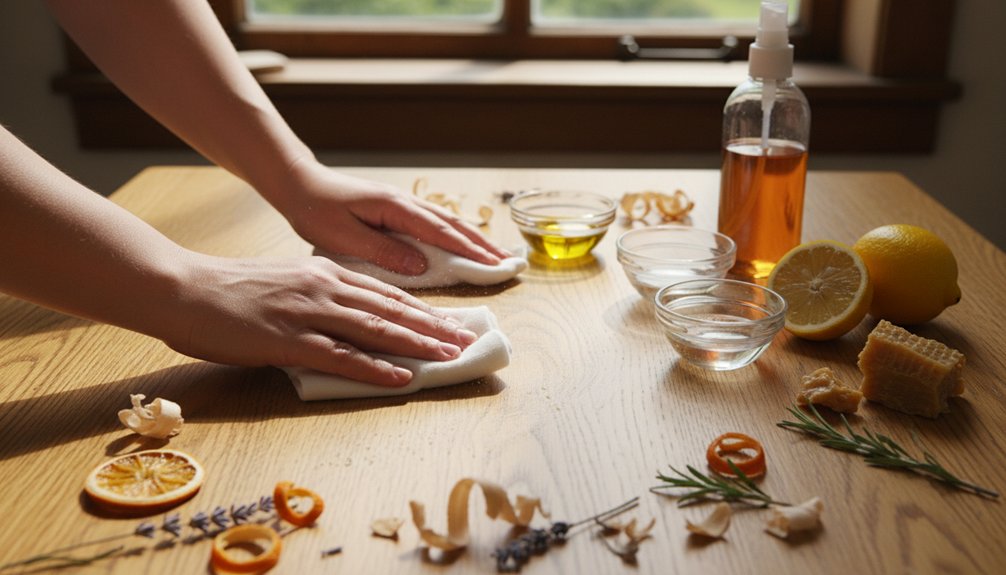
You can effectively clean and polish your oak furniture using natural ingredients found in most households. To create a polish, mix two parts olive oil with one part lemon juice. This combination nourishes the wood while providing a subtle shine. For general cleaning, combine one part vinegar with four parts water. This solution removes dirt and grime without damaging the finish.
If you want to add a protective layer, apply beeswax in thin coats along the grain of the wood. Beeswax creates a water-resistant barrier that helps maintain the furniture’s integrity. Coconut oil serves as an excellent conditioner, penetrating the wood and enhancing its natural luster. Additionally, using a tea solution can gently clean oak surfaces while adding a slight tint that can enhance the wood’s color.
Each of these methods offers practical benefits. By using natural ingredients, you avoid harmful chemicals while effectively maintaining the beauty of your oak furniture.
Why Choose Natural Products for Oak Furniture Care
Oak furniture represents a significant investment in your home. To protect this investment, you need the right care products that preserve its beauty and longevity.
Natural cleaners provide a safer alternative to chemical products. They don’t release harmful fumes, making them suitable for homes with children and pets. Using natural cleaners prevents exposure to harsh ingredients that can damage your oak furniture over time.
Choosing natural products for furniture care also benefits the environment. These products biodegrade, reducing pollution in water systems. Most come in recyclable packaging, promoting sustainability.
By selecting natural options, you support manufacturers that prioritize eco-friendly practices.
In addition, natural polishes nourish oak wood fibers with plant-based oils. This method enhances the wood’s authentic appearance instead of covering it with synthetic materials.
Olive Oil and Lemon Juice Polish Recipe
Making your own olive oil and lemon juice polish is easy once you know the right proportions and how to apply it correctly.
Start by mixing two parts olive oil with one part fresh lemon juice. This combination cleans and conditions oak surfaces effectively.
To apply the polish, take a soft cloth and work the mixture into the wood grain. Ensure you cover the entire surface evenly.
After applying, buff the wood with a clean, dry cloth to bring out a natural shine without leaving any residue.
Mixing the Proper Ratio
To make an effective olive oil and lemon juice polish, use a two-to-one ratio of olive oil to lemon juice.
Combine two tablespoons of olive oil with one tablespoon of fresh lemon juice in a small bowl. This mixture nourishes wooden surfaces and adds shine. The olive oil protects the wood while the lemon juice helps remove dirt.
Before applying the polish, stir the mixture thoroughly.
For regular maintenance, polish your oak furniture every two to three months. If your furniture sees heavy use or looks dull, increase the frequency to once a month.
Always test the polish on a small, hidden area first to ensure it works well with your specific oak finish.
Application and Buffing Technique
To start the application process, dip a soft, lint-free cloth into your olive oil and lemon juice mixture. Wring out the excess liquid to avoid over-saturating the oak surface.
Apply the polish using circular motions, following the direction of the wood grain. Work on small sections at a time to ensure even distribution across the surface. This method allows the polish to penetrate effectively and prevents streaks.
After applying the mixture, let it sit for two to three minutes.
Then, take a clean, dry cloth and begin buffing the surface. Buff in the same direction as the wood grain, using firm and consistent strokes. Keep buffing until the surface feels smooth and shows a subtle luster.
This buffing process removes any excess polish, while enhancing the natural beauty of the oak.
Vinegar-Based Cleaning Solutions for Oak Surfaces
Vinegar effectively cleans oak surfaces without using harsh chemicals.
To protect the wood’s finish, mix one part vinegar with four parts water. This ratio removes dirt and grime without causing damage.
Use a soft cloth or microfiber towel to apply the solution gently. Wipe in the direction of the wood grain to avoid scratches.
After cleaning, dry the surface with a clean, dry cloth to prevent streaks.
Regularly using this method preserves the natural beauty of your oak surfaces while keeping them clean.
Vinegar-to-Water Mixture Ratios
To clean oak furniture effectively, mix white vinegar and water in specific ratios that protect the wood while removing dirt. The recommended ratio is one part white vinegar to three parts water. This mixture creates a mild solution that cleans without harming the wood’s finish.
For lighter cleaning tasks, you can increase the water to one part vinegar and four parts water.
White vinegar disinfects naturally and cleans without harsh chemicals, making it a safe choice for oak surfaces. If you’re sensitive to the vinegar smell, use distilled water instead, as it contains fewer minerals that can leave unwanted residue.
Always test your cleaning solution on a hidden area of the furniture first to ensure it won’t damage the finish. Adjust your vinegar-to-water ratio based on how dirty the surface is, using stronger solutions only when absolutely necessary.
Application Techniques and Tools
When you clean oak surfaces with vinegar-based solutions, use soft, lint-free cloths or microfiber towels. These tools prevent scratches on the wood finish.
Begin by dampening your cloth with the vinegar solution. Avoid applying liquid directly onto the oak to stop excess moisture from soaking into the grain, which can cause damage.
Wipe the oak using gentle, circular motions, following the direction of the wood grain. This technique ensures even coverage and prevents streaks. For tough stains, allow the solution to sit for thirty seconds before wiping it clean.
After cleaning, dry the surface immediately with a separate clean cloth. This two-step method removes leftover residue and helps avoid water spots.
Change your cloths regularly during large cleaning tasks to maintain their effectiveness.
Drying and Buffing Methods
After cleaning your oak surface, focus on drying it properly to protect the wood’s finish. Moisture left on the oak can damage the wood and lead to water spots. The best drying techniques depend on the size and location of your oak piece.
Drying and Buffing Steps:
- Use clean, lint-free microfiber cloths to absorb excess moisture right after cleaning.
- Wipe the surface in the direction of the wood grain to avoid scratches and streaks.
- Allow the surface to air-dry for 15-20 minutes before starting to buff.
- Choose suitable buffing tools, such as soft cotton cloths or chamois leather, for polishing.
- Buff the surface using gentle circular motions to restore its natural shine.
These steps ensure your oak furniture stays beautiful and prevents moisture-related damage while achieving a professional-looking finish.
Beeswax Polish for Long-Lasting Oak Protection
Beeswax polish effectively protects oak furniture and flooring. This natural treatment creates a water-resistant barrier that prevents moisture damage. It enhances the wood’s natural grain patterns while providing a warm sheen that remains clear over time.
Beeswax polish creates a natural, water-resistant barrier that protects oak while enhancing its grain and providing lasting warmth.
For proper application, first, warm the beeswax polish slightly between your hands. Then, use a soft cloth to apply the polish in thin, even coats. Always work along the direction of the grain and focus on small sections at a time.
Allow each layer to dry for about fifteen minutes before buffing it with a clean cloth.
Reapply the beeswax every three to six months, depending on the level of foot traffic. This regular maintenance builds durable protection that can last for years, ensuring your oak surfaces remain in excellent condition.
Tea-Based Cleaning Methods for Oak Wood
Beeswax protects oak surfaces, but regular cleaning is essential to maintain their appearance.
Tea-based cleaning methods effectively clean oak furniture. The natural tannins in black tea remove dirt and grime while enhancing the wood’s color. This method is cost-effective, as you likely have the necessary ingredients at home.
Steps to Clean Oak with Tea:
- Brew two black tea bags in one cup of boiling water.
- Let the tea cool completely before using it.
- Dampen a soft cloth with the cooled tea solution.
- Wipe the oak surface in the direction of the wood grain.
- Immediately dry the surface with a clean, lint-free cloth to avoid water damage.
Using this tea method regularly helps maintain the quality and appearance of your oak furniture.
Coconut Oil as a Natural Oak Conditioner
Coconut oil serves as an effective natural conditioner for oak furniture. This oil deeply moisturizes wood, preventing it from drying out and cracking.
To condition oak surfaces, first warm the coconut oil slightly in your hands. Then, apply the oil directly to the oak using a soft cloth. Focus on small sections and follow the direction of the wood grain. After application, allow the oil to absorb for about fifteen minutes. Finally, buff any excess oil off with a clean cloth.
Warm coconut oil in your hands, apply with a soft cloth along the grain, let absorb fifteen minutes, then buff clean.
For optimal results, repeat this conditioning process monthly. You can enhance the cleaning properties by mixing coconut oil with lemon juice. This mixture not only nourishes the wood but also creates a protective barrier that repels moisture.
Using coconut oil maintains the natural beauty of oak furniture while ensuring its longevity.
Essential Oil-Enhanced Natural Polish Formulas
When you create your own wood polish with essential oils, you enhance the cleaning power while adding a pleasing scent. Start with a base of olive oil or jojoba oil mixed with white vinegar. This combination cleans oak surfaces effectively.
Next, add essential oils to boost fragrance and cleaning properties.
Here are some effective essential oil combinations to consider:
- Combine lemon oil with orange oil to achieve a fresh citrus scent and effective grease-cutting abilities.
- Mix tea tree oil with lavender for its antimicrobial benefits, which help keep surfaces clean and safe.
- Use cedarwood oil for a woodsy aroma that complements the natural scent of oak.
- Pair eucalyptus oil with peppermint for an invigorating fragrance that refreshes the space.
- Blend rosemary oil with thyme to create a herbal polish that provides a pleasant scent and effective cleaning.
For optimal results, use 10-15 drops of your chosen essential oils per cup of your oil and vinegar base mixture. This ratio ensures that your polish is both effective and aromatic.