

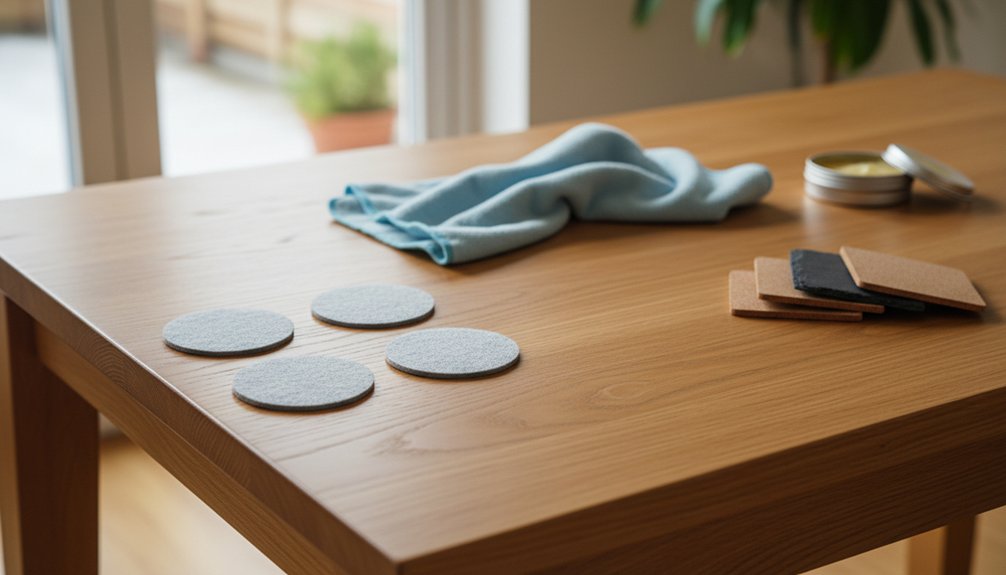
To prevent scratches on your oak furniture, start by attaching felt pads to the legs of chairs and tables. These pads help furniture glide smoothly across surfaces without causing damage. Next, apply furniture wax or polish on a regular basis. This creates a protective barrier that guards against scratches and maintains the wood’s finish. Always place coasters, placemats, and table runners on surfaces to protect them from spills and heat.
Keep sharp objects away from the furniture to avoid unintentional scratches. Maintain indoor humidity levels between 40-45% to prevent the wood from cracking or warping. When moving items, lift them instead of dragging to protect the surface. For cleaning, use soft, lint-free cloths like microfiber to avoid abrasions. By consistently applying these practices, you will effectively preserve the natural beauty of your oak furniture for many years.
Use Protective Pads and Felt Covers on Furniture Legs
When furniture legs contact oak surfaces, they create friction that scratches and scuffs the wood. To prevent this damage, attach protective pads to the bottom of chair and table legs.
Felt covers are effective because they provide a soft, cushioned barrier between the furniture legs and the oak. You can find these pads in various sizes at hardware stores and online retailers.
Felt pads create a protective cushion between furniture and oak floors, available in multiple sizes from hardware stores and online shops.
To install the pads, peel off the adhesive backing and press them firmly onto each leg. This quick maintenance step significantly reduces scratches on your oak surfaces.
Replace the pads every six months or as soon as they show signs of wear. Additionally, using felt covers makes moving furniture safer, allowing for smooth gliding without damaging your valuable oak pieces.
Apply Furniture Wax or Polish Regularly for Added Protection
Regularly applying furniture wax or polish protects your oak furniture from minor scratches and daily wear.
Choose a product specifically designed for oak or hardwood surfaces because the wrong type can harm the finish or leave a residue.
After selecting the appropriate wax or polish, apply it using a soft cloth to ensure an even coat.
This method provides a strong barrier that maintains your furniture’s natural beauty and extends its lifespan.
Consistent application helps keep your oak furniture in top condition, making it look great for years to come.
Choose the Right Product
Oak furniture needs moisture to keep its protective finish intact. You need to apply wax or polish to create a barrier against everyday wear and tear. Your choice of cleaning products significantly affects your furniture’s protection. Here are some key factors to consider when selecting furniture cleaning supplies:
| Product Type | Best For | Application Frequency |
|---|---|---|
| Natural Wax | Antique oak pieces | Every 3-4 months |
| Silicone-Free Polish | Modern oak finishes | Monthly |
| Beeswax-Based Products | All oak furniture | Every 2-3 months |
Avoid using products with harsh chemicals or silicone. These can harm the natural beauty of oak. Always test new products on inconspicuous areas first to ensure compatibility. Read the labels carefully to confirm they match your furniture’s finish. High-quality products may cost more initially, but they provide better long-term protection against scratches and damage.
Proper Application Technique
When you care for your oak furniture, using the right products matters, but how you apply them is crucial too. Improper application can diminish effectiveness and even damage the wood. To ensure your furniture stays protected and looks great, follow these straightforward steps.
- Apply thin, even coats. Use soft, lint-free cloths and work in circular motions. This technique helps prevent streaking and ensures uniform coverage.
- Work with the wood grain. Always apply products in the direction of the grain. This approach minimizes the risk of surface abrasions and enhances the wood’s natural pattern.
- Allow adequate drying time. After each coat, wait for the drying time recommended by the product manufacturer. Skipping this step can lead to uneven finishes.
- Buff gently. After the final application, lightly buff the surface to create a smooth finish. Avoid using excessive pressure, as this can damage the protective layer.
Avoid over-applying products, as this can lead to a buildup that attracts dust and dirt.
Place Coasters, Placemats, and Table Runners on Surfaces
Using coasters, placemats, and table runners protects your oak furniture from scratches and heat damage. Coasters prevent direct contact between drinks and the wood surface. Opt for cork, silicone, or felt-backed coasters to avoid moisture buildup and unsightly rings. Avoid hard materials like stone or ceramic, as these can easily scratch your furniture.
Placemats add a protective layer for plates and serving dishes. Choose materials that complement your décor while providing durability.
Table runners can shield the surface from heat and spills. Styles range from quilted cotton to vinyl-backed fabric, each offering varying levels of protection.
Place coasters, placemats, and table runners in high-traffic areas where items are frequently set down. Establish a household rule to always use these protective items during meals and gatherings.
This habit significantly extends the lifespan of your oak furniture.
Keep Sharp Objects and Pet Claws Away From Oak Surfaces
Sharp objects damage oak furniture finishes and create deep scratches that are hard to fix. Protecting your oak pieces requires practical strategies to prevent scratches and maintain their appearance.
Establish boundaries to keep potential hazards away from your oak surfaces.
Here are effective methods to protect your oak furniture:
- Store keys, scissors, and tools in drawers to prevent them from scratching oak surfaces.
- Trim your pet’s nails regularly to reduce the risk of claw marks on the wood.
- Use decorative trays for items like jewelry or watches to contain them and prevent scratches.
- Install furniture covers or throws in spots where pets tend to jump or rest to shield the furniture.
Implementing these measures protects your oak furniture from unsightly marks and extends its lifespan.
Maintain Proper Humidity Levels to Prevent Wood Damage
You need to control your home’s humidity levels to protect oak wood from damage. Oak wood expands and contracts with changes in moisture, which can cause cracks and scratches.
Maintain humidity levels between 40-45% relative humidity. Use humidifiers during dry winter months to add moisture and dehumidifiers in humid summer conditions to reduce moisture.
Monitor your furniture for signs of humidity-related damage, such as warping, splitting, or gaps in joints. These issues indicate that your furniture is experiencing stress from improper humidity levels, making it more susceptible to scratches.
Ideal Humidity Range
Humidity levels significantly impact the integrity of oak furniture. To prevent cracks and scratches, maintain humidity between 40-45% throughout the year.
Wood expands and contracts with moisture changes. When humidity fluctuates drastically, the surface can crack, leading to increased vulnerability to scratches. Consistent humidity control is essential for protecting your investment and prolonging the lifespan of your furniture.
To achieve and maintain proper humidity levels, follow these steps:
- Use a hygrometer to measure indoor humidity accurately.
- During dry winter months, run a humidifier to introduce moisture into the air.
- In humid summer conditions, operate a dehumidifier to reduce excess moisture.
- Position furniture away from heat vents and air conditioning units to avoid direct exposure to fluctuating temperatures.
By consistently managing humidity, you prevent wood movement that results in surface damage and scratches.
Maintaining the ideal humidity range is crucial for preserving the appearance and durability of your oak furniture.
Using Humidifiers and Dehumidifiers
Effective humidity management requires the right equipment and strategic placement in your home. Use a hygrometer to monitor indoor moisture levels accurately.
When the humidity drops below the ideal range, place humidifiers in rooms with oak furniture to add necessary moisture to the air. During humid summer months, use dehumidifiers to remove excess moisture, which can cause wood expansion and surface damage to your furniture. Position dehumidifiers away from direct contact with furniture to prevent concentrated moisture exposure.
Maintain consistent humidity control throughout the year rather than making sudden adjustments. Central HVAC systems with built-in humidity controls help achieve an efficient moisture balance, protecting your oak furniture.
Regularly maintain your humidifiers and dehumidifiers to ensure peak performance and prevent wood damage, which can lead to scratching and other issues. Focus on these steps to effectively manage humidity and safeguard your oak furniture.
Signs of Humidity Damage
Recognizing signs of humidity damage in oak furniture is crucial for preserving its integrity. Oak wood reacts noticeably to changes in moisture, making early detection vital. Here are the key indicators that humidity is affecting your furniture and that you need to take action.
Signs of Humidity Damage:
- Warping and Bowing: When the wood absorbs excess moisture, tabletops and panels can curve. This warping prevents them from sitting flat against surfaces.
- Cracking and Splitting: High humidity can cause joints in the wood to separate. You may see gaps along the grain, indicating structural stress.
- Surface Changes: The finish on your furniture may become cloudy or develop a white haze. In some cases, the finish may start to peel away from the wood, exposing it to further damage.
- Sticking Drawers and Doors: Swollen wood from increased moisture can cause drawers and doors to jam. This prevents them from closing properly or moving smoothly.
If you notice any of these signs, you need to address the humidity issues immediately. Taking prompt action can prevent permanent damage to your oak furniture.
Implement moisture control strategies to protect your valuable pieces.
Lift Objects Instead of Dragging Them Across the Surface
To protect your oak furniture from scratches, lift objects instead of dragging them. When you slide items across the surface, even light ones, friction damages the wood’s finish and leaves marks.
Grip objects firmly and lift them completely off the table before moving them. For heavier items, ask for assistance instead of trying to slide them on your own.
Always raise and carefully reposition decorative vases, lamps, books, and electronics. This simple habit requires minimal effort and significantly helps preserve your furniture’s appearance.
Clean Oak Furniture With Soft, Lint-Free Cloths Only
To keep oak furniture looking its best, you need to focus on proper cleaning techniques. The type of cloth you use directly affects the furniture’s finish. If you select hard or abrasive fabrics, you risk creating tiny scratches that build up over time and dull the wood’s shine. To prevent this, always use soft, lint-free cloths for cleaning.
Here are the best cloth materials for cleaning oak furniture:
- Microfiber cloths trap dust without scratching the surface.
- Cotton flannel offers gentle cleaning and is safe for delicate finishes.
- Chamois leather is excellent for polishing and buffing.
- Old cotton t-shirts provide a cost-effective cleaning option.
When cleaning, always wipe in the direction of the wood grain. Avoid using paper towels because they can be surprisingly abrasive.
If your cloth gets dirty, wash it thoroughly or replace it to avoid transferring dirt back onto your furniture. Following these steps will help maintain the beauty of your oak surfaces for years to come.