

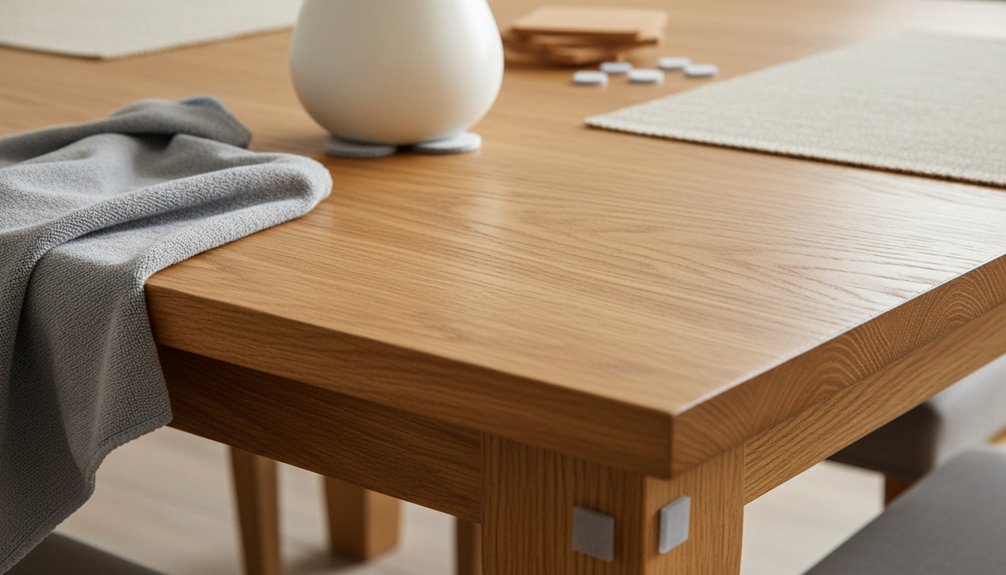
To prevent scratches on oak furniture, you should attach felt pads to the legs of your furniture. These pads will create a barrier that reduces the risk of scratches when moving furniture. You also need to apply quality wax every three to four months. The wax adds an extra layer of protection to the wood finish.
Keep sharp objects and pet claws away from the furniture by establishing boundaries in your home. Using furniture covers can also help protect against scratches.
When setting the table, place tablecloths and placemats over areas that experience heavy use. This will minimize direct contact with the oak surface. For cleaning, always use soft microfiber cloths and wipe in the direction of the wood grain to avoid damaging the finish.
Maintain humidity levels between 40-60% to prevent the wood from drying out or warping. Lastly, rotate decorative items on your furniture every few weeks. This practice helps prevent concentrated wear patterns that could damage the oak’s finish over time. Following these steps will help keep your oak furniture looking its best.
Use Protective Pads and Felt Covers on Furniture Legs
Attaching protective pads to furniture legs prevents scratches on oak furniture.
These pads act as a barrier between the wood surface and your floors, which reduces friction when moving chairs, tables, or cabinets. Using felt covers is a smart choice because they’re soft and effectively cushion movement.
You can find protective pads at most hardware stores, and they come in various sizes and thicknesses to fit different furniture.
Regularly inspect the pads for wear and replace any that are damaged. This simple step helps maintain your furniture and provides long-term protection for your oak pieces.
For different flooring types or furniture weights, consider cork or rubber pads as alternatives.
This basic method of scratch prevention takes only minutes to implement but safeguards your valuable furniture over time.
Apply Quality Furniture Wax or Polish Regularly
Regularly applying quality furniture wax or polish protects oak surfaces from scratches and damage.
Quality furniture wax creates a protective barrier on oak surfaces, preventing scratches while preserving the wood’s natural character and extending furniture longevity.
Establish a maintenance schedule to apply wax every three to four months, adjusting based on how much the furniture is used. Use products designed specifically for oak or hardwood finishes rather than generic waxes.
Before applying wax, clean the surface thoroughly with a soft, lint-free cloth to eliminate dust and debris. Apply a thin, even layer of wax using circular motions and work in small sections.
Follow the manufacturer’s instructions for drying time, then buff the surface with a clean cloth until you achieve a shiny finish.
This protective layer not only safeguards against minor scratches but also enhances the natural beauty of the oak furniture and prolongs its lifespan.
Keep Sharp Objects and Pet Claws Away From Oak Surfaces
Your oak furniture faces threats from sharp objects and pet claws that can damage its surface.
You must establish boundaries for where pets can go and which items should remain away from your furniture. Setting up designated pet-free zones protects your oak pieces from scratches and marks.
Additionally, using protective furniture covers guards against accidental damage.
Designate Pet-Free Furniture Zones
Pets bring joy to households, but their claws can damage oak furniture. Establish furniture boundaries to protect your investment.
Designate pet-free zones by consistently redirecting your pets away from oak pieces. Use baby gates or closed doors to restrict access to rooms with valuable furniture.
Train your pets using commands like “off” or “down” to discourage them from jumping on sofas and chairs. Reward your pets with treats and praise when they respect these boundaries.
Provide alternatives like pet beds, scratching posts, and designated lounging areas. These options satisfy your pets’ natural behaviors while keeping them away from oak surfaces.
This approach ensures both furniture longevity and a harmonious home environment.
Use Protective Furniture Covers
Protective furniture covers provide essential defense against scratches and damage to oak surfaces. When accidents occur, these covers absorb impacts and shield your furniture. You have various options to choose from, each balancing durability and visual appeal.
| Cover Type | Protection Level | Best Use Case |
|---|---|---|
| Throw Blankets | Medium | Protects armrests and seats |
| Vinyl Covers | High | Ideal for high-traffic furniture |
| Fabric Slipcovers | Medium-High | Offers full furniture protection |
| Clear Plastic Guards | Low-Medium | Safeguards table surfaces |
When selecting protective covers, consider your household’s unique needs. Homes with pets require heavy-duty vinyl covers for maximum durability. If you want to maintain a formal look, fabric slipcovers provide both protection and aesthetic value. Regularly replace worn covers to ensure continuous protection for your furniture. Opt for washable covers to simplify maintenance and extend the lifespan of your oak pieces.
Place Tablecloths, Runners, and Placemats Strategically
Using tablecloths, runners, and placemats protects oak furniture from everyday scratches.
Choose materials that resist trapping moisture or debris, as these can harm the wood finish over time.
Place tablecloths over high-traffic areas to shield surfaces where dishes, utensils, and decorative objects frequently make contact.
Ensure that the tablecloths are fitted and stable, so they don’t shift easily during use.
Use runners to accentuate the length of the table and protect key areas without covering the entire surface.
Position placemats directly under plates, cups, and utensils to provide targeted protection.
This approach will keep your oak furniture looking great and extend its lifespan.
Choose Appropriate Material Types
The right protective materials can safeguard your oak furniture from scratches and scuffs. When you choose tablecloths, runners, and placemats, consider how different fabrics interact with wood finishes.
Cotton and linen provide excellent protection because they don’t trap moisture that could harm your furniture. Avoid materials with rough backing or decorative elements like beads, as they can scratch surfaces.
Felt-backed placemats offer durability and cushioning for dishes and utensils, reducing the risk of damage. Vinyl tablecloths can be effective, but ensure they’re thick enough to prevent sharp objects from puncturing through.
Stay away from materials with plastic mesh undersides, as these can leave permanent marks on your surfaces. Select protective layers that grip the table well to minimize the chances of items shifting and causing scratches on your oak furniture.
Proper Placement and Coverage
To protect your oak furniture effectively, focus on the strategic placement of protective coverings. Position tablecloths and runners in areas where daily activities take place, such as dining tables and workspaces. Choose coverage sizes that extend beyond the edges of the furniture, especially where items are frequently placed or moved. Concentrate on high-traffic zones to prevent scratches from developing.
Use placemats at each seating position to provide individual surface protection, and lay runners along the center of the table for serving dishes. Ensure there are no gaps between protective materials, as these exposed areas can attract scratches.
To keep coverings in place, use non-slip pads underneath. This will prevent them from shifting during use and exposing your oak furniture’s finish to potential damage.
Maintain Proper Humidity Levels to Prevent Wood Movement
When indoor air becomes too dry or humid, oak furniture expands and contracts, which can lead to surface damage. This movement causes tension in the wood fibers, making the furniture more prone to scratches and splits.
To keep your oak furniture stable, you need to maintain humidity levels between 40-60% throughout the year.
Use a hygrometer to measure the moisture levels in your home. Pay particular attention during winter, when heating systems can dry out the air, and during summer, when humidity levels can rise.
If the air is too dry, use a humidifier to add moisture. If the air is too humid, utilize a dehumidifier to remove excess moisture.
Maintaining consistent humidity levels prevents the wood from swelling or shrinking, which decreases stress on the surface. This stability helps your oak furniture resist scratches and keeps its protective finish intact for a longer period.
Clean Oak Furniture With Soft Microfiber Cloths Only
Dust particles and abrasive debris damage your oak furniture’s finish, creating scratches over time. To prevent this, use soft microfiber cloths for cleaning. These cloths trap dust particles instead of pushing them across the surface, protecting your furniture from scratches.
When cleaning, wipe in the direction of the wood grain using gentle, sweeping motions. Avoid scrubbing in circles; this can leave visible scratch patterns on your furniture.
Microfiber cloths have additional advantages—they don’t require harsh cleaning chemicals, and they don’t leave lint behind.
Replace worn or stiff microfiber cloths to maintain their cleaning effectiveness. Wash them regularly without using fabric softener to keep their protective qualities intact.
Following these steps will help preserve your oak furniture’s finish and keep it looking its best.
Reposition Decorative Items to Avoid Concentrated Wear Patterns
Leaving decorative items in the same position on your oak furniture for months leads to scratches and wear marks on the surface. Vases, picture frames, and candleholders create damage underneath through constant friction and pressure.
To prevent this, you should rotate your decorative items every two to three weeks. This action distributes contact points across different areas and avoids excessive wear on any single spot.
For example, you can move your table centerpiece six inches to the left, place your lamp in a different corner, or swap photo frames between rooms. These straightforward adjustments help prevent wear patterns on your furniture.
Additionally, moving these items allows you to notice dust buildup beneath them, providing a chance to clean those hidden areas. Regularly rotating your items not only maintains the appearance of your furniture but also extends its lifespan significantly.