

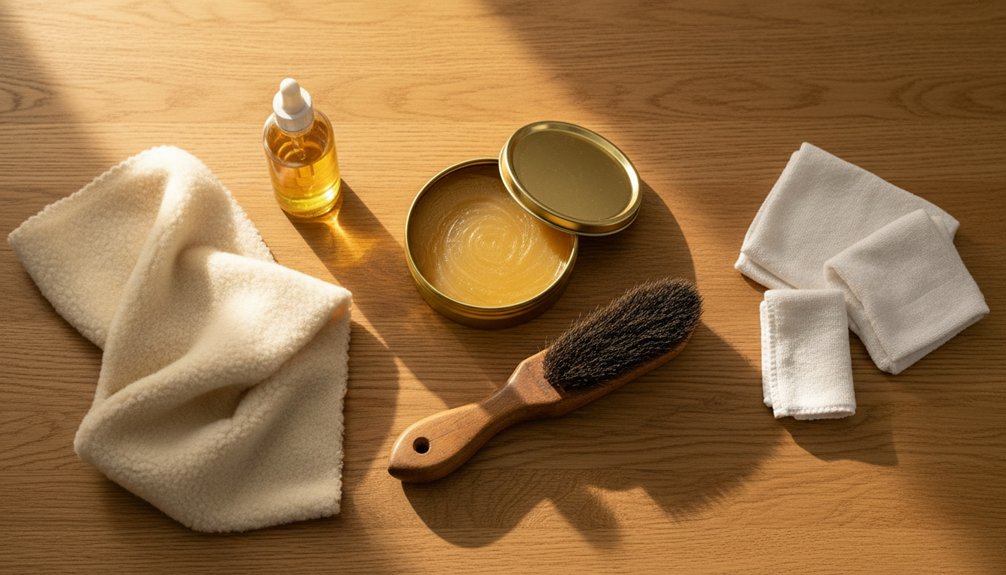
To maintain oak furniture effectively, use pH-neutral cleaners and mild dish soap for regular cleaning. These cleaners remove dirt without damaging the wood. Apply natural oils like tung or linseed to penetrate and protect the wood grain. These oils nourish the wood and enhance its natural beauty. For added durability and stain resistance, consider using synthetic oils. They form a protective layer that withstands wear and tear. Wax treatments provide lasting surface protection, creating a barrier against moisture and scratches.
Use high-quality microfiber cloths for application and buffing. These cloths prevent lint and scratches while ensuring a smooth finish. Keep scratch repair kits on hand for minor dings and blemishes. These kits include fillers and colors that match your oak furniture. Additionally, use natural polishes to enhance shine without using harmful chemicals. These polishes provide a safe way to maintain the luster of your furniture.
Understand proper application techniques to maximize each product’s effectiveness. Follow the manufacturer’s instructions for best results, and allow sufficient drying time between applications. Regular maintenance will keep your oak furniture looking its best and prolong its lifespan.
Essential Cleaning Solutions for Oak Wood Surfaces
When you clean oak furniture, choose pH-neutral cleaners designed for wood care. Harsh chemicals strip the wood’s natural oils and damage the finish.
For regular maintenance, mix mild dish soap with warm water. Use this solution on finished oak, which can handle a bit more moisture. Unfinished oak requires specialized products to avoid damage.
Clean high-traffic furniture weekly and display pieces monthly. Test any new cleaning product on a hidden area first to check for adverse reactions.
Maintain high-traffic oak pieces weekly and display furniture monthly, always testing new cleaners on hidden spots before full application.
Apply the cleaner using a soft, damp cloth, moving in the direction of the wood grain. After cleaning, dry the surface immediately with a clean towel to prevent water damage and maintain the oak’s natural shine.
Premium Oils and Waxes for Oak Furniture Protection
When protecting your oak furniture, you must decide between natural oils and synthetic oils, as both types have unique benefits for preservation and appearance.
Natural oils, like tung or linseed oil, penetrate the wood, enhancing the grain and providing moisture protection. Synthetic oils, on the other hand, offer durability and resistance to stains and heat.
The application method significantly impacts your results. If you choose penetrating oils, apply them with a clean cloth to ensure even coverage.
For wax products, use a soft applicator to buff the surface, creating a protective barrier that repels moisture and dirt.
Regular maintenance is crucial for keeping your oak furniture looking its best. Depending on the product, you may need to reapply oils every six months to a year, while wax treatments might require more frequent applications, roughly every three months.
Natural Vs Synthetic Oils
Natural oils and synthetic oils serve distinct roles in protecting oak furniture, and understanding their differences is crucial for making the right choice.
Natural oils, such as linseed and tung oil, penetrate wood fibers deeply. They enhance the natural beauty of the grain while allowing the wood to breathe. This breathability helps moisture escape, preventing trapped humidity that can lead to damage.
Additionally, natural oils are biodegradable and produce fewer harmful fumes during application, making them safer for both users and the environment.
In contrast, synthetic oils are produced through chemical processes. They offer longer-lasting protection and dry more quickly than their natural counterparts.
However, synthetic oils can release volatile organic compounds (VOCs), which raise environmental concerns. These oils often create a surface barrier that can inhibit the wood’s natural breathing, potentially leading to moisture-related issues over time.
When choosing between natural and synthetic oils for oak furniture, consider the specific benefits and drawbacks of each type.
Natural oils provide deep penetration and breathability, while synthetic oils offer durability and quick drying times. Understanding these factors will help you select the right oil for your furniture’s needs.
Application Techniques and Frequency
To protect your oak furniture effectively, you need to apply oils and waxes properly. Start by using a lint-free cloth to apply thin, even coats. Work along the wood grain to ensure uniform coverage and prevent buildup. Let each coat penetrate the wood for about 15-20 minutes before buffing off any excess product.
How often you apply these products depends on how much you use the furniture. For pieces that experience heavy traffic, treat them every three months. For decorative items that see less use, a treatment twice a year is sufficient.
Understand the difference between oils and waxes. Oils soak into the wood fibers, while waxes sit on the surface to provide protection. Avoid applying thick layers, as they can create a sticky residue that detracts from the finish.
Regular maintenance is more effective than extensive restoration, so create a schedule that fits your furniture’s usage patterns.
Microfiber Cloths and Applicators for Streak-Free Results
When you apply polish or cleaner to your oak furniture, the cloth you use for buffing directly impacts the final appearance. Microfiber cloths absorb more liquid and leave a lint-free finish compared to cotton cloths. The fine fibers in microfiber trap dust and dirt instead of spreading them around, which protects your oak surface from scratches.
For furniture care, you can choose from various applicator types. Flat microfiber pads are effective for buffing large surfaces like tabletops and cabinet doors. For intricate areas and carvings, smaller microfiber cloths are ideal.
Some microfiber applicators have dual sides; one side is for applying the product and the other for buffing it out. When selecting applicators, use tightly woven microfiber for applying polish and looser weaves for the final buff.
Always keep your microfiber cloths clean to avoid transferring dirt back onto your furniture.
Wood Conditioners to Prevent Drying and Cracking
Oak furniture requires consistent moisture to prevent drying and cracking. Wood conditioners protect the wood by forming a barrier that helps retain moisture. These products penetrate deep into the grain and replenish the natural oils that decrease over time due to age and environmental factors.
When you choose a wood conditioner, read the ingredient list closely. Select conditioners that use natural oils, like linseed or tung oil, because these oils effectively nourish the wood. Additionally, consider beeswax-based formulas, which not only protect but also provide a subtle shine to the surface.
Apply wood conditioners every three to six months, adjusting based on the humidity levels in your home. Regular application of wood conditioner keeps your oak furniture looking vibrant and prevents the formation of cracks that occur in neglected pieces.
Consistency in conditioning is key to maintaining the structural integrity and appearance of your oak furniture.
Scratch Repair Kits for Damaged Oak Surfaces
Even with regular care, daily use of oak furniture often leads to scratches and marks. Scratch repair kits provide a straightforward method for restoring these damaged surfaces. These kits usually contain colored wax sticks, markers, or putty that match various oak finishes. You apply the product directly to the scratches to fill and blend in the color with the surrounding wood.
Before applying the repair product, clean the scratched area thoroughly to ensure good adhesion. Choose a shade that’s slightly lighter than your oak furniture for the best match. Many scratch repair kits also include applicators and buffing cloths, which help achieve a polished finish.
After fixing the scratches, it’s smart to apply a surface protection product. This step helps prevent future damage and keeps the finish looking fresh.
Regular use of these scratch repair kits helps maintain the appearance of your oak furniture and significantly extends its lifespan.
Natural Polishes for Long-Lasting Shine and Durability
Natural polishes help maintain the beauty of oak furniture without harmful chemicals. Beeswax-based products protect wood while providing a warm, glossy finish. These polishes use organic ingredients, like carnauba wax and plant oils, to nourish the wood effectively.
You can apply these natural polishes with a soft cloth. Buff the surface in circular motions until you achieve the desired shine.
When selecting eco-friendly options, choose products that don’t contain petroleum distillates or synthetic fragrances. A homemade polish made from olive oil and lemon juice conditions the wood naturally and is easy to make.
To keep your furniture in top shape, apply natural polishes every three to six months. This routine not only preserves the furniture’s appearance but also supports healthy indoor air quality.