

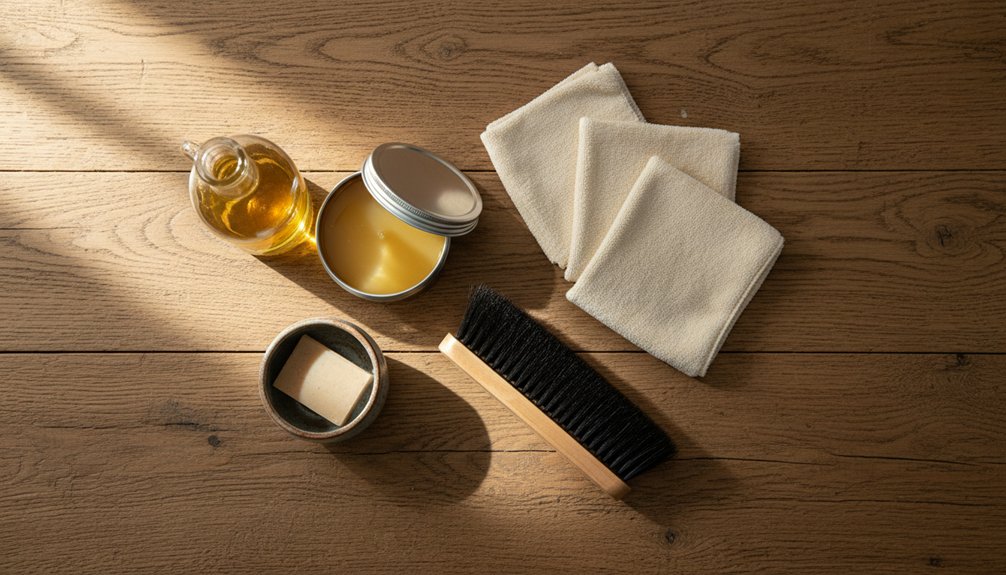
To maintain your oak furniture, use pH-neutral cleaners or mix mild dish soap with water. This combination effectively cleans the surface without damaging the wood. For added protection, apply premium waxes that contain beeswax or carnauba every three to six months. These waxes help preserve the finish and enhance the wood’s natural beauty.
To create moisture-resistant barriers, use natural oils like tung, linseed, or Danish oil. Reapply these oils every six to twelve months to keep the wood hydrated and protected. Additionally, keep repair kits on hand, which should include touch-up markers and wood fillers for addressing scratches. Use felt pads and coasters to prevent future damage from hot or heavy objects. This approach will help you maintain the integrity and appearance of your oak furniture over time.
Essential Cleaning Solutions for Oak Wood Surfaces
When you clean oak furniture, use products that protect the wood’s finish and keep its fibers intact. Choose pH-neutral cleaners designed for wood care; they prevent harsh chemicals from stripping protective coatings and causing discoloration.
For regular cleaning, mix mild dish soap with water. Wring out your cloth thoroughly to avoid moisture damage. Apply commercial furniture polishes with natural oils to maintain oak’s shine and provide extra protection.
Steer clear of cleaners with ammonia, bleach, or silicone, as these can lead to buildup over time. Use gentle wiping motions along the wood grain instead of circular patterns to prevent scratching.
Before using any new cleaner, test it on an inconspicuous area of the furniture to ensure it won’t damage the finish.
Premium Polish and Wax Products for Oak Protection
Oak furniture requires careful maintenance to ensure its longevity and beauty. Specialized wax products protect oak surfaces from wear and environmental damage. Premium waxes, containing natural ingredients like beeswax and carnauba, seal the wood’s pores and enhance its appearance.
Premium waxes with natural beeswax and carnauba create protective barriers that seal oak’s pores while enhancing its timeless beauty.
When you apply wax, you create a protective layer that repels moisture and prevents scratches. To apply wax effectively, use thin, even coats. Rub the wax into the surface in circular motions with a soft cloth. After applying each layer, let it dry for fifteen minutes before buffing. This process builds a durable shield that preserves the wood.
In addition to waxing, quality polishes can provide immediate shine between waxing sessions. Choose silicone-free formulas to avoid buildup over time. Depending on your furniture’s exposure to sunlight and frequency of use, apply polishes every three to six months.
Consistent care with these products will keep your oak furniture looking its best.
Repair Kits and Touch-Up Solutions for Oak Furniture
Oak furniture often experiences three main types of damage: scratches, dents, and discoloration. To effectively repair these issues, you can utilize specialized repair kits that include essential tools. These kits contain wax sticks, wood filler, and sandpaper, which allow you to restore the furniture thoroughly.
For minor surface scratches, touch-up markers serve as a practical solution. You can select markers that match your oak furniture‘s specific shade, enabling you to blend the repairs seamlessly into the wood grain. This method ensures the repairs are nearly invisible.
Deeper scratches require a different approach. You should apply colored wax or wood filler that hardens in the damaged area. This technique allows you to effectively fill in the scratch and restore the surface.
When addressing dents, the process involves steaming the compressed wood fibers. You need to use a damp cloth and an iron to introduce steam into the dent, which helps raise the wood fibers back to their original position.
After the wood has returned to shape, apply finishing products to ensure a smooth and polished look.
Quality repair kits often come with various stain shades. You should choose a stain that matches your oak’s unique color to restore its original appearance effectively.
Protective Pads and Covers to Prevent Oak Damage
Oak furniture is sturdy, but you can significantly prolong its life with protective pads and covers. Place felt pads under lamps, vases, and decorative items to prevent scratches on tabletops. Use coasters for drinks to avoid water rings and heat damage. Use placemats during meals to protect surfaces from spills. Apply furniture pads on chair and table legs to safeguard your floors and reduce movement wear.
When arranging your space, position oak pieces away from direct sunlight and heating vents. This helps prevent fading and cracking over time. Use table covers and runners to provide extra protection during daily use.
Incorporate these protective measures into your seasonal maintenance routine. Regularly check pads for wear and replace them as needed.
For dining tables, use tablecloths during gatherings to shield surfaces from spills and impacts.
Natural Oil Treatments for Long-Lasting Oak Preservation
Natural oils effectively preserve oak furniture by nourishing the wood and forming a protective barrier. Options like tung oil, linseed oil, and Danish oil penetrate deep into the oak, enhancing the wood’s grain and providing resistance against moisture and wear.
Natural oils like tung, linseed, and Danish oil nourish oak furniture while creating a moisture-resistant protective barrier.
When applying these oils, you should work with thin, even coats to ensure the best oil absorption. Apply the first coat and allow it to dry completely, which usually takes about 24 hours.
After the first layer dries, you can add additional coats for enhanced protection.
To maintain the beauty of your oak furniture, reapply these natural oil treatments every six to twelve months, depending on the furniture’s usage. Regular oiling keeps the wood looking vibrant and extends its lifespan.