
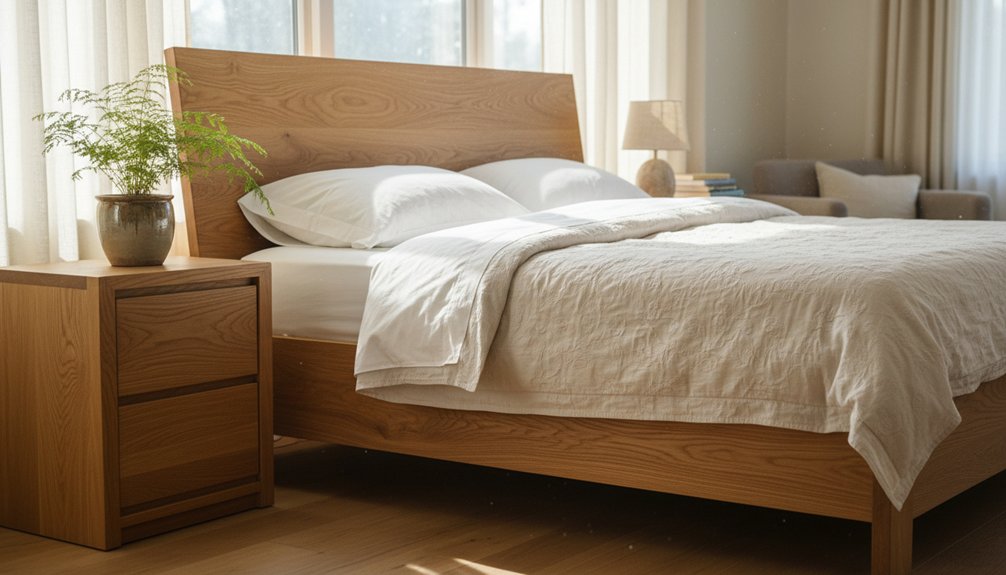
Oak furniture provides important health benefits for your home. Oak wood regulates humidity levels, which helps prevent mold and reduces allergens in the air. Unlike synthetic materials, oak emits very few volatile organic compounds, making it safer for indoor use.
The dense grain of oak wood resists dust mites, making it easier to clean without the need for harsh chemicals. Oak contains natural tannins that have antimicrobial properties, which help inhibit bacterial growth. Additionally, oak undergoes a chemical-free aging process that prevents toxic off-gassing from adhesives and finishes.
These features create a healthier indoor environment, especially for children and individuals with sensitivities. By choosing oak furniture, you can enhance the safety and comfort of your living space.
Natural Air Quality Improvement From Oak Wood
When you choose oak furniture for your home, you’re opting for a natural material that enhances indoor air quality.
Oak wood regulates humidity levels effectively. This regulation prevents mold growth and minimizes airborne allergens that can harm your respiratory health.
Oak’s natural humidity control stops mold before it starts, creating healthier air for your family to breathe every day.
Unlike synthetic materials, oak emits very few volatile organic compounds (VOCs), which means cleaner air in your living space.
The porous nature of oak allows it to absorb specific pollutants from the air, acting as a natural air filter. This characteristic is particularly beneficial for families focused on maintaining clean air.
You’ll especially appreciate the improved air quality in bedrooms and living areas where you spend a lot of time.
Hypoallergenic Properties of Solid Oak
Solid oak furniture offers a hypoallergenic option for your home. Unlike particle board or composite materials, solid oak doesn’t release harmful volatile organic compounds. These compounds can trigger respiratory problems in sensitive individuals.
Oak allergies are rare when compared to reactions from synthetic furniture materials.
Solid oak possesses natural resistance to dust mites. Dust mites thrive in upholstered and fabric-covered furniture, but the dense grain structure of oak prevents allergens from penetrating deeply.
This feature makes oak easy to clean and maintain. You can remove surface dust effectively with just a damp cloth, without the need for harsh chemical cleaners.
These hypoallergenic properties make solid oak furniture particularly suitable for family members with asthma or allergies. By choosing solid oak, you create a healthier living environment.
Low VOC Emissions for Safer Indoor Environments
Volatile organic compounds (VOCs) negatively impact indoor air quality. Oak furniture offers a safer choice compared to manufactured wood products. Solid oak emits fewer chemicals than particle board and MDF, which often use formaldehyde-based adhesives in their production. Choosing oak furniture enhances the indoor safety of your home.
Natural oak requires fewer chemical treatments during the manufacturing process. This results in low VOC emissions throughout the furniture’s lifespan. Low emissions make oak a practical option for spaces like bedrooms and nurseries, where you and your family spend significant time breathing indoor air.
Oak furniture maintains healthier indoor air quality through minimal chemical processing and consistently low VOC emissions over time.
The specific benefits of oak’s low VOC levels include:
- Reducing respiratory irritation and headaches from indoor pollutants.
- Minimizing off-gassing odors that can linger in your home.
- Improving overall air quality for children and individuals with sensitivities.
Antimicrobial Characteristics of Oak Furniture
Oak wood contains natural tannins that provide antimicrobial properties. These tannins resist bacterial growth on surfaces, which helps create a cleaner environment in your home.
Choosing oak furniture means selecting pieces that actively discourage microorganisms from thriving on their surfaces. This characteristic, combined with oak’s durability, ensures that your furniture remains hygienic throughout its long lifespan.
The antimicrobial properties of oak don’t require special treatments or chemical additives. They’re inherent to the wood, providing continuous protection without the need for additional maintenance.
This is particularly beneficial for high-touch areas like dining tables, desks, and bedroom furniture. Unlike synthetic materials that can trap bacteria in scratches and crevices, oak’s natural defenses contribute to a healthier living space.
Therefore, oak is an excellent choice for households that prioritize wellness and cleanliness.
Durability Reduces Exposure to Harmful Replacement Materials
Oak furniture offers significant health benefits due to its durability. Durable oak furniture reduces the need for frequent replacements. When you avoid replacing your furniture often, you limit your exposure to harmful materials that can be found in cheaper alternatives.
Investing in durable oak furniture means fewer replacements and reduced exposure to the harmful chemicals often found in cheaper alternatives.
Many low-cost furniture options contain formaldehyde, volatile organic compounds, and synthetic adhesives. These substances can off-gas and negatively impact indoor air quality.
By choosing oak, you invest in long-lasting pieces that minimize your contact with these toxic materials. This choice leads to fewer trips to furniture stores, which further decreases your exposure to harmful chemicals.
The health advantages of oak furniture include:
- Reduced chemical exposure: Durable oak minimizes the need for new furniture, which often comes with harmful manufacturing residues.
- Improved air quality: Oak furniture avoids the risks associated with particle board and synthetic finishes that can emit harmful gases.
- Sustainable sourcing: Many oak products are sourced responsibly, supporting environmental and human health.
Chemical-Free Aging Process Benefits
Oak furniture ages naturally, which means it doesn’t release harmful substances into your home.
This natural aging process allows the wood to develop a unique patina through oxidation and weathering. As a result, you avoid exposure to toxic fumes that often come from synthetic finishes and chemical preservatives. This is important for maintaining good indoor air quality.
Choosing oak furniture means you’re investing in a product that matures without the risks associated with chemical treatments. The focus on natural materials ensures a healthier environment for you and your family.
Natural Wood Maturation Process
When you choose furniture made from naturally aged oak, you select a product that undergoes a careful drying process over months or years. This method avoids artificial chemical treatments that speed up drying, ensuring the wood retains its structural integrity.
By allowing oak to mature naturally, you also reduce harmful emissions in your home.
Proper wood aging provides several benefits:
- Reduced VOC emissions: Organic finishes work with the natural drying process, minimizing volatile organic compounds released into your home.
- Enhanced durability: Slowly dried wood stabilizes without stress, preventing cracking and ensuring longevity.
- Better air quality: Natural aging prevents synthetic chemicals from penetrating the wood fibers, which contributes to a healthier indoor environment.
Naturally matured oak keeps its authentic characteristics while promoting a safer space for your family.
Each piece of furniture reflects this meticulous process, making it a smart choice for anyone prioritizing quality and health in their home.
No Toxic Chemical Treatments
Oak furniture ages naturally, without the use of chemical treatments. This choice means your furniture won’t emit harmful substances into your home.
Conventional furniture often involves treatments that release volatile organic compounds (VOCs), which can compromise indoor air quality for years. By opting for untreated oak, you eliminate the risk of these harmful emissions. The natural aging process of oak doesn’t require synthetic preservatives or toxic finishes to keep the wood intact.
Many manufacturers prioritize sustainable sourcing and ethical practices. They offer chemical-free options because they recognize that high-quality oak maintains its durability without harsh treatments.
The natural properties of oak protect it from everyday wear and tear. This results in furniture that’s safe for children, pets, and individuals with chemical sensitivities. Choosing untreated oak supports your health and well-being while promoting environmental responsibility.
Safer Indoor Air Quality
Oak furniture plays a significant role in improving indoor air quality. Unlike synthetic materials that release volatile organic compounds (VOCs) over time, oak furniture is crafted from solid wood, which undergoes a natural aging process without harmful chemicals. This means that when you bring oak furniture into your home, you reduce pollutants in your environment.
Benefits of oak furniture for air quality:
- Oak furniture eliminates off-gassing from synthetic adhesives and finishes, ensuring cleaner air.
- Oak reduces your exposure to formaldehyde and VOCs commonly found in pressed wood products.
- Oak maintains a stable air composition throughout its lifespan, contributing to healthier indoor air.
When you select solid oak furniture, you prioritize your respiratory health. The natural properties of oak ensure that your home remains free from harmful chemical emissions, minimizing the risk of allergies and breathing issues.
Temperature and Humidity Regulation Properties
Oak furniture regulates humidity and temperature effectively due to its hygroscopic nature. Oak absorbs moisture from the air when humidity levels rise, which keeps your indoor environment comfortable. This absorption helps prevent discomfort associated with high humidity, such as stickiness.
When the air is dry, oak releases stored moisture back into the environment, helping to maintain balanced humidity levels. This process occurs continuously without any effort from you.
The density and cellular structure of oak contribute to its ability to stabilize temperature. Oak furniture helps moderate fluctuations in air temperature, creating a more consistent indoor climate.
As a result, you’ll experience fewer issues with static electricity during winter months and reduced condensation during humid periods. Overall, oak furniture acts as a natural climate regulator, enhancing the comfort and quality of your home environment.