
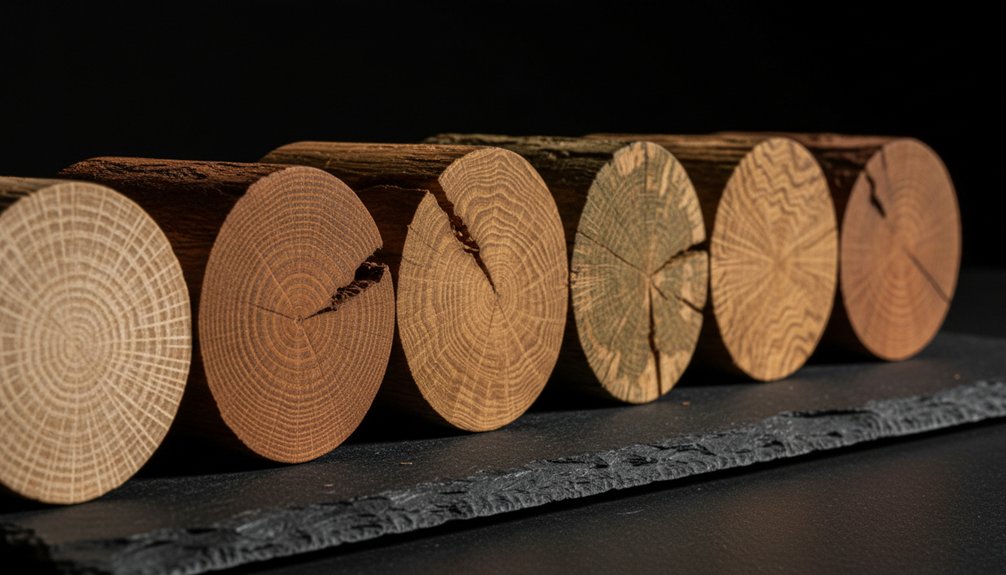
Oak varieties serve specific woodworking purposes based on their characteristics. White oak provides excellent water resistance due to its unique cellular structure, making it suitable for outdoor projects and boat building. Red oak features bold grain patterns and is easy to work with, but it does not offer moisture protection. Quarter-sawn oak delivers superior stability and showcases distinctive ray fleck patterns, appealing to those who want a classic look. Rift-sawn oak produces straight, uniform grain, making it a great choice for modern designs. Live oak is an incredibly dense southern hardwood that resists rot naturally, which is beneficial for long-lasting projects. Understanding these specific features helps you select the right oak variety for your woodworking needs.
White Oak: Durability and Water Resistance
When you choose wood for outdoor projects or applications exposed to water, white oak is a reliable option.
White oak provides exceptional durability and natural water resistance. The wood’s cellular structure features tyloses, which are growths that block pores and prevent water from penetrating. This quality makes white oak suitable for boat building, wine barrels, and outdoor furniture.
In addition to maritime applications, white oak works well for flooring, cabinetry, and construction projects where moisture exposure is likely.
The wood’s density offers strength and wear resistance, ensuring your projects endure for many years. Unlike red oak, white oak doesn’t absorb liquids easily. This characteristic makes white oak the preferred choice for reliable protection against water damage and rot.
Red Oak: Distinctive Grain Patterns and Affordability
Red oak features bold, open grain patterns that enhance visual interest in various applications. Its wider pores create a more pronounced texture compared to white oak, which many woodworkers appreciate. The natural color ranges from light tan to a pink-toned brown, offering warmth for your projects.
When working with red oak, you’ll find it easy to cut, shape, and finish using standard woodworking tools. Its excellent workability and staining properties make it a go-to choice for many craftsmen. Additionally, red oak is more affordable than white oak, making it a practical option for larger projects without breaking the bank.
Red oak is commonly used in flooring, cabinetry, furniture, and trim work. Many interior designers favor it for its dramatic grain, which enhances the overall visual appeal of a space.
However, avoid using red oak outdoors, as it doesn’t possess the water resistance that white oak offers.
English Oak: Traditional European Craftsmanship
While North American oaks are prevalent in the woodworking market, English oak (Quercus robur) has been a cornerstone of European craftsmanship for centuries. Craftsmen use this wood for constructing historic buildings, ships, and furniture across Britain and continental Europe. Its durability and decay resistance make it a vital choice for traditional European construction methods.
| Property | English Oak | Comparison |
|---|---|---|
| Density | 45 lbs/ft³ | Heavier than Red Oak |
| Grain | Straight, pronounced | More dramatic figuring |
| Tannin Content | Very High | Double most species |
| Workability | Moderate | Requires sharp tools |
| Cost | Premium | 2-3x American varieties |
Craftsmen prefer English oak for timber framing and fine joinery due to its reliable performance. When quarter-sawn, the wood showcases distinctive medullary rays that create striking silver grain patterns. The high tannin content in English oak offers natural preservation, enhancing its longevity in various applications.
Rift-Sawn Oak: Straight Grain for Modern Designs
Rift-sawn oak comes from a precise cutting method that yields boards with straight grain patterns.
This method produces wood that’s more stable than other cuts because it reduces the chances of warping and shrinking over time.
The straight grain offers a uniform appearance, making rift-sawn oak ideal for modern furniture and architectural designs.
When you choose rift-sawn oak, you ensure a consistent look that enhances the overall aesthetic of your project.
This stability and clean appearance make rift-sawn oak a popular choice among builders and designers looking to create contemporary spaces.
Rift-Sawing Cutting Method
When you cut oak at angles between 30 and 60 degrees to the growth rings, you’re employing the rift-sawing method. Rift-sawing creates boards that display straight, vertical grain patterns running parallel to the surface. This method results in minimal flaking and a clean, uniform appearance, making it suitable for modern design aesthetics.
Rift-sawing offers distinct advantages, including superior dimensional stability. Boards cut using this method experience less movement compared to plain-sawn cuts. This means your rift-sawn oak boards are less likely to cup or warp, making them ideal for high-quality projects.
Common uses for rift-sawn oak include fine furniture, cabinetry, and architectural millwork, where consistency and reliability are crucial.
While rift-sawn oak typically costs more due to the increased waste generated during the cutting process, the investment is justified. The visual appeal and structural benefits of rift-sawn oak make it the preferred choice for premium installations.
Stability and Visual Appeal
Rift-sawn oak offers strong structural performance and a clean aesthetic, making it a preferred choice for contemporary interior design projects.
The straight grain pattern in rift-sawn boards reduces warping and twisting, which contributes to wood longevity. This cutting method ensures that boards remain flat and stable during seasonal changes in humidity, making them suitable for flooring and cabinetry.
The visual benefits of rift-sawn oak are clear:
- Uniform grain patterns create a sleek, modern look without distracting figures or flakes.
- Consistent color distribution simplifies the staining and finishing process, leading to a more uniform appearance.
- Subtle texture enhances minimalist designs while adding warmth to spaces.
Using rift-sawn oak elevates areas where clean lines and understated elegance are essential.
It’s a practical choice for anyone looking to combine durability with visual appeal in their designs.
Quarter-Sawn Oak: Unique Flecking and Stability
Quarter-sawn oak is cut from logs at a precise angle to the wood’s growth rings. This method generates unique ray fleck patterns that appear on the wood’s surface, resembling ribbons or tiger stripes. This distinct appearance often makes quarter-sawn oak a preferred choice for furniture makers and flooring specialists.
In addition to its visual appeal, quarter-sawn oak offers superior stability compared to other cutting methods. The way the wood is cut helps minimize warping and shrinking, ensuring that furniture and flooring maintain their shape over time.
As a result, many craftsmen choose quarter-sawn oak for projects that demand durability and aesthetics.
What Is Quarter-Sawing?
Most lumber mills use plain-sawing to cut logs quickly, but I focus on quarter sawing for its unique advantages.
Quarter sawing involves cutting logs at angles between 60 and 90 degrees relative to the growth rings. This technique produces boards with vertical grain orientation, showcasing the wood’s medullary rays and creating distinct flecking patterns.
Quarter sawing offers several benefits:
- Quarter-sawn lumber maintains superior dimensional stability. This stability helps prevent warping and cupping over time.
- Quarter-sawn boards resist moisture penetration better than plain-sawn boards. This resistance reduces the likelihood of surface checking.
- The characteristic ray fleck patterns in quarter-sawn wood add visual depth and character to the final product.
Keep in mind that quarter-sawn boards tend to cost more than plain-sawn lumber. This price difference comes from the fact that the quarter sawing process yields less usable material from each log.
Additionally, it requires more labor and specialized equipment to execute properly. The investment in quarter sawing pays off in terms of quality and performance.
Distinctive Ray Fleck Patterns
Quarter-sawn oak features unique ribbon-like patterns known as ray fleck or “tiger stripes.” These patterns appear when the wood’s medullary rays are cut at perpendicular angles during the sawing process.
You’ll see silvery or light-brown streaks across the wood’s surface, adding visual interest that’s highly sought after in furniture and cabinetry.
The intensity of ray flecking varies between white oak and red oak. White oak generally shows more pronounced patterns compared to red oak.
By adjusting the sawing techniques, you can enhance or minimize these ray fleck characteristics to align with your design preferences.
This distinct feature of oak wood has made quarter-sawn oak particularly favored in Arts and Crafts and Mission-style furniture, where the natural grain patterns play a crucial role in the overall design.
Enhanced Dimensional Stability
The way you saw oak affects its stability in different environmental conditions. When you quarter-saw oak, you cut it at a specific angle that minimizes wood expansion. Quarter-sawn oak experiences significantly less expansion compared to plain-sawn lumber because of its unique grain orientation. This orientation provides quarter-sawn oak with natural resistance to warping and twisting.
The benefits of this enhanced stability are clear:
- Seasonal movement – Quarter-sawn oak expands and contracts less across its width, maintaining its dimensions during humidity changes.
- Long-term performance – Quarter-sawn oak retains its shape over decades, making it a reliable choice for flooring and furniture.
- Maintenance – You’ll encounter fewer issues like gaps or cupping, saving time and effort in repairs.
These stability features make quarter-sawn oak a preferred choice for projects where dimensional consistency is critical.
Craftsmen use quarter-sawn oak for fine furniture, flooring, and cabinetry that require precise measurements and durability.
Live Oak: Dense Southern Hardwood Properties
Live oak is a unique southern hardwood that stands out due to its impressive density and durability. This tree primarily grows in coastal areas, ranging from Virginia to Texas. Its strength and resilience made live oak a critical material in shipbuilding during the 18th and 19th centuries.
When we evaluate live oak for various applications, we look at specific properties:
| Property | Measurement | Rating |
|---|---|---|
| Density | 55 lbs/ft³ | Very High |
| Janka Hardness | 2,680 lbf | Exceptional |
| Decay Resistance | Natural oils | Superior |
The interlocking grain pattern of live oak contributes to its structural integrity, making it reliable for demanding projects. We often use live oak in flooring, furniture, and outdoor construction due to its weather-resistant qualities. The wood’s natural resistance to rot and insects means that many projects do not require chemical treatments, simplifying maintenance and enhancing longevity.