
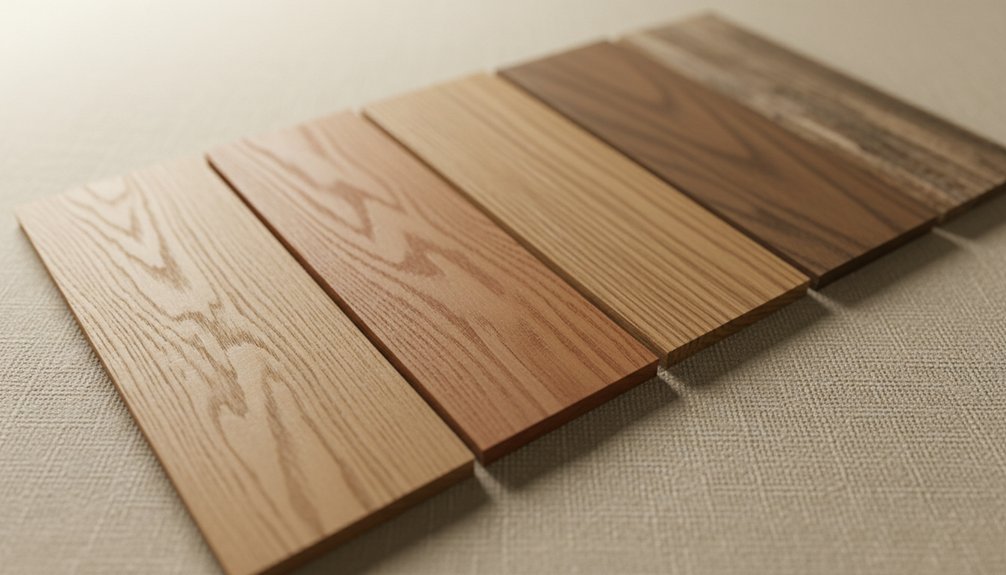
You can choose from five outstanding oak species for crafting high-quality furniture. White Oak resists moisture effectively, which makes it suitable for durable furniture. It also absorbs stains uniformly, enhancing its appearance. Red Oak features striking grain patterns and is a cost-effective option, making it a popular choice for budget-conscious projects. English Oak offers a classic European look with its dense and resilient wood, ideal for traditional designs. Japanese Oak allows for intricate craftsmanship due to its excellent workability, though it’s less commonly available. Holm Oak boasts impressive density, which is perfect for creating heirloom-quality furniture. Each oak species has distinct properties that contribute to the final product, so understanding these characteristics will guide you in selecting the best wood for your furniture project.
White Oak: The Premium Choice for Timeless Furniture Pieces
When you choose wood for quality furniture, white oak is a top choice. White oak provides reliable durability and strength, making it ideal for long-lasting pieces. Its tight grain patterns enhance the visual appeal of furniture while also contributing to its robustness. The presence of tyloses in white oak helps it resist moisture, preventing water from penetrating the wood. This characteristic makes white oak suitable for building tables, cabinets, and chairs that endure over time.
Moreover, white oak accepts stains evenly, ensuring a consistent finish that meets your design needs.
Many manufacturers focus on sustainable harvesting practices for white oak, which helps maintain healthy forests for future generations. By selecting white oak, you not only invest in aesthetically pleasing furniture but also support environmentally responsible practices in the industry.
Red Oak: Bold Grain Patterns for Eye-Catching Designs
Red oak features bold grain patterns that enhance furniture designs. The open grain showcases sweeping lines, giving every piece a unique character.
Red oak has a pinkish-red undertone and a slightly porous texture, which allows it to accept stains well. This quality enables you to achieve darker finishes without hassle.
You can use red oak for various furniture styles, such as traditional dining tables and contemporary cabinets. It offers a more budget-friendly option compared to white oak while still delivering excellent durability.
The wood’s workability allows for intricate designs and detailed woodworking projects. Red oak machines efficiently and holds nails securely, making it suitable for indoor furniture applications.
Its striking grain patterns often spark conversations in any space.
English Oak: Traditional European Elegance and Durability
English oak plays a crucial role in European furniture making. Craftsmen have used this wood for centuries to create durable and stylish pieces.
English oak is denser and more durable than American oak, which results in tighter grain patterns. These grain patterns contribute to the refined look of furniture. English oak‘s historical significance is evident in the many pieces that have lasted for hundreds of years.
English oak’s superior density creates tighter grain patterns, delivering both refined aesthetics and the enduring quality proven across centuries of craftsmanship.
Choosing English oak means investing in a material that resists wear and maintains its structure over time. This wood is particularly suitable for traditional furniture styles.
The warm honey tones and subtle grain of English oak enhance classic designs. Although English oak typically costs more, the quality and longevity you gain make it a worthwhile investment.
Japanese Oak: Exotic Beauty With Superior Workability
Japanese oak is an underutilized wood in Western furniture making, yet it offers several advantages for craftsmen. This wood is easy to work with, which makes it suitable for crafting intricate designs. Many Japanese artisans have relied on this species for fine furniture, thanks to its excellent workability. The wood showcases attractive grain patterns with color variations that range from light tan to medium brown.
| Property | Japanese Oak |
|---|---|
| Workability | Excellent – machines and finishes smoothly |
| Grain Pattern | Straight with attractive figuring |
| Durability | Moderate to good resistance |
| Weight | Medium density, easy handling |
| Availability | Limited but improving through sustainable sourcing |
You can create detailed joinery with Japanese oak without worrying about excessive tool wear. The wood takes stains and finishes well, allowing for a variety of design options. Overall, Japanese oak combines usability with aesthetic appeal, making it a solid choice for furniture makers looking to expand their material palette.
Holm Oak: Dense Mediterranean Hardwood for Heirloom Quality
Holm oak serves as a durable material for furniture, thanks to its remarkable density and longevity. Craftsmen often choose holm oak for heirloom pieces because it resists decay and withstands heavy use.
Its extraordinary hardness makes it suitable for strong items like dining tables, bed frames, and outdoor furniture. When working with holm oak, you need carbide-tipped tools to handle its density effectively. This hardwood has a history in Mediterranean shipbuilding, underlining its strength and resilience.
Using holm oak means you’ll create furniture that lasts for generations. As you craft with this material, expect to invest more effort, but the payoff is worth it.
You’ll produce pieces that not only endure but also develop a beautiful patina over time. Focus on holm oak for any project that requires maximum strength and durability; it will serve you well in creating lasting furniture.