
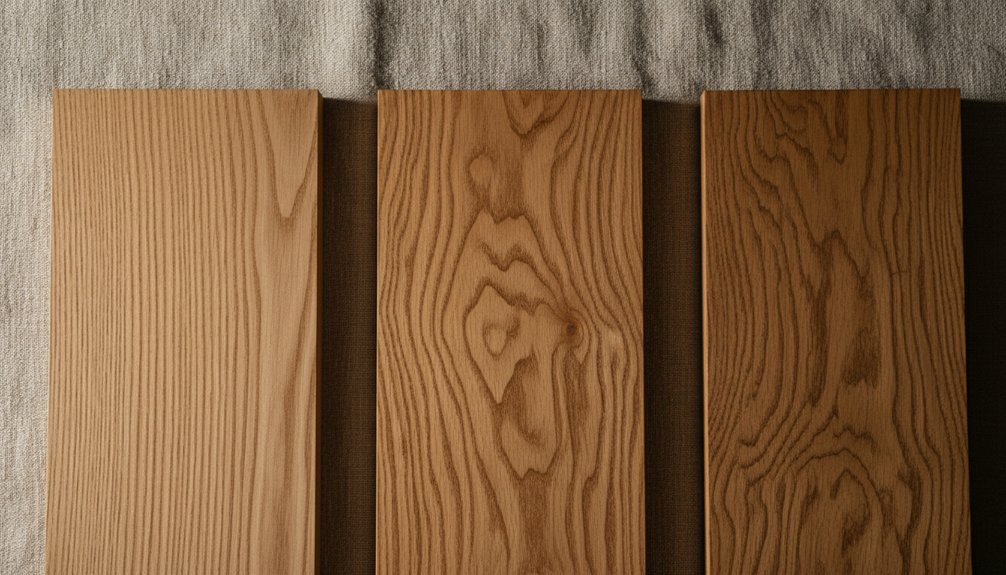
You can choose from three oak types that are ideal for crafting quality furniture: white oak, red oak, and European oak. White oak offers a tight grain structure, which enhances its water resistance and rot protection. This makes white oak the most durable choice for furniture that will withstand the test of time.
Red oak features open grain patterns that give it a unique appearance while remaining cost-effective. Its durability makes red oak suitable for everyday furniture use without sacrificing quality.
European oak showcases a straight grain and rich golden-brown tones that deepen as the wood ages. This type of oak provides an elegant look and excellent scratch resistance, making it a smart choice for both style and function.
All three oak types accept stains well, allowing for versatility in design. Whether you’re crafting traditional or contemporary pieces, using these oak varieties will ensure that your furniture lasts for generations.
White Oak: The Premium Choice for Durable Furniture
When you choose white oak for your furniture, you’re selecting a hardwood known for its durability and reliability. White oak has a tight grain structure that provides natural water resistance, making it suitable for everyday use. This wood resists rot and insect damage, ensuring your furniture lasts longer.
In addition to its durability, white oak accepts stains well, allowing for a variety of finishes, from light natural shades to deep, rich colors. This versatility makes it a favorite among craftsmen. Its strength-to-weight ratio means white oak is ideal for building sturdy chairs, tables, and cabinets that won’t warp or crack over time.
Furthermore, the distinctive ray fleck pattern in white oak adds unique visual appeal to each piece. This characteristic enhances the furniture’s aesthetic and allows it to gain character as it ages.
Red Oak: Affordable Beauty With Distinctive Grain Patterns
Red oak serves as a practical choice for furniture makers who prioritize quality without breaking the bank. The wood features a distinctive open grain that produces bold patterns, adding noticeable character to each piece. Its porous nature allows red oak to absorb stains effectively, giving makers precise control over the final look.
The widespread availability of red oak across North America keeps costs low while ensuring consistent quality. Craftsmen can achieve a range of finishes, from light natural hues to deep, rich stains that highlight the prominent grain.
Red oak’s moderate hardness rating makes it durable for constructing everyday furniture like tables, chairs, and cabinets. Additionally, its workability accommodates both traditional and contemporary designs, making red oak a versatile option for various projects.
European Oak: Traditional Elegance for Fine Furniture Craftsmanship
European oak serves as a top choice for furniture makers focused on durability and timeless design. This wood appears in both historic castles and modern luxury homes, showcasing its versatility.
European oak features tight, straight grain patterns, which differ from the more pronounced lines found in American varieties. As it ages, the wood’s golden-brown color deepens, enhancing the character of each piece.
Craftsmen in France and England have utilized European oak for centuries due to its stability. This stability means that furniture made from this wood resists warping and cracking.
The density of European oak also provides excellent resistance to wear and scratches, making it suitable for both traditional and contemporary designs.
Investing in European oak furniture means selecting pieces designed to last for generations. While it may come at a higher price than domestic options, the quality and longevity of the wood justify this investment.